
Reviewed · MOUNT KENYA & HIGHLAND TREKS
4 Days Mount Kenya Trekking
Mount Kenya’s Point Lenana summit gives you a serious high-altitude challenge without requiring a technical climb. Over four days, you walk from forest to moorland, pass beneath the main peaks, and reach 4,895 meters in time for sunrise. The scenery shifts quickly, from trees and wildlife to bare rock, glaciers, and wide mountain views.
I like the small group limit of three and the practical support from a guide, cook, and porters. I also like the Sirimon route, which gives you time to gain height before the summit push. The main drawback is the schedule: Day 3 begins at 3am, and the cold at the high camps can be severe, so proper clothing and fitness matter.
Key points to know before booking
- Point Lenana reaches 4,895 meters: This is the highest point on the trek and the goal of the early morning summit walk.
- The Sirimon route changes scenery fast: You pass through forest, heath, moorland, valleys, and rocky high country.
- The summit morning starts at 3am: Expect about three hours uphill before reaching Point Lenana near sunrise.
- The group is limited to three people: This allows close contact with the guide and a quieter walk.
- Three nights in mountain camps are included: Meals, guiding, porters, and hotel transfers are also part of the price.
- Cold is a real concern: Pack seriously for nights at Old Moses Camp and Shipton Camp, especially at 4,200 meters.
Why Point Lenana is the right Mount Kenya goal
Mount Kenya has three major summits, but Point Lenana is the trekking summit. Batian and Nelion require technical climbing, while Point Lenana can be reached by a fit walker using a mountain route.
That distinction matters. You get the drama of Mount Kenya without signing up for a rock-climbing expedition. The route still demands stamina, altitude tolerance, and steady footing, but the climb is aimed at people who can handle long uphill days rather than people with specialist climbing skills.
At 16,059 feet, or 4,895 meters, Point Lenana is high enough to create genuine altitude concerns. The schedule gives you two days to gain height before the summit morning, which is helpful, though the itinerary remains brisk. You should arrive ready to walk for several hours each day and to move slowly at altitude.
The small-group format is another strong point. With a maximum of three people, you are not lost in a large line of walkers. It also gives you a better chance to set a sensible pace, ask questions, and stay in close contact with the guide.
Other highland treks from Mombasa:
- Climbing Mount Kenya 5 Days Via Chogoria Route
★ 5.0 · 44 reviews - From Nairobi: TRIP TO MOUNT LONGONOT NATIONAL PARK
★ 4.9 · 41 reviews - Samburu/ Aberdare/ Lake Nakuru/ Masai Mara 7 Days Safari
★ 5.0 · 37 reviews
Day 1: Nairobi to Sirimon Gate and Old Moses Camp

The first morning begins around 7am, with departure from Nairobi listed at 7:30am. You drive about four hours to Nanyuki, where lunch is planned before continuing for roughly another hour to Sirimon Gate.
This transfer takes up much of the morning, but it is a useful way to reach the mountain without rushing straight into a long climb. From Sirimon Gate, at about 2,440 meters, you begin walking through forest. The track winds uphill, and after about three hours the trees give way to heath.
That change is one of the pleasures of this route. You can feel the mountain opening up as the forest thins. The first day is not simply a transfer followed by a short stroll. You gain height on foot and begin adapting to the thinner air.
After roughly three and a half hours from the gate, you reach Old Moses Camp at about 3,300 meters. This is your first overnight stop and your first taste of mountain camp life. Dinner and accommodation are included.
The day is manageable for a fit walker, but the early start from Nairobi and the road journey can make it feel longer than the walking time suggests. I would keep the morning simple, eat properly in Nanyuki, and avoid treating the first day as an easy sightseeing outing.
Day 2: Moorland, Liki North, and Mackinder Valley
After breakfast, you continue uphill from Old Moses Camp. About an hour into the walk, the route crosses the Ontulili River, then turns right across the moorland. You pass Liki North before continuing toward Mackinder Valley.
This is the day when Mount Kenya begins to feel remote and high. The forest is behind you, and the open moorland gives you longer views across the mountain. The route is not just a straight climb. It contours across the terrain, crosses water, and gradually leads you toward the upper valleys.
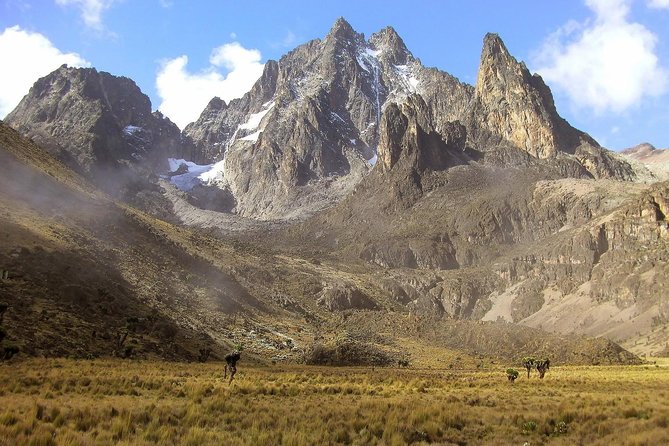
Mackinder Valley is a major visual reward. From here, you get broad views toward Mount Kenya’s main peaks. The combination of open ground, rock, high-altitude plants, and distant ice gives the route its character.
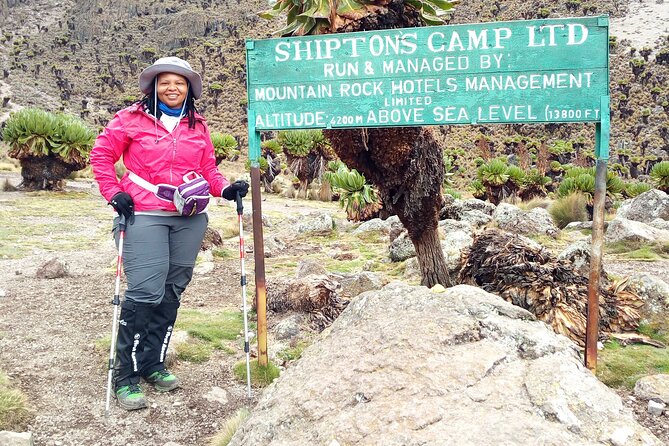
You finish at Shipton Camp, about 4,200 meters above sea level. Dinner and overnight accommodation are included. This is a large altitude gain from Nairobi in only two days, so you should not judge the day by distance alone. The thinner air can make a normal uphill walk feel slow.
The camp is also where the cold becomes more serious. One account of the trip specifically warns that the nights can be very cold. Take that advice literally. Warm layers, a proper hat, gloves, and clothing suitable for sleeping at high altitude are essential parts of your packing plan.
Day 3: The 3am climb to Point Lenana
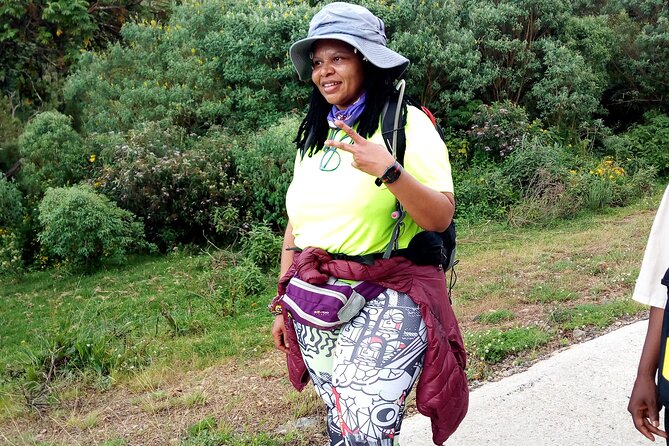
The summit morning begins at about 3am. You leave Shipton Camp and climb a steep, stony quarry that cuts through a cliff. The route passes toward the lower Hall Tarns before reaching Point Lenana after roughly three hours.
This is the toughest and most memorable section of the trek. The start in darkness makes the climb feel concentrated and demanding. You are walking on steep, rocky ground, often slowly, with the summit ahead and sunrise as the target.
You should not expect a gentle approach to the top. This is a high-altitude ascent on rough terrain, and the early start means you may be walking before your body feels fully awake. Your guide’s support matters here, particularly with pacing and route-finding.
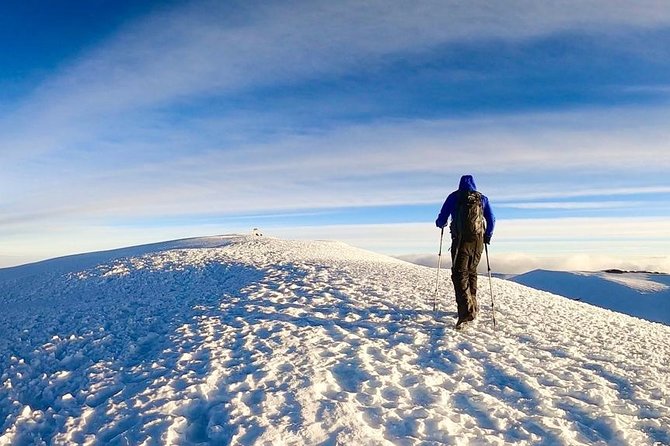
The payoff comes at Point Lenana near 6am. The summit offers sunrise views from 4,895 meters, with the mountain’s main peaks, glaciers, rocks, valleys, and distant country opening around you. The exact visibility depends on weather, but the timing is designed to give you the best chance of seeing the mountain in early light.
After the summit, you descend to Shipton Camp in about two hours for breakfast. You then continue downhill for another four hours to Old Moses Camp, where you have dinner and spend the night.
This is a long day. You climb before breakfast, descend to eat, and then continue walking for much of the day. The return to Old Moses Camp may feel almost as demanding as the summit push because tired legs have to handle several more hours of downhill travel.
Still, the itinerary has a practical logic. You do not need to remain at 4,200 meters after the summit, and the descent begins soon after your high point. You should be prepared for a demanding day rather than planning anything else around it.
A few more things to do around Mombasa worth a look
- Shimba Hills Day Safari & Sheldrick Falls Hike Private Tour
★ 4.5 · 21 reviews - Shimba Hills: Game Drive, Waterfall Hike, and Lunch
★ 4.8 · 9 reviews - Private Hiking Day Trip to Mt. Longonot from Nairobi
★ 5.0 · 58 reviews - NAIROBI:Ngong Hills Day Hike,Group Tour
★ 4.9 · 26 reviews
Day 4: Returning through the rainforest
After breakfast at Old Moses Camp, you walk downhill through rainforest for about two hours to meet the transport vehicle back to Nairobi.
Compared with the summit day, this is a short and straightforward finish. The return through the forest also gives you one last change in scenery, taking you from the high, exposed mountain back toward thicker vegetation.
The timing of the drive back to Nairobi is not specified, so you should avoid booking a tight onward connection or important evening plan. The trip includes hotel transfers, but you should confirm the exact pickup and drop-off arrangements before departure.
One practical point deserves attention: the experience information identifies Mombasa, Kenya, as the location, while the itinerary begins in Nairobi and includes a Nairobi hotel transfer. If you are staying in Mombasa, confirm the pickup plan before paying. The stated route and transport details clearly center on Nairobi.
What the support team adds to the trip
This is not a self-guided walk. A guide leads the route, while a cook and porters support the group. That arrangement has real value on a four-day mountain trip.
The guide handles the route and helps you keep moving through changing terrain. On summit morning, close guidance is especially useful because you start in darkness and tackle steep, stony ground. One account names a guide called Michael, while another describes a guide with long experience on Mount Kenya. You should confirm your assigned guide’s name and role before departure, since names and staff can change.
The cook and porters reduce the load you need to carry and make the camp routine easier. Meals are included, as are three nights of mountain accommodation. This means the $800 price is not simply paying for a guide and a permit-style walk. It covers the mountain support system, food, camp stays, and transfers.
The group limit of three is important here. A larger party can mean waiting, uneven walking speeds, and less direct contact with the guide. With only three people, you get a more personal arrangement, though the small group also means you may not have a large social crowd around camp.
Is $800 good value?
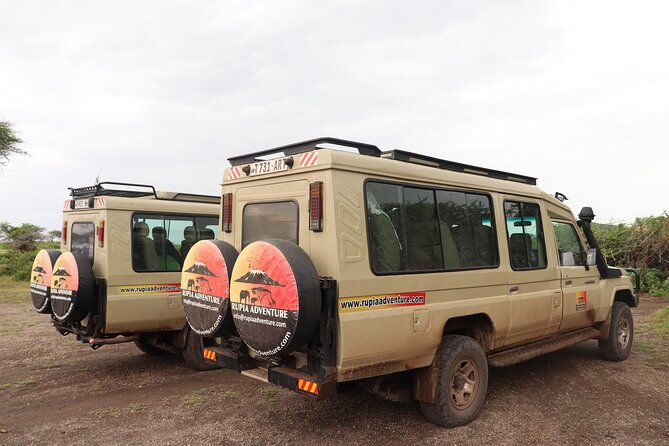
At $800 per person, this is not a bargain day hike. It is a four-day mountain package with a guide, cook, porters, meals, three nights of camp accommodation, and transfers from Nairobi.
I see the price as reasonable if you want a supported climb and do not want to arrange each part yourself. Organizing transport to Sirimon Gate, camp accommodation, food, guiding, and porters separately would take time and could create gaps in the schedule. The small group also adds value for people who prefer close support.
The price is less attractive if you already have mountain logistics arranged or if you want a more social group trip. With a maximum of three people, you pay for personal attention rather than a large shared operation.
Before booking, confirm exactly what the hotel transfer covers, where the camp accommodation is located, and what equipment you must bring. The supplied details confirm the main inclusions but do not provide a full equipment list.
Who should book this trek?
You should consider this trip if you:
- Are physically fit and comfortable with several hours of uphill and downhill walking
- Want to reach a major Mount Kenya summit without technical climbing
- Prefer a small group with a guide close by
- Value included meals, porters, camp accommodation, and transfers
- Can cope with a 3am start and a long summit day
- Have warm clothing for cold nights at high altitude
I would be cautious if you dislike early starts, struggle with steep rocky ground, or have not prepared for altitude. The phrase fit walker is important here. This is not presented as a casual mountain holiday.
The altitude also deserves honest attention. The route goes from 2,440 meters at Sirimon Gate to 4,895 meters at Point Lenana in a short period. You should walk at a steady pace, follow your guide’s advice, and tell the guide promptly if you feel unwell.
Booking, cancellation, and practical checks
You receive confirmation when you book. The experience normally books about 23 days ahead, so arranging it early makes sense if your Nairobi dates are fixed.
Cancellation is free up to 24 hours before the start time for a full refund. Inside 24 hours, the payment is not refunded, and changes are not accepted. The local start time controls the cutoff.
The trek depends on suitable weather and a minimum number of participants. If poor weather cancels the trip, or the minimum is not reached, you are offered another date or experience, or a full refund.
I would ask three questions before departure: where exactly is the Nairobi pickup, what personal mountain equipment is supplied, and how the camp sleeping arrangements work. The trip provides the main support, but the supplied details do not list every item you need to bring.
Should you book the four-day Mount Kenya trek?
Book it if Point Lenana is your goal and you want a guided, supported route with a very small group. The Sirimon approach offers varied scenery, the summit morning is properly timed for sunrise, and the included cook, porters, meals, camps, and transfers make the arrangement easier to manage.
Skip it if you want a relaxed walking holiday or if you are not ready for a steep 3am climb followed by a long descent. The high camps are cold, the altitude is serious, and Day 3 requires stamina.
For a fit walker who wants a direct Mount Kenya experience rather than a technical ascent, this is a focused and practical choice. Confirm the Nairobi logistics and packing requirements first, then book with confidence if you are ready for the mountain’s early mornings and hard-earned views.
FAQ
Where does the Mount Kenya trek start?
The itinerary begins with pickup and departure from Nairobi at about 7:30am. The experience information also lists Mombasa as the location, so confirm the exact pickup arrangement if you are staying outside Nairobi.
How long does the trek last?
The experience lasts four days and includes three nights of mountain camp accommodation.
What summit does the trek reach?
The route reaches Point Lenana, one of Mount Kenya’s three summits. Point Lenana is at 4,895 meters, or 16,059 feet.
Which route does the trek use?
The trek uses the Sirimon route. It passes through forest, heath, moorland, valleys, and rocky high-altitude terrain.
What time does the summit walk begin?
The summit attempt begins at about 3am on Day 3. You reach Point Lenana around 6am after roughly three hours of climbing.
Is food included?
Yes. Meals are included during the four-day trek, with dinner and overnight stays at Old Moses Camp and Shipton Camp as described in the schedule.
How many people can join the group?
The maximum group size is three people.
Can I cancel for a full refund?
You can cancel up to 24 hours before the experience start time for a full refund. Cancellations or changes made within 24 hours are not refunded or accepted.
More 4-Day Experiences in Mombasa
- 4 Days Tsavo West, Amboseli and Tsavo East National Park Safari
★ 5.0 · 30 reviews - 4 Days Safari from Mombasa to Amboseli and Tsavo West and East
★ 5.0 · 12 reviews - 4-Day Tsavo East West and Amboseli National Park from Mombasa
★ 4.0 · 5 reviews - 4 Days Safari Lake Nakuru NP Naivasha and Masai Mara
★ 5.0 · 132 reviews
Just added around Mombasa
- Tsavo East National Park: 2-Day Tour from Mombasa★ 3.9 · 5 reviews
- 1-Day Tsavo East Safari From Mombasa★ 5.0 · 3 reviews
- 4-Day Tsavo East West and Amboseli National Park from Mombasa★ 4.0 · 5 reviews
- Swahili Street Food Tour★ 5.0 · 7 reviews
- 4×4 Safari in Tsavo East National Park★ 5.0 · 4 reviews
- Fort Jesus Sound and Light show Mombasa★ 4.0 · 17 reviews
- Private Transfer from Mombasa★ 5.0 · 6 reviews
- Mombasa city tour, Fort Jesus and Haller Park★ 5.0 · 20 reviews
Mount Kenya & Highland Treks, compared.
Private Tour to Mount Longonot and Optional Boat Ride on Lake Naivasha
Read our review →
7-Days Kenya Safari Samburu, Aberdare, Lake Nakuru, & Maasai Mara
Read our review →
Private Half Day Hike to Ngong Hills from Nairobi
Read our review →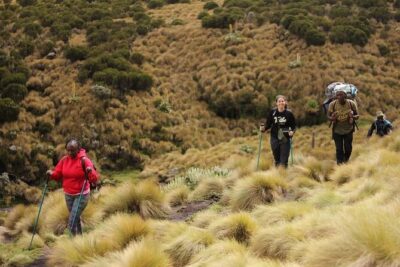
Browse the lists this tour appears in