
Reviewed · MASAI MARA SAFARIS
6 Days Safari to Samburu N/R, Aberdare N/P, Nakuru N/P and Maasai Mara N/R.
The rare Somali ostrich is the hook here, but this safari offers much more: four very different wildlife areas in six days. I like the sharp contrast between dry Samburu and forested Aberdare, and I like that the trip is private, so your group can work with its own guide rather than follow a large coach. The chance to see elephants crossing the Ewaso Nyiro River is another fine reason to consider it.
The main drawback is the pace. You cover a lot of Kenya by road, with several long transfers and early starts. The $4,000 price is also a serious commitment, so you should confirm exactly what it covers before paying.
Key points before you book
- Somali ostrich in Samburu: The reserve is one of the best parts of this route for unusual northern Kenyan wildlife, including Somali ostrich and reticulated giraffe.
- Four distinct wildlife settings: You move from dry river country to mountain forest, an alkaline lake, and open Maasai Mara plains.
- Private guiding: Only your own group takes part, with past guides including Simon and George.
- Strong rhino prospects at Lake Nakuru: The park visit focuses on white and black rhinos, endangered giraffes, gazelles, and flamingos.
- Two safari days in Maasai Mara: You get an afternoon arrival, a full game-drive day, and a final early-morning drive.
- Road travel is part of the experience: Farms, tea, coffee, wheat, roses, waterfalls, the Equator, and marathon training routes fill the spaces between parks.
Why Samburu gives this safari its character
Day one begins in Nairobi after breakfast, with a drive north toward Samburu. The road passes through productive farming country known for mangoes, pineapples, avocados, coffee, roses, wheat, and tea. This is useful context: Kenya is not simply a country of game parks. Much of the journey runs through working agricultural areas, and the changing crops help you see how quickly the country’s climate and altitude shift.
You cross the Equator, climb Mount Kenya to about 3,000 meters, then descend toward Samburu at roughly 800 meters. That change is not a small detail. It explains why the dry northern reserve feels so different from the cooler highlands you have just crossed.
Lunch is scheduled at Samburu Ashnil Camp, followed by an afternoon game drive at about 3:30 p.m. The main search is for African elephants and waterbucks, with a sunset view toward Brown Hill before returning around 6:30 p.m. The timing gives you a useful first look without trying to cram the whole reserve into one afternoon.
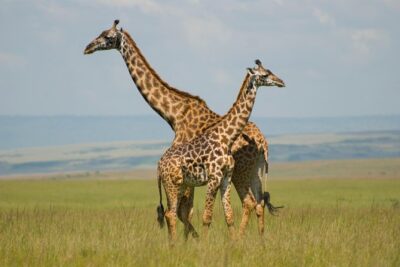
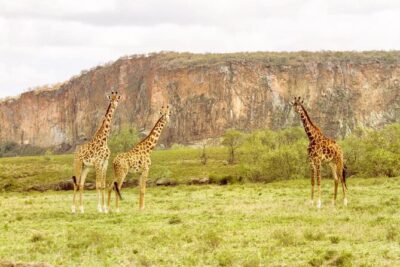
Samburu is the most distinctive stop on this route. Its dry vegetation and the Ewaso Nyiro River create a setting unlike the Mara. You might find reticulated giraffe, giraffe antelope, elephants, waterbucks, and the Somali ostrich, the elegant northern species that gives the trip its special photographic target.
The river crossing can be especially memorable. Elephants may move across the Ewaso Nyiro, the brown river that flows north through this part of Kenya. Wildlife sightings are never guaranteed, but the possibility of watching elephants cross water is one of the strongest reasons to accept the long drive to Samburu.
Other ways to reach the Mara from Nairobi:
- 3 Days Masai Mara Group Joining
★ 5.0 · 486 reviews - 5 Days Masai Mara, Lake Nakuru & Naivasha Budget Joining Safari
★ 5.0 · 229 reviews - 3 Days Gamedrive Safari In Masai Mara From Nairobi
★ 5.0 · 207 reviews
Aberdare after an early predator drive
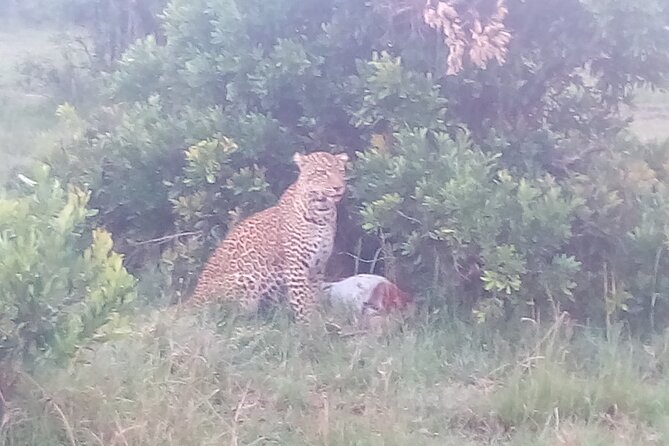
The second day starts early with a game drive while lions, cheetahs, and leopards are active. Early departures can be tiring, but they make sense on safari. The cooler hours are often when animals are moving, and the morning light is better for photographs than the harsh midday sun.
After breakfast, you leave for Aberdare National Park and stop for lunch at Outspan Hotel before continuing by game drive to Treetop Lodge. The schedule is compact, so this is not a leisurely day. You should expect time on the road, followed by a wildlife-focused arrival in the forest.
Aberdare changes the mood completely. Instead of Samburu’s dry open country, you enter natural forest with ebony, mahogany, bamboo, ficus, and olive trees. The animals are also different. Black-and-white colobus monkeys, forest syke monkeys, black rhinos, Defassa waterbucks, leopards, spotted hyenas, and the rare bongo are all listed as possible sightings.
The water point outside the lodge is the practical highlight. Animals come to drink, so you can watch from a fixed position rather than spending every moment in a moving vehicle. Elephants and buffaloes may compete near the water, while spotted hyenas may approach calves. That kind of close observation rewards patience.
Aberdare is also the stop most likely to test your expectations. Forest wildlife is harder to spot than animals on open plains. You might see less in a short period, but the forest setting gives the safari variety. If your priority is constant big-cat action, the Mara is the stronger part of the trip. If you want a less familiar habitat and the possibility of a bongo, Aberdare earns its place.
Lake Nakuru brings rhinos and a waterfall stop
After breakfast on day three, the route heads toward Lake Nakuru. A stop at Thompson’s Water Fall breaks up the drive, and the road passes maize, potato, and vegetable farms. You may also see Kenyan marathon champions training along the route, a small but memorable detail that adds life to a transfer day.
Lunch is planned at Lake Nakuru Lodge, followed by an afternoon game drive. The focus is on white and black rhinos, endangered giraffes, gazelles, and flamingos. A sunset beside the lake closes the day before dinner and overnight at the lodge.
Lake Nakuru is valuable because it adds two of Kenya’s most sought-after animals, black and white rhinos, to a route already focused on elephants and big cats. The presence of flamingos also gives the lake a different visual character from Samburu and Aberdare.
Keep your expectations measured. Flamingo numbers and animal locations can change, and the schedule allows only an afternoon in the park. Still, the stop is well judged within a six-day route. It breaks up the long journey between northern Kenya and the Maasai Mara while giving you a serious chance to see rhinos.
The long road to Maasai Mara
Day four begins with another early game drive at Lake Nakuru, when lions and leopards may still be active. The plan also includes sunrise views over the alkaline lake, with flamingos in the scene, followed by breakfast and a drive toward Maasai Mara with a picnic lunch.
The route passes through wheat and barley country before reaching the Mara area. The timing notes supplied for this day are not fully clear, with several different clock references appearing in the schedule. I would ask the operator to confirm the actual departure, park-entry, lunch, and camp check-in times before the trip.
On arrival, the first Mara game drive looks for elephants, common zebras, lions, and topi before check-in at Sekenani Camp. This is a useful arrival format. You do not lose the entire afternoon to camp formalities, and you get an immediate look at the reserve.
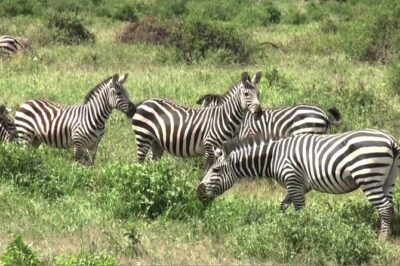
The Maasai Mara covers about 1,500 square kilometers, and its name refers to the Maasai people and the Maa language, while Mara means spotted. Its international fame comes from the annual movement of animals between the Serengeti in Tanzania and the Mara. The migration is seasonal, so you should not assume it will be happening during your dates. The Mara still has strong wildlife value outside migration periods.
Other Rift Valley lake trips from Nairobi:
- 4 Days Safari Lake Nakuru NP Naivasha and Masai Mara
★ 5.0 · 132 reviews - 5 Days Lake Naivasha, Lake Nakuru, & Masai Mara
★ 5.0 · 101 reviews - Full Day Lake Nakuru Park and optional boat ride on Lake Naivasha
★ 4.5 · 95 reviews - 4 Days Safari Adventure Masai Mara and Nakuru Park Group
★ 5.0 · 87 reviews
A full day among lions, cheetahs, and zebras
Day five is the central safari day: a full-day game drive with a picnic lunch. You leave the camp for about eight hours and return around 6 p.m. That long block gives your guide time to search instead of rushing from one sighting to the next.
The target list is broad: lions, cheetahs, zebras, leopards, crocodiles, giraffes, and elephants. The open Mara setting is well suited to spotting large animals, though the quality of the day still depends on animal movements, weather, and your guide’s decisions.
I like the picnic format here because it keeps you in the reserve during the best part of the day. Returning to camp for lunch would cost time and may mean missing an unexpected sighting. The tradeoff is comfort. An eight-hour vehicle outing can feel long, particularly after several early mornings and road transfers.
Your private arrangement matters most on a day like this. A guide can respond to your interests, spend longer with a pride of lions, or move on if you have already had enough time at a sighting. Past departures have included guides called Simon and George. The experience described with George involved animals coming very close to the vehicle, with the guide encouraging the group to follow his instructions. That is sound safari advice: stay calm, remain inside the vehicle unless told otherwise, and let the guide manage the distance.
The final sunrise and return to Nairobi
Day six starts with an early game drive in search of lions and cheetahs. Sunrise silhouettes with animals on the horizon can be a fine final scene, especially after the longer game drive the day before.
You return for breakfast, leave at about 10 a.m., and stop for lunch on the road before continuing to Nairobi. The trip ends at your residence or with a transfer to Jomo Kenyatta International Airport. If you are flying that day, confirm the expected arrival time and leave a generous buffer. The drive from the Mara can be lengthy, and road conditions can affect the schedule.
This final morning is better than simply waking up and heading straight back. You get one last chance to see active predators, while the return route gives you time to process the trip rather than ending it abruptly.
What the $4,000 price means
At $4,000 per person, this safari sits in the expensive category. The private format helps explain part of the cost, as does the six-day route through four major wildlife areas. You are paying for a dedicated vehicle and guide arrangement, extensive road transport, several park visits, accommodation, meals, and the planning needed to connect distant regions, but you should confirm each item before booking because the supplied details do not spell out the full package.
The route offers strong value if you want variety in a short period. Samburu, Aberdare, Nakuru, and Maasai Mara do not feel interchangeable, and you get specific wildlife goals at each stop. The value is weaker if you want a slow safari with long stays in one reserve. Much of this trip is spent moving between parks.
A private trip can also be good value for families or a small group with shared interests. You are not paying for a general departure with strangers, and the guide can shape the day around photography, predators, elephants, or rhinos. Ask about vehicle type, the number of people in your group, accommodation standards, park fees, meals, and whether airport transfer is included.
Physical demands, timing, and practical details
The stated fitness requirement is moderate. You should be comfortable with early mornings, long vehicle rides, repeated transfers, and full game-drive days. The schedule includes a five-hour activity on day one, three hours on day two, three hours on day three, four hours on day four, eight hours on day five, and five hours on day six.
Pickup is offered, and the booking uses a mobile ticket. Confirmation is provided at booking. This is a private activity, so only your group participates.
The cancellation terms are useful if your plans may change. You can receive a full refund if you cancel at least 24 hours before the local start time. Cancellations or changes made inside that 24-hour window are not accepted for a refund.
Who should book this six-day safari?
I would recommend it to someone visiting Kenya for the first time who wants a broad sample of wildlife regions without arranging separate trips. It suits a small private group that values flexibility and wants both unusual animals, such as Somali ostrich and reticulated giraffe, and classic targets, such as lions, elephants, rhinos, zebras, and cheetahs.
It also suits photographers who want varied subjects. Samburu offers dry-country species and river scenes, Aberdare adds forest wildlife, Nakuru brings rhinos and flamingos, and the Mara provides open views of predators and grazing animals.
I would hesitate if you dislike long drives, need a relaxed pace, or want a trip built around one reserve. The schedule is ambitious. It gives you more range, but less time to settle into each place.
Should you book it?
Book this safari if variety and private guiding matter more to you than an easy pace. Samburu is the standout for rare northern species and the possibility of elephants crossing the Ewaso Nyiro, while Lake Nakuru and Maasai Mara provide strong classic safari goals.
Before committing $4,000, get the daily timing and inclusions in writing. Pay special attention to the unclear clock references on day four and the exact return time from Maasai Mara on day six. If those details suit your schedule, this is a bold, wildlife-heavy route with enough contrasts to feel like more than a standard Mara visit.
FAQ
How long is the safari?
The safari lasts approximately six days.
Where does the safari begin?
It begins in Nairobi, Kenya.
Where does the safari end?
It ends at your Nairobi residence or with a transfer to Jomo Kenyatta International Airport.
Which parks and reserves are included?
The route includes Samburu National Reserve, Aberdare National Park, Lake Nakuru National Park, and Maasai Mara National Reserve.
Is this a private tour?
Yes. Only your group participates.
Is pickup available?
Yes, pickup is offered.
What animals might I see?
The planned searches include Somali ostrich, elephants, waterbucks, reticulated giraffe, lions, cheetahs, leopards, black and white rhinos, giraffes, gazelles, flamingos, zebras, topi, crocodiles, and monkeys.
Can I cancel for a full refund?
Yes, if you cancel at least 24 hours before the local start time. Cancellations and changes made less than 24 hours before the start are not accepted for a refund.
More 6-Day Experiences in Nairobi
- 6-Day Maasai Mara, Lake Nakuru and Amboseli Safari
★ 5.0 · 47 reviews - 6 Days Masai Mara, Lake Nakuru & Amboseli-Ultimate Kenyan Safari
★ 4.5 · 35 reviews - 6-Day Private Landcruiser Safari to Masai Mara, Nakuru & Amboseli
★ 5.0 · 35 reviews - 6 Days Kenya Adventure Wildlife Safari
★ 5.0 · 26 reviews
More highland treks from Nairobi
- Climbing Mount Kenya 5 Days Via Chogoria Route
★ 5.0 · 44 reviews - From Nairobi: TRIP TO MOUNT LONGONOT NATIONAL PARK
★ 4.9 · 41 reviews - Samburu/ Aberdare/ Lake Nakuru/ Masai Mara 7 Days Safari
★ 5.0 · 37 reviews - Private Tour to Mount Longonot and Optional Boat Ride on Lake Naivasha
★ 5.0 · 35 reviews
Just added around Nairobi
- Visit kibera Slum the chocolate city★ 4.8 · 3 reviews
- 3 days maasai mara migration safari★ 4.5 · 7 reviews
- Maasai Mara Day Trip★ 5.0 · 15 reviews
- 4 Days Tour Landcruiser in Masai Mara and Lake Nakuru★ 5.0 · 10 reviews
- 4 Days Safari to Lake Nakuru N/P and Maasai Mara N/R★ 5.0 · 18 reviews
- Day Tour to Nairobi national park, Elephants, and Giraffe Center★ 3.5 · 8 reviews
- Wildebeest Migration in Masai Mara and Sightseeing 4 Days Tour★ 4.5 · 6 reviews
- Vegans special safari★ 4.5 · 4 reviews
Masai Mara Safaris, compared.
5 Days Masai Mara, Lake Nakuru & Naivasha Budget Joining Safari
Read our review →
3 Days Gamedrive Safari In Masai Mara From Nairobi
Read our review →
3 days group joining safari to Maasai Mara with a Land Cruiser Jeep
Read our review →Browse the lists this tour appears in