
Reviewed · CITY SIGHTSEEING TOURS
Mombasa City Tour
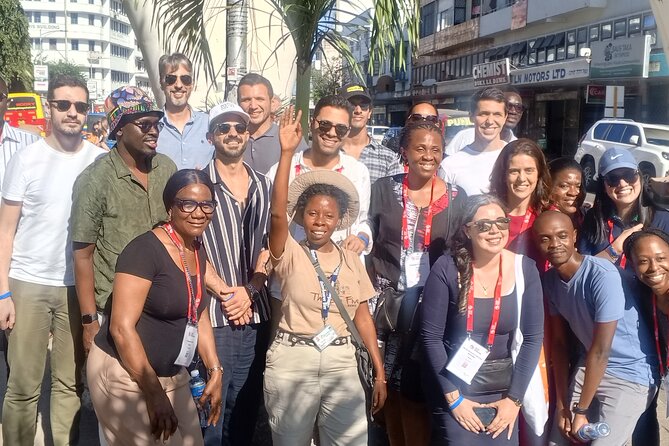
Mombasa’s story is written in coral-stone walls, narrow lanes, carved doors, spice stalls, and the heavy fortifications of Fort Jesus. This four-hour tour gives you a clear first look at the city, with a guide such as Antony or Anthony explaining how Arab, Portuguese, British, Swahili, Hindu, and modern Kenyan influences meet here. I especially like the tuk-tuk rides, which make moving between sights part of the experience, and the chance to see both famous landmarks and everyday city life. The visit to Fort Jesus and Old Town offers far more context than a quick photo stop.
I also like that guides have been praised for patience, clear explanations, and practical help beyond the set route. Antony has helped visitors with restaurant ideas, evening plans, and other Mombasa activities. The main drawback is that the $45 price does not include Fort Jesus admission, taxes, or transport to the Akamba Handicraft Cooperative, about 8.9 kilometers from central Mombasa. You should also confirm exactly which stops are included on your date.
Key points to know before booking
- Fort Jesus gives the tour its historical anchor: You get the city’s most important landmark, though the entrance fee is extra.
- Old Town is best explored on foot: Narrow lanes, Swahili houses, the Old Port, markets, and spice stalls reward a slow pace.
- Tuk-tuks make the city tour memorable: Rides within Mombasa are included, and the open-sided vehicles suit short hops through town.
- Antony and Anthony receive repeated praise: Expect a guide-led experience focused on history, culture, and practical local advice.
- Akamba Handicraft needs extra planning: Transport to the wood-carver market is not included in the $45 price.
- The tour suits a first day in Mombasa: It helps you understand the city before choosing beaches, parks, food, or other excursions.
Fort Jesus sets the tone for Mombasa
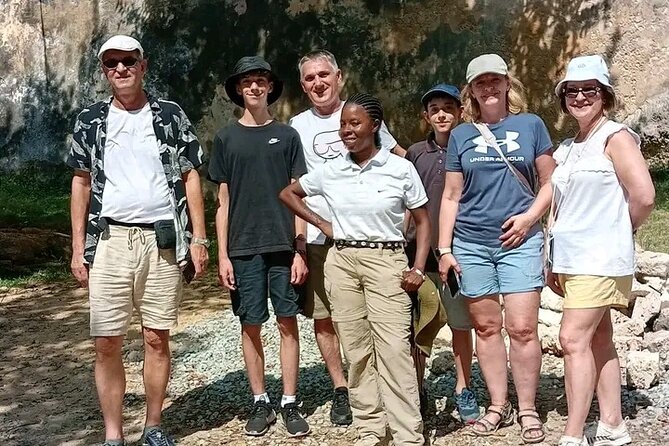
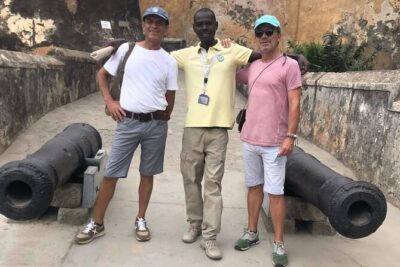
Starting at Fort Jesus makes sense. Built by the Portuguese in the 16th century to protect their trade route, the fort is not simply a photogenic pile of thick walls. It is the place where Mombasa’s changing control, trade, conflict, and coastal connections begin to make sense.
Inside, the museum presents artifacts and historical displays tied to the fort and the city’s colonial past. From the battlements, you can look toward the city and the Indian Ocean. The views are useful, but the real value comes from having a guide explain what you are seeing and why the fort mattered.
Antony is repeatedly singled out for explaining the fort in detail and answering questions before you even enter. That matters here. Without context, a fort can become a quick circuit of rooms and stone walls. With a good guide, the site becomes a lesson in Mombasa’s place along Indian Ocean trade routes.
Plan for some walking and uneven surfaces. The tour is described as suitable for most participants, but Fort Jesus is still a historic site rather than a modern museum built for effortless movement. Wear sensible shoes, carry the supplied water, and leave room in your four-hour schedule for the guide to explain the site properly.
The entrance fee is not included. That is the clearest extra cost attached to the main attraction, so budget for it before you arrive. The meeting point is Fort Jesus Museum on Nkurumah Road, and the activity ends back there.
More city-side trips in Mombasa:
- Mombasa: Tusks, Fort Jesus, Old Town, Beach and City Tour
★ 4.7 · 137 reviews - Mombasa: Private City Tour with Fort Jesus & Haller Park
★ 4.6 · 24 reviews - Mombasa Half Day City Tour
★ 4.5 · 23 reviews
Old Town reveals the city behind the landmarks
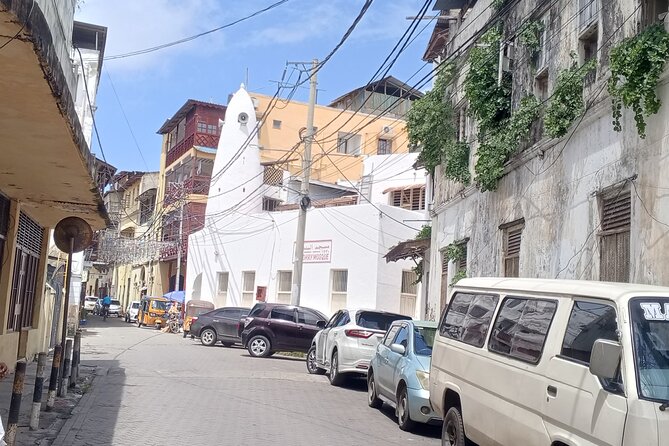
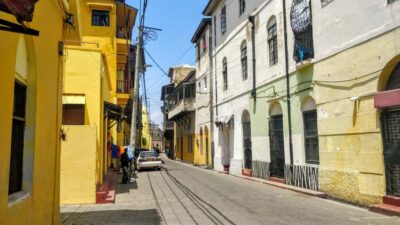
After Fort Jesus, the Old Town is where Mombasa starts to feel less like a checklist of sights and more like a living place. Its narrow streets are lined with traditional Swahili architecture, old buildings, carved details, and signs of Arab, Portuguese, and British influence.
The Old Port and Swahili houses help show how the city grew around the coast. This is also the part of the tour where a guide can point out details you might walk past alone. A doorway, market lane, temple, or building facade can carry more meaning when someone explains its place in Mombasa’s past.
I would give this section your full attention rather than treating it as a short transfer between major stops. The city tour is at its best when you slow down, ask questions, and let the guide connect the architecture to local culture.
The area also introduces the darker side of Mombasa’s past. The tour includes discussion of a former slave market and the systems of trade and exploitation connected to the coast. This is not a light sightseeing stop, but it is important. A good city tour should not present only attractive buildings and pleasant shopping. It should help you understand the forces that shaped the city, including the painful parts.
The narrow streets may be busy and the route can involve walking in warm conditions. The tuk-tuk rides help break up the walking, but this is not a ride-only tour. You should be ready to get out, walk, listen, and look closely.
Tuk-tuks turn transport into part of the outing
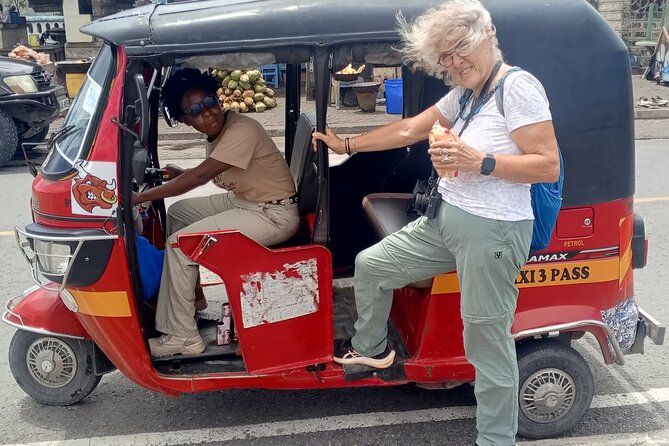
The included tuk-tuk ride is one of the tour’s most appealing details. These small three-wheeled vehicles are practical for short city journeys, but they also give you a close view of Mombasa as you move between stops.
You are not sealed inside a large coach. The ride lets you see street scenes at a slower pace, and it adds a distinctly local feel to the four-hour route. One group enjoyed moving around town in a convoy of tuk-tuks, which suggests that larger bookings may involve several vehicles.
The vehicles are useful, not luxurious. Expect a simple urban ride rather than an air-conditioned sightseeing bus. That is part of the charm, though people who prefer quiet, private transport should keep it in mind.
The tour includes tuk-tuk transport within the city, but transport to Akamba Handicraft is excluded. That market is about 8.9 kilometers from Mombasa’s central business district, so do not assume the included city rides cover every stop. Ask before booking if the wood-carver market is central to your plans.
Pickup within Mombasa is offered at no extra cost. The stated starting point remains Fort Jesus Museum, but the operator has also arranged pickups from locations such as Mombasa Terminus and helped with hotel drop-off or check-in before beginning. That flexibility appears useful, but you should confirm your exact pickup plan in advance rather than treating it as automatic.
The Mombasa Tusks make a quick city landmark
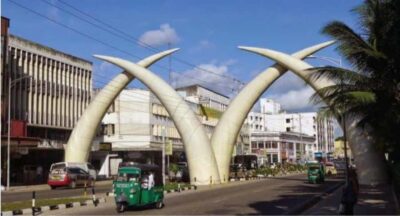
The Mombasa Tusks are a pair of giant tusk-shaped structures marking an important city entrance. You generally drive past them rather than spend a long period at the site.
That makes this a brief stop, but it is still worthwhile for first-time visitors. The tusks are one of Mombasa’s most recognizable urban symbols, and they help connect the older coastal city with its modern streets.
This is a good example of why the tour works better as an overview than as a series of long museum visits. You get a sense of how the city is arranged, where the main roads run, and how historic Mombasa meets the newer commercial center.
If you want a long photo session at every landmark, four hours may feel tight. If you want an efficient introduction with short visits and plenty of explanation, the format makes sense.
Same base, a completely different sort of day:
- Walking Tour Through Old Town Mombasa and Fort Jesus
★ 5.0 · 393 reviews - Mombasa: Kisite Park Private Cruise with Breakfast and Lunch
★ 4.7 · 181 reviews - Half-Day Scenic Bike Tour
★ 5.0 · 75 reviews - 2 Days Tsavo East National Park Tour From Mombasa/Diani (1 Night)
★ 5.0 · 50 reviews
Spice markets show Mombasa through its food
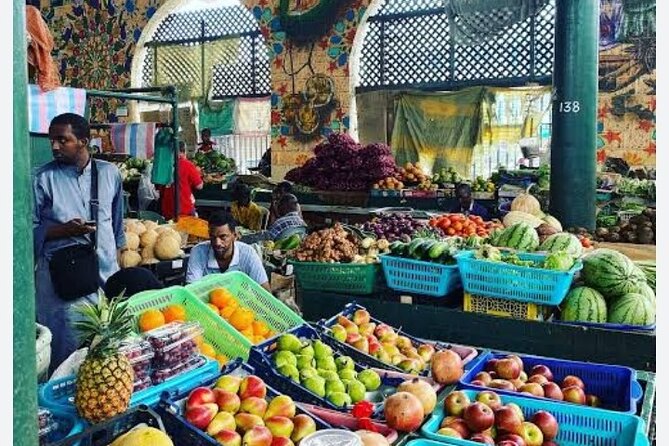
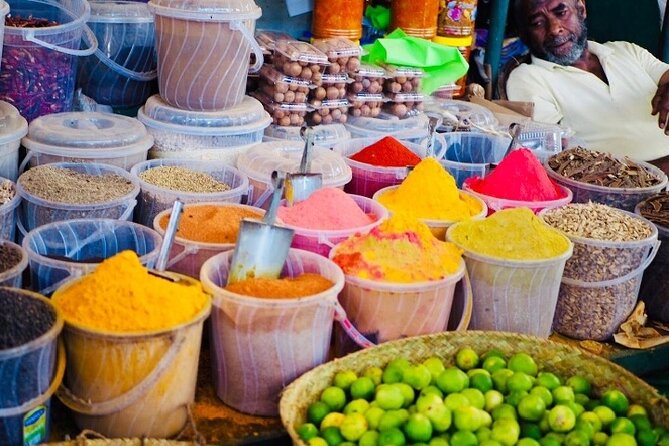
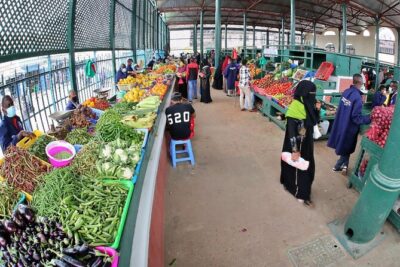
The spice market brings the tour back to daily life. Mombasa’s coastal cooking uses aromatic spices, and a market visit gives you a chance to see and learn about the ingredients rather than only hearing about them in a history lesson.
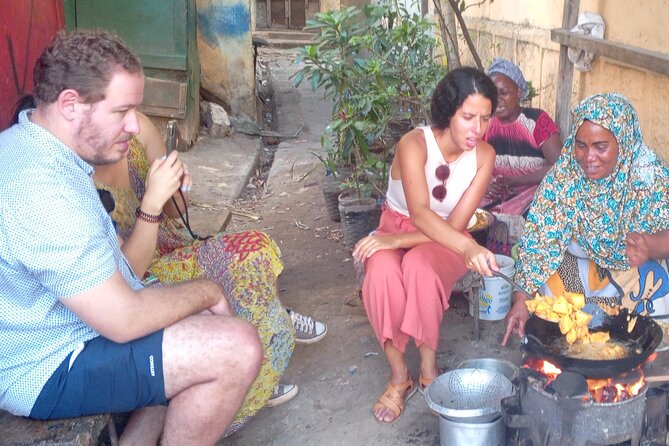
The market is also a useful place to ask questions. You can learn how spices connect to Swahili cuisine and to the wider trading links that shaped the coast. If you enjoy food, this may become one of the most memorable parts of the outing.
The route can also include Mackinnon Market and other market areas. These are working places, not staged displays built only for visitors. That means the experience may feel more immediate, but it also calls for ordinary market manners: ask before photographing people, keep your belongings secure, and take your time when looking at goods.
The shopping side is optional in spirit, even if stops are part of the route. You do not need to buy something at every stall. If you want souvenirs, compare prices and choose items that are easy to pack.
Akamba wood carvings require a separate transport plan
The Akamba wood carver market is promoted as a place to find souvenirs, especially carved wooden pieces. It can be a useful addition if you want something connected to Kenyan craft traditions rather than a generic city memento.
The important practical detail is distance. Akamba Handicraft is approximately 8.9 kilometers from Mombasa’s central business district, and transport there is not included. The tour price covers the guided city experience, not every transfer beyond the central route.
That exclusion can affect the value calculation. At $45 per person, the tour is reasonable for a guided four-hour introduction with city transport and water. Once you add Fort Jesus admission, taxes, and a separate ride to Akamba, the total cost rises. I would book it for the guide and the historical structure of the day, not simply as a cheap shopping transfer.
Ask whether Akamba is part of your exact departure plan and what transport will cost. The advertised route and the stops described by past participants can vary, with some itineraries also including a Hindu temple, Mama Ngina Waterfront, or other city sights.
Hindu, Swahili, and modern Mombasa meet on the route
The city’s cultural range is one of the strongest reasons to take a guided tour. Along with Fort Jesus, Old Town, markets, and the tusks, the route has included the Swaminarayan Temple and Mama Ngina Waterfront.
These stops help prevent a narrow view of Mombasa. The city is not only Portuguese fortifications and old Swahili lanes. Hindu cultural landmarks, coastal neighborhoods, markets, waterfront spaces, and modern roads all belong to the picture.
The exact balance depends on traffic, walking pace, shopping time, and the guide’s plan for your group. A private or small booking may allow more flexibility, while a larger group may need to keep to a tighter schedule. The stated maximum for the small-group tour is 20 people, which is a reasonable size for questions and walking through Old Town.
The general booking information also uses a much larger maximum number for the activity, so I would confirm the expected group size if that matters to you. The tour is presented as a small-group experience, but clear confirmation is always wise.
Guides make the difference
The strongest part of this experience is the guide. Antony and Anthony are the names most often associated with it, and the descriptions of their work are consistent: clear history, patience, good communication, care with timing, and willingness to answer questions.
Antony is also praised for not rushing people through the stops. That is important at Fort Jesus and in Old Town, where the value comes from explanation. He has also offered suggestions for Haller Park, snorkeling at Wasini, food, nightlife, and other practical plans around Mombasa.
You should still tell the guide what interests you. If you care most about architecture, ask for more detail on Swahili houses and Old Town. If you prefer food, spend more time at the spice market. If you want souvenirs, clarify the Akamba transfer before setting out.
A guide cannot turn four hours into a full study of Mombasa. The best use of the time is to gain a clear framework, then explore further on your own or book another activity with better direction.
Is $45 a fair price?
At $45 per person, I consider this a fair price for a guided overview, especially if you are staying in Mombasa and want help getting oriented. The package includes a certified licensed guide, tuk-tuk rides within the city, a bottle of water, and pickup within Mombasa at no extra charge.
The value rests less in the vehicle and more in the interpretation. You are paying for a route that links Fort Jesus, Old Town, markets, monuments, and cultural sites, plus someone who can explain what connects them.
The exclusions are worth noting:
- Fort Jesus entrance fee
- All fees and taxes
- Transport to the Fort Jesus meeting point
- Transport to Akamba Handicraft
- Pickup from Diani, listed at an additional $20 per person, with the amount varying by group size
If you are staying in Diani, the extra pickup fee changes the calculation. If you are already in central Mombasa, the price is easier to justify.
Free cancellation is available up to 24 hours before the start time for a full refund. Cancellations or changes within 24 hours are not refunded, and poor weather may lead to a new date or a full refund. Those terms are reasonable, but you should watch the local cut-off time.
Who should book this Mombasa city tour?
I would recommend it for a first visit, a short stay, a cruise stop, or anyone who wants historical context before exploring alone. It suits people who enjoy walking, asking questions, local markets, and a mix of major sights and ordinary city scenes.
It is also a good choice if you want help planning the rest of your time. The guides have offered practical suggestions for food, nightlife, Haller Park, and Wasini snorkeling, which can save you from guessing what to do next.
I would hesitate if you want a private, slow-paced museum tour with every cost included. The four-hour format covers a lot, but some stops are brief, and extra charges apply. You should also clarify the precise route, especially if Fort Jesus admission or Akamba Handicraft is important to you.
Should you book it?
Book this tour if you want a well-organized introduction to Mombasa with a strong history focus and easy movement by tuk-tuk. Fort Jesus, Old Town, the spice market, the Mombasa Tusks, and the city’s cultural variety give you a useful first picture, while Antony or Anthony can add the detail that maps and guidebooks cannot.
Before paying, confirm the pickup location, group size, Fort Jesus fee, and whether Akamba transport is included on your date. If those details suit your plans, this is a practical way to get your bearings and see why Mombasa is more than a beach stop.
FAQ
How long does the Mombasa City Tour last?
The tour lasts approximately four hours.
Where does the tour start and end?
It starts at Fort Jesus Museum on Nkurumah Road in Mombasa and ends back at the meeting point.
Is pickup included?
Pickup within Mombasa is offered at no extra cost. Pickup from Diani costs an additional $20 per person, with the amount varying by group size.
Is Fort Jesus admission included?
No. The Fort Jesus entrance fee is not included in the tour price.
Is transport to Akamba Handicraft included?
No. Transport to Akamba Handicraft is excluded. The market is approximately 8.9 kilometers from Mombasa’s central business district.
What happens if I cancel?
You can receive a full refund if you cancel at least 24 hours before the start time. Cancellations or changes made within 24 hours are not refunded, and poor weather may result in a different date or a full refund.
Just added around Mombasa
- MOMBASA:FortJesus,OldTown,SpiceMarket, Shiva Temple DayTour.★ 4.9 · 11 reviews
- Mombasa:Street food Experience★ 4.7 · 14 reviews
- Mombasa Tour by Ghalib★ 4.8 · 9 reviews
- Mombasa: Wasini Dolphin Tour★ 3.2 · 3 reviews
- MOMBASA:FortJesus,OldCity,GiraffeOstrich,Oryx,Eland,WildTour★ 4.8 · 5 reviews
- Mombasa Old Town Walking Tour★ 4.8 · 4 reviews
- Mombasa: Historical Guided city tour. Old town, Fort Jesus★ 4.2 · 3 reviews
- Mombasa City Tour,Fortjesus,Oldtown,Tusks and Spice Market.★ 4.8 · 19 reviews
City Sightseeing Tours, compared.
Tusks, Fort Jesus, Old Town, Beach and City Tour
Read our review →
Nairobi Cultural and Historical City Tour with a Local
Read our review →
Private City Tour with Fort Jesus & Haller Park
Read our review →
Mombasa Half-Day City Tour with Fort Jesus and Haller Park
Read our review →Browse the lists this tour appears in