
Reviewed · GIRAFFE CENTRE & ELEPHANT ORPHANAGE
Elephant Orphanage,Giraffe Center&Karen Blixxen Day TripTour
The most memorable part of this Nairobi outing is the chance to watch rescued baby elephants gulp milk from giant bottles, then see giraffes lean down for food at the Giraffe Center. You get two close animal encounters, plus a look at Karen Blixen’s former home and a Kenyan craft workshop in one day.
I like the personal elephant stories and the chance to learn about giraffe behavior while feeding these tall, gentle animals. I also like the practical hotel pickup, bottled water, English-speaking guide, and open-roof safari van. The main catch is cost: the advertised $35 does not include the listed admission and conservation fees, which can add a substantial amount.
Key points to know before booking
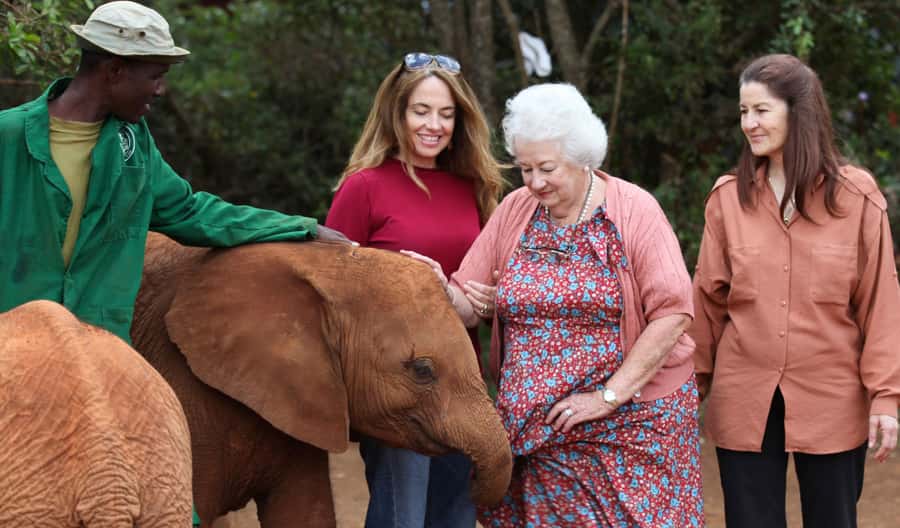
- Baby elephants are fed by hand: You watch the youngest animals take milk from keepers, then see older calves manage large bottles with their trunks.
- Giraffes come close at the feeding platform: The Giraffe Center combines feeding with lessons about giraffe traits, behavior, and conservation.
- Four very different stops fill the day: Wildlife, literary history, handmade crafts, and cultural shopping give the tour more range than a simple animal visit.
- The $35 headline price is not the final cost: Listed extras include $20 for the elephant center, $15 for the Giraffe Center, $12 for Karen Blixen Museum, and a $45 conservation fee payable by card.
- Central Nairobi pickup is included: Pickup and drop-off are available in Nairobi County, Lavington, Haile Selassie Avenue, Kileleshwa, Westlands, and Kilimani.
- The schedule can stretch: The stated duration ranges from three to eight hours, so allow room for traffic, stop length, and your chosen activities.
Why this Nairobi combination works
Nairobi has a rare advantage: you can reach wildlife and major cultural sights without leaving the city for a full safari. This tour uses that advantage well. It links the David Sheldrick Wildlife Trust, the Giraffe Center, Karen Blixen Museum, and a bead factory in one outing.
The stops are not all the same sort of attraction, and that helps. The elephants give you an emotional conservation story. The giraffes provide the most direct animal contact. Karen Blixen’s house adds a historical and literary angle, while the bead workshop gives you a chance to see handmade Kenyan goods.
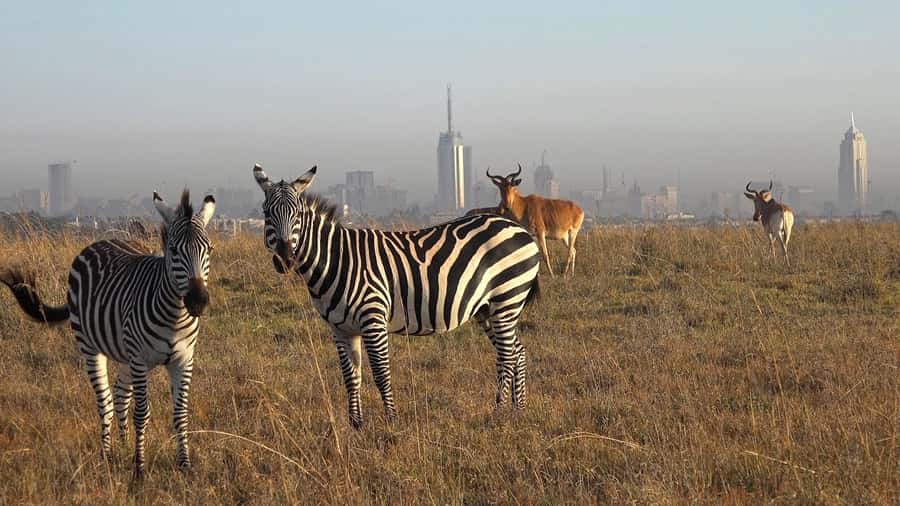
I would think of this as a city tour with wildlife rather than a replacement for a national park safari. You will not spend the day searching for lions, elephants in the wild, or large herds. Instead, you get a focused look at rescued animals and Nairobi’s Karen district, with less time in the open countryside.
The arrangement suits you best if this is your first time in Nairobi, you have only one free day, or you want an easy introduction before a longer Kenya trip. It also works well for families and anyone who prefers a guided outing with hotel transport.
More animal sanctuaries around Maasai Mara:
- Giraffe Center, Elephant Orphanage, Beads Center & Bomas of Kenya Tour Nairobi
★ 5.0 · 95 reviews - Giraffe center, Elephant Orphanage and Beads Center
★ 5.0 · 34 reviews - Nairobi: National Park & Optional Elephants & Giraffe Center
★ 4.8 · 874 reviews
Meeting your guide in central Nairobi
Pickup is offered from Nairobi County and several central neighborhoods, including Lavington, Kileleshwa, Westlands, Kilimani, and the Haile Selassie Avenue area. Confirm your exact pickup point when booking, since traffic and hotel access can affect the morning schedule.
Transport is by open-roof safari van. That gives you better views along the way and a more safari-like feel than a standard closed car, though it also means you should prepare for sun and changing weather. Bottled water is included, and the tour is conducted in English.
A small-group option is available. That matters at the animal stops, where a smaller group generally makes it easier to hear the guide and find a good viewing position. The tour can run from three to eight hours, a wide range that likely reflects the route, traffic, stop choices, and time spent shopping or eating.
One practical point deserves attention: the posted information gives a $35 per-person tour price, but the listed admissions are separate. If you visit every paid attraction, the stated charges are $20 for the baby elephant center, $15 for the Giraffe Center, and $12 for Karen Blixen Museum. A $45 conservation fee, payable by card, is also listed.
That means the possible total is much higher than $35. Ask the operator exactly which conservation charge applies to your booking and what is included before you pay. The low base price can be useful, but only if you compare the full cost.
Meeting the rescued elephants at David Sheldrick Wildlife Trust
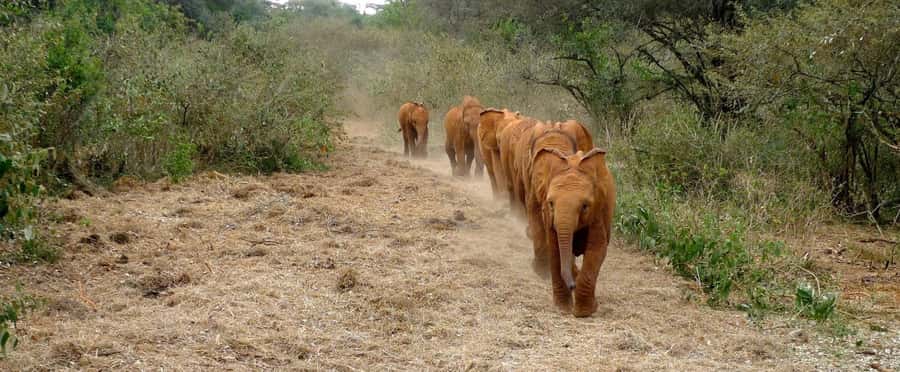
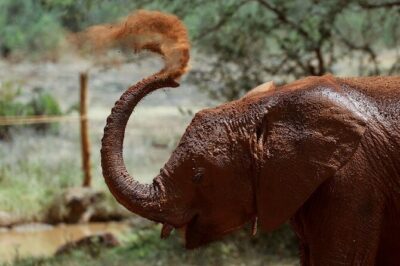
The elephant stop is the emotional center of the day. At the David Sheldrick Wildlife Trust, keepers feed rescued baby elephants with milk and explain each animal’s personal story.
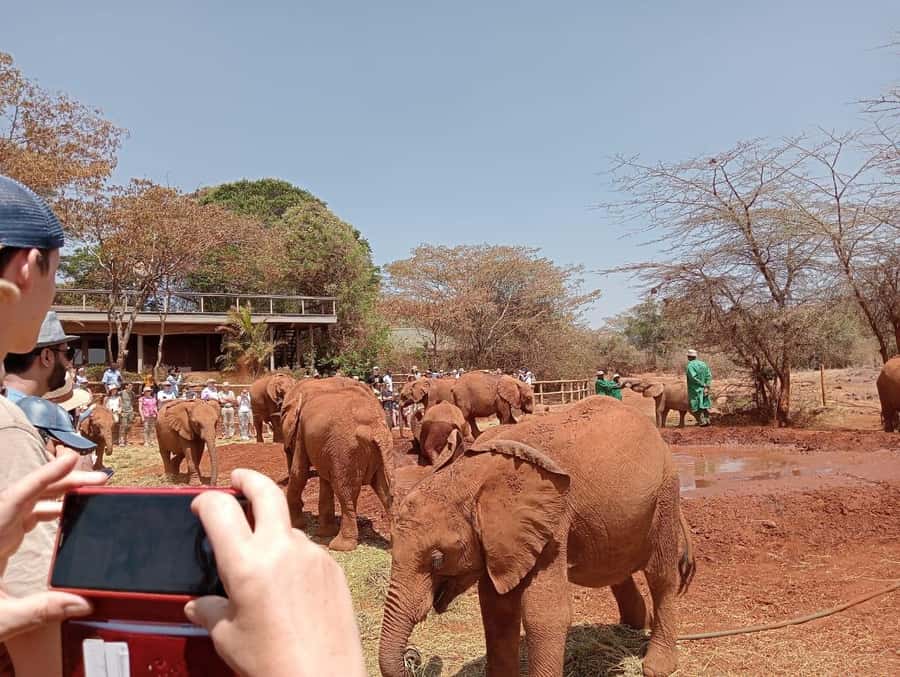
The youngest elephants are brought out first. You can watch them drink, play in the water, and make the noisy gargling sounds that give the feeding session much of its charm. The presentation is not just a photo opportunity. It explains that each calf has a particular background and is receiving care from the trust.
Then come the two and three-year-old elephants. Some are old enough to feed themselves, so they hold large milk bottles in their trunks and work through several gallons of milk. This is a wonderfully clear way to see how quickly the animals grow and how their trunks become useful feeding tools.
I like this stop because the keepers connect the animals to individual stories rather than treating them as a collection of cute babies. You get a short lesson in rescue and care while watching lively behavior at close range.
The listed visit is about one hour, including a guided tour and shopping. If your main reason for booking is the elephants, pay attention to the start time and schedule. The feeding session is the key event, and arriving at the wrong time would weaken the whole visit.
Admission is listed separately at $20, with guaranteed entry included in the tour description. Since the conservation fee is also listed separately, check how those charges are collected. Bring a card for the stated $45 conservation payment.
Feeding giraffes at the Giraffe Center
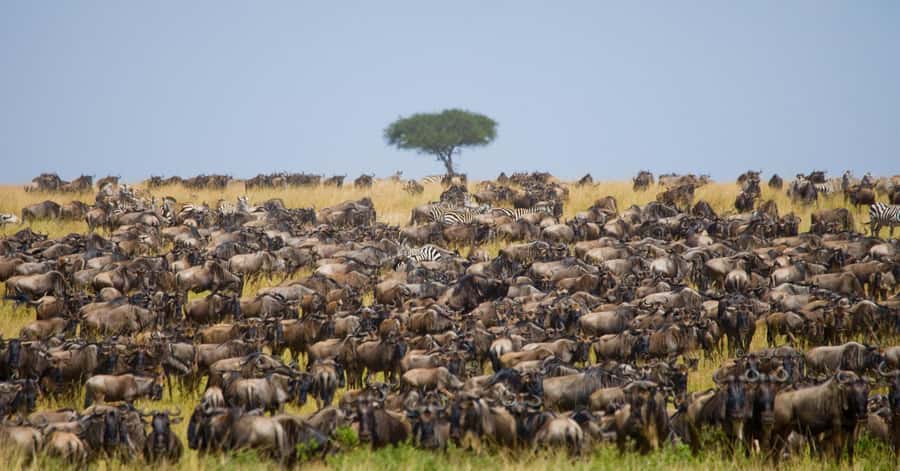
At the Giraffe Center, giraffes live in a semi-wild setting and come close to the feeding area. You learn about their behavior, physical traits, and conservation work, then get the chance to feed them.
This is a more hands-on stop than the elephant visit. The giraffes’ height makes the encounter memorable, and the feeding platform gives you a clear view of their long necks, faces, and tongues. You are not simply watching animals behind a barrier. You are taking part in a guided encounter designed to teach you how the animals behave.
The visit is listed at about 30 minutes in the schedule, though the overall tour may allow more time depending on traffic and the day’s arrangement. That is enough for a short introduction and feeding session, but not a long wildlife visit.
The Giraffe Center admission is listed as $15. The tour includes guaranteed entry, but the entrance fee is not included in the $35 price. If you are deciding which paid stop matters most, the Giraffe Center is the most direct choice for hands-on animal contact, while the elephant center offers the stronger rescue story.
Same base, a completely different sort of day:
- From Nairobi: 3 Days, 2 Nights Maasai Mara Group Safari
★ 4.5 · 394 reviews - Masai Mara 3 Day Safari | Private 4WD Jeep Tour
★ 5.0 · 103 reviews - Lake Nakuru, Naivasha & Masai Mara 4 Days Private Jeep Safari
★ 5.0 · 72 reviews - African Wildlife & Nature – 5 Kenya national parks – 6 day Jeep Safari
★ 5.0 · 60 reviews
Karen Blixen’s house and the Out of Africa connection
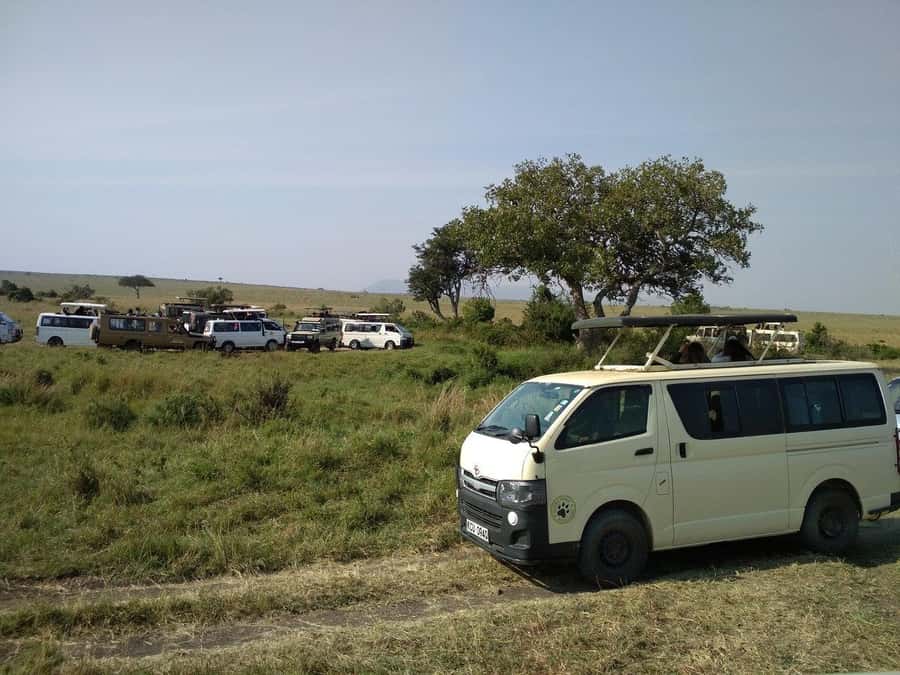
Karen Blixen Museum occupies the former farmhouse of Danish author Karen Blixen and her Swedish husband, Baron Bror von Blixen Fincke. The house sits about 10 kilometers from Nairobi’s city center, at the foot of the Ngong Hills.
The farm became widely known after the release of Out of Africa, the Oscar-winning film based on Blixen’s autobiography. Even if you have not read the book or seen the film, the house gives the day a welcome change of pace after the animal visits.
The museum visit is listed at about 30 minutes, with a guided tour, photo stop, and views along the route. That is a fairly short time for a historic house, so expect an introduction rather than a long museum study. You may want to ask your guide which rooms and stories will be covered if literary history is a main reason for booking.
The admission charge is listed as $12. The value here depends on your interests. Fans of Out of Africa will likely find the setting especially meaningful. If you care less about the film and the author, this may feel like the least essential stop compared with the elephants and giraffes.
Still, it adds context. Nairobi is not only a place to pass through on the way to a safari. The museum shows one chapter of the city’s colonial-era farm history and its later place in international popular culture.
Kazuri beads, pottery, and a final shopping stop
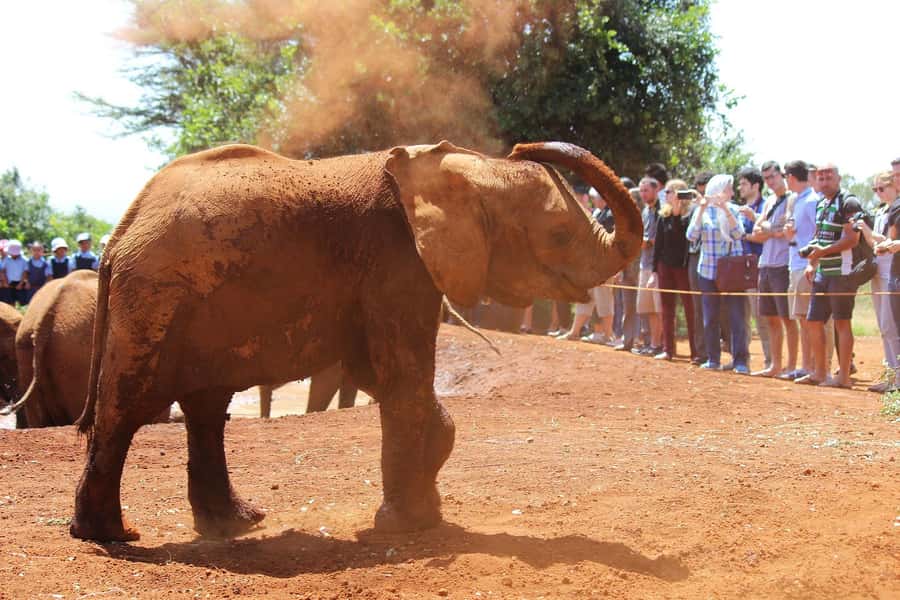
The final stop is the Kazuri Beads Factory, also described with Kobe beads in the tour details. You see beads and pottery made by African women and have time for shopping and a workshop-style visit.
This stop gives you something the wildlife centers do not: a look at handmade production. You can admire the colors, shapes, and small variations in the finished pieces, then decide if you want to buy a gift or souvenir.
The schedule allows about an hour for shopping, local snacks, drinks, and workshop or cultural activities. The broader itinerary also lists arts and crafts market visits, traditional dance, and a dance show. The exact mix may depend on the day and route, so ask the guide what is planned for your departure.
I see this as a useful final stop rather than a must-see attraction. It gives you a chance to purchase something made locally, but you should not feel pressured to spend. If you prefer museums and wildlife, keep your shopping time short. If you want gifts, jewelry, or pottery, this is where the extra hour can be worthwhile.
The tour description also mentions coffee, tea, wine, beer, spirits, and lunch options. These items are not clearly included in the $35 price, so treat them as possible purchases rather than part of the package unless confirmed in advance.
Timing, traffic, and the real value of the day
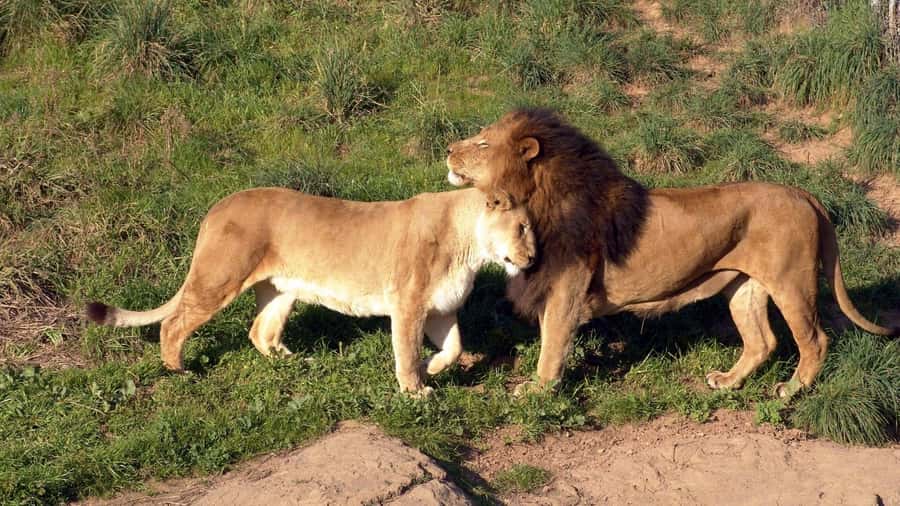
The duration range of three to eight hours is unusually broad. Nairobi traffic can change the day, and four separate attractions take time even when each visit is short. A quick route with limited time at each stop may fit the lower end, while a fuller day with lunch, shopping, and guided visits can approach eight hours.
You should avoid scheduling a tight connection after this tour unless airport drop-off has been confirmed with plenty of spare time. Airport drop-off is offered, and the tour can finish at your hotel or take you to the airport, but the published duration gives you reason to leave a generous buffer.
The $35 price has real value if you need transport and a guide to connect several attractions. Paying separately for a taxi to each place could be inconvenient, especially if you do not know Nairobi well. The driver-guide also gives you a single point of contact for the day.
The value is less clear once you add all the listed fees. At the highest stated total, admissions and conservation charges can exceed the base tour price by a wide margin. You are paying for convenience, access, transport, and interpretation, not just entry tickets.
The best approach is to compare the full amount with what you would pay for a private car, separate admissions, and your own planning. If the operator confirms that all four stops are included and the conservation charge is explained clearly, the package becomes easier to judge.
Who should book this Nairobi day trip?
I would recommend it to you if you want a compact introduction to Nairobi and prefer a planned route. Families may appreciate the variety, since children can watch baby elephants, feed giraffes, see a historic house, and browse colorful crafts rather than spend the whole day in one museum.
It also suits first-time visitors staying in the listed central neighborhoods. Hotel pickup removes some transport decisions, and the English-speaking guide can connect the stops into one story.
You should think twice if your main goal is a full wildlife safari. This tour focuses on animal centers, not open-country game viewing. You should also be cautious if you need a fixed finish time, since the duration varies and Nairobi traffic can be unpredictable.
The overall rating is 3.2 from 12 reviews, so I would treat the tour as useful but not flawless. The strongest reason to book is the combination of the elephant feeding and giraffe encounter. The biggest reason to hesitate is the unclear final cost and wide timing range.
FAQ
What is included in the $35 tour price?
The tour includes hotel pickup and drop-off in Nairobi, a driver-guide, a professional English-speaking guide, bottled water, an open-roof safari van, and guaranteed entry to the baby elephant center and Giraffe Center. The listed admission fees and conservation fee are separate.
How much are the listed admission fees?
The listed charges are $20 for the baby elephant center, $15 for the Giraffe Center, and $12 for Karen Blixen Museum. A separate $45 conservation fee is listed as payable by card.
Where can pickup and drop-off take place?
Pickup and drop-off locations include Nairobi County, Lavington, Haile Selassie Avenue, Kileleshwa, Westlands, and Kilimani. Confirm your exact location when booking.
How long does the experience last?
The stated duration is three to eight hours. The actual length can depend on traffic, the time spent at each attraction, shopping, meals, and the route used that day.
Is the tour conducted in English?
Yes. The listed live tour guide language is English.
Can I cancel or pay later?
You can cancel up to 24 hours in advance for a full refund. Reserve-now, pay-later booking is available, allowing you to hold a place without paying immediately.
Should you book it?
Book this tour if you want one organized Nairobi day that combines rescued elephants, feeding giraffes, Karen Blixen’s house, and handmade crafts. The mix is broad, the hotel transport is useful, and the animal visits offer the strongest memories.
Before confirming, ask for the full price after all admissions and conservation charges, the expected pickup time, and the planned finish time. If those details suit your budget and schedule, this is a practical way to see several of Nairobi’s best-known attractions in one outing. If you want wild game viewing or a quiet, unhurried museum day, choose a different plan.
Just added around Maasai Mara
- Nairobi: 3-Day Maasai Mara Group Tour with 4X4 Jeep Safari★ 3.0 · 5 reviews
- Nairobi: 5 Days Maasai Mara, Nakuru & Naivasha Tour★ 3.3 · 9 reviews
- 4-Day Tour in Lake Nakuru, Lake Naivash, Masai Mara from Nairobi★ 5.0 · 26 reviews
- Maasai Mara: Hot Air Balloon Safari & Champagne Breakfast★ 4.6 · 31 reviews
- 3-Day Masai Mara Group Safari with Pick Up★ 4.5 · 32 reviews
- Giraffe center, Elephant Orphanage and Beads Center★ 5.0 · 34 reviews
- Olpejeta, Lake Naivasha, Masai Mara 5 Days Private Kenya Jeep tour★ 5.0 · 34 reviews
- 2 Days Classic Maasai Mara Safari★ 5.0 · 42 reviews
Giraffe Centre & Elephant Orphanage, compared.
National Park & Optional Elephants & Giraffe Center
Read our review →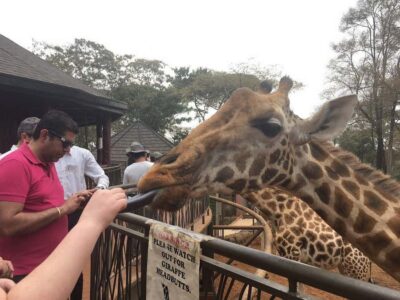
Elephant Orphanage and Giraffe Center Tour with Options
Read our review →
Nairobi National Park, Elephant Orphanage and Giraffe Centre
Read our review →
Tour: Giraffe Center and Nairobi National Park
Read our review →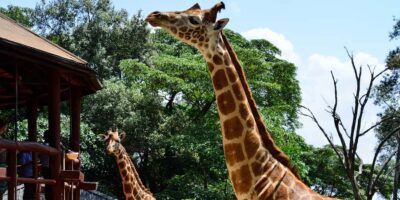

Day tour to Giraffe Center and Karen Blixen Museum
Read our review →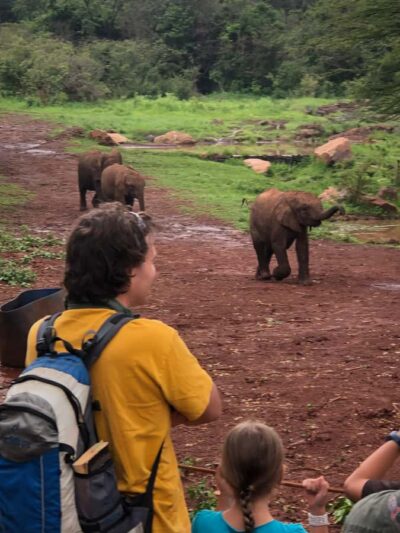
Browse the lists this tour appears in