
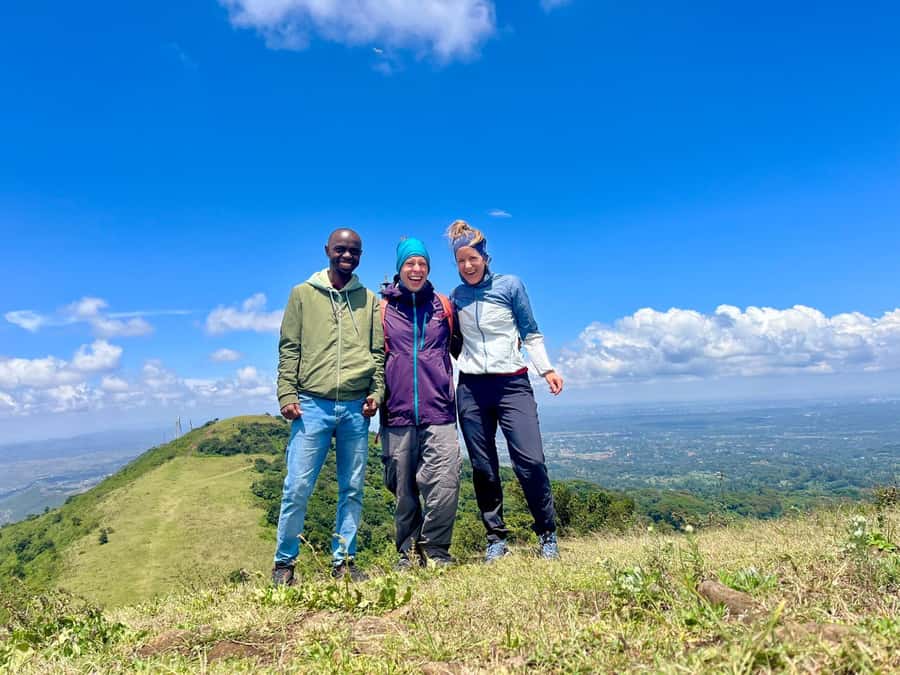
Reviewed · MOUNT KENYA & HIGHLAND TREKS
NAIROBI:Ngong Hills Day Hike,Group Tour
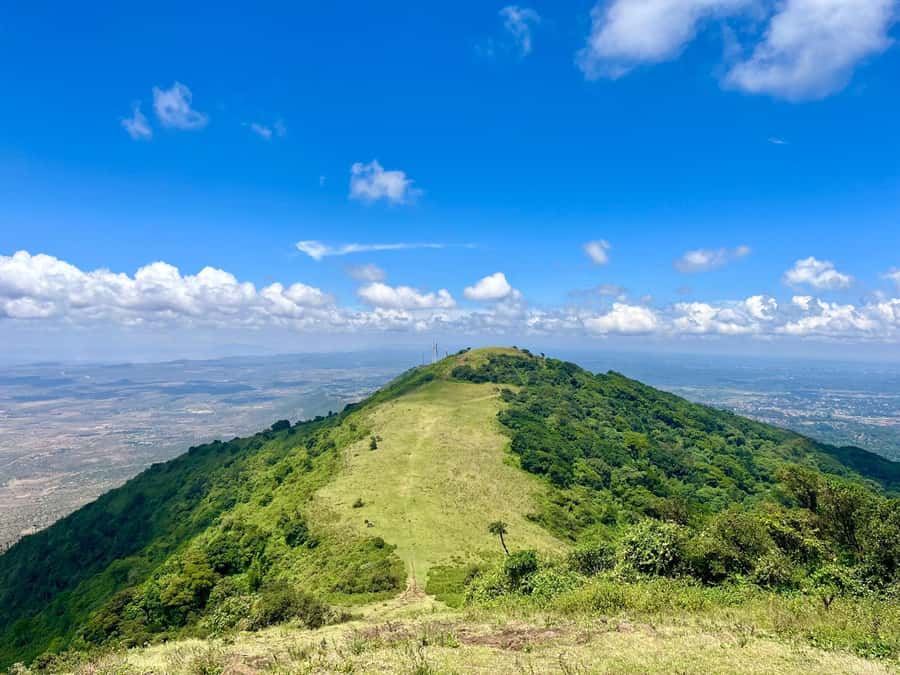
Ngong Hills gives you a quick escape from Nairobi without requiring a long safari drive. The trail rises through planted forest, then reaches indigenous woodland and open ridges with 360-degree views over Nairobi and the Great Rift Valley. On a clear day, the city feels surprisingly far away.
I like two things here. First, guide Steve adds useful context about Kenyan culture, geography, wildlife, and the history of the hills instead of simply pointing you uphill. Second, the pace can be adjusted, which matters because this is not a flat stroll. The main drawback is the drive from central Nairobi: traffic from Westlands can take about 90 minutes each way, leaving less time for the walk than the five-hour headline suggests.
Key Points
- The walk can reach about 11 kilometers: You should have a fair level of fitness, even though you do not need to be an athlete.
- Steve guides in English: He combines trail information with stories about Kenya, Nairobi, and local culture.
- The summit gives broad views in every direction: You can see Nairobi, the Rift Valley, and changing views on both sides of the hills.
- The route passes through two types of forest: A planted forest comes first, followed by indigenous forest near the higher section.
- Pickup and drop-off are included: You are collected from your residence within Nairobi and returned there afterward.
- Bring more water than you think you need: Bottled water is supplied, but the uphill sections and warm conditions make extra water sensible.
Why Ngong Hills Makes a Good Nairobi Day Trip
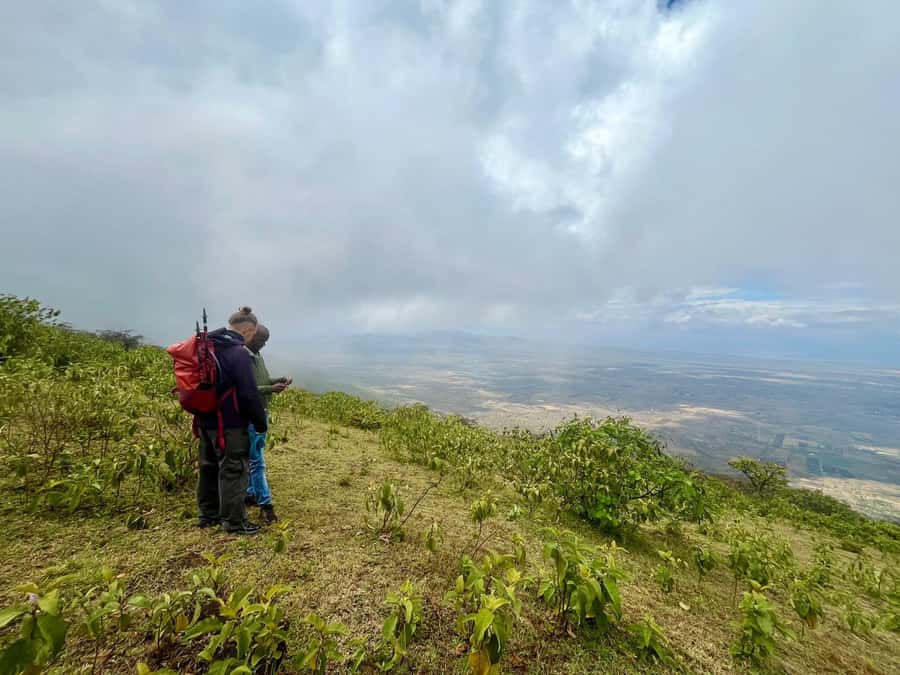
Ngong Hills is one of the simplest ways to trade city traffic for open air. The hills sit in Kajiado County, within easy reach of Nairobi in theory, though the city’s road congestion can make the transfer much longer than the map suggests.
The appeal is not one single viewpoint. You get a changing walk. The lower route passes through planted forest, the trail gradually gains height, and the upper section opens toward indigenous trees and wide ridges. From the high point, you can look across Nairobi and toward the Great Rift Valley.
That variety gives the outing more substance than a short climb to a photo stop. You are walking through different settings while Steve explains the area and its place in Kenyan culture. If you have just arrived in Kenya, this can also serve as a gentle introduction to the country’s geography and daily life.
The walk is described as gradual, but that does not mean effortless. The hills include steep sections, and one account of the route covered about 11 kilometers. Another finished in roughly four and a half hours. You should think of this as a proper half-day hike with stops, not a casual park walk.
Other highland treks from Kenya:
- Climbing Mount Kenya 5 Days Via Chogoria Route
★ 5.0 · 44 reviews - From Nairobi: TRIP TO MOUNT LONGONOT NATIONAL PARK
★ 4.9 · 41 reviews - Samburu/ Aberdare/ Lake Nakuru/ Masai Mara 7 Days Safari
★ 5.0 · 37 reviews
Leaving Nairobi and Reaching the Trailhead
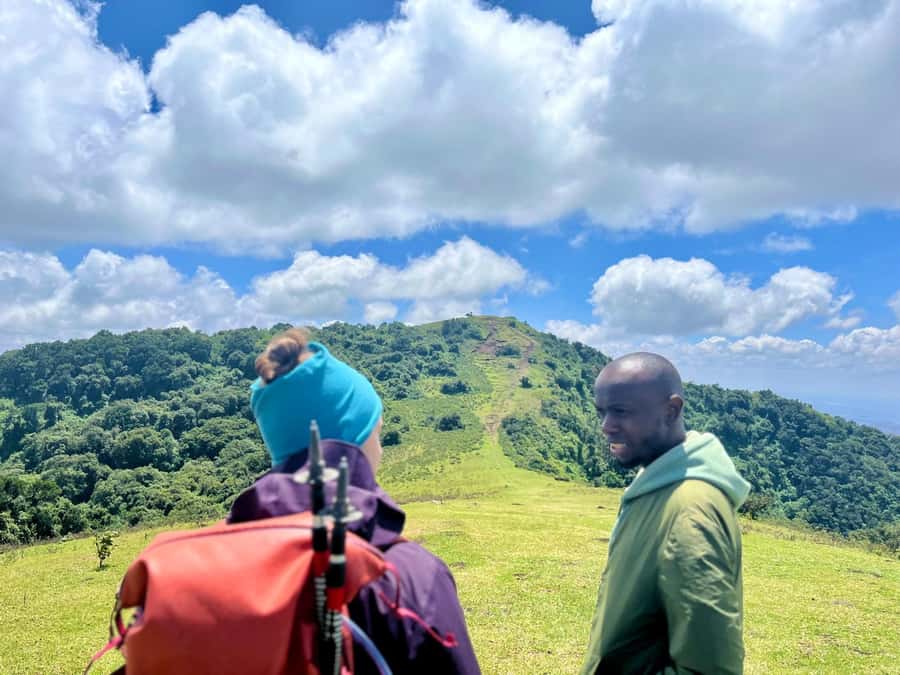
Steve collects you from your residence in Nairobi in the morning. Transport, pickup, and return are part of the $70 price, along with the entrance ticket, guide fee, and bottled water.
This arrangement is useful if you are unfamiliar with Nairobi or would rather not arrange a separate taxi to the hills. It also removes one common source of stress: finding the entrance and handling the drive yourself.
Still, build in patience for the roads. If you stay in Westlands, the drive to the starting point can take around an hour and a half, with a similar return journey. Your actual hiking time may therefore be shorter or longer depending on traffic, pickup location, and the group’s pace.
The morning start is sensible. It gives you cooler walking conditions than the middle of the day and leaves the afternoon open. One person used the hike as a way to adjust after a long flight and found the early outing a useful first look at Kenya. That makes this a reasonable choice near the beginning of a Nairobi stay, provided you are comfortable exercising soon after arrival.
At the gate, Steve handles the ticket process and gives a short briefing before the walk begins. Entrance is included, and the activity information indicates skip-the-line access. Ask about the expected route and pace during the briefing, especially if you want to walk from the northern end toward the southern end rather than stop at the first main viewpoint.
The Planted Forest and the First Climb
The opening section rises gradually through a planted forest. This is a good place to settle into the walk, check your footwear, and get used to the rhythm of climbing.
Steve uses the early part of the route to discuss the hills and their history. He also talks about Kenya, Nairobi, geography, and culture, so you are not left counting steps. The conversation is one of the strongest reasons to choose a guide rather than simply visit the hills independently.
Short pauses are built into the walk for water and photographs. These breaks are practical, not wasted time. They let you catch your breath, enjoy the changing views, and keep a mixed group together.
Do not mistake the gradual start for a promise of an easy walk all the way. The route becomes more demanding as it gains height. You can set a comfortable pace, and Steve has shown a willingness to wait, adjust the rhythm, and make room for regular rests. Even so, you should arrive ready for sustained uphill work.
A basic fitness level is enough for many people, but a completely inactive visitor may struggle. The best comparison is a long hill walk rather than a sightseeing stroll. Comfortable walking shoes, light clothing, sun protection, and a full water bottle will make a clear difference.
Indigenous Forest and the Higher Ridges
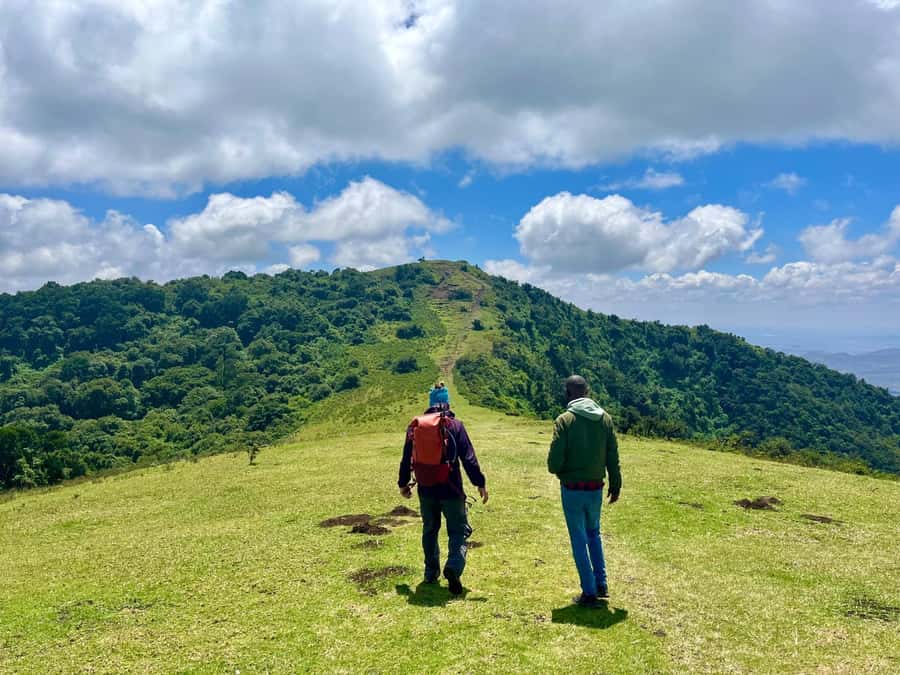
Near the upper section, the scenery changes again. An indigenous forest appears, offering a more natural setting before the trail reaches the higher open ground.
This part gives the walk its best sense of progression. You have moved from Nairobi’s built-up surroundings into forest, then toward exposed ridges and long views. Steve explains more about the trees and the area as you go, giving the scenery a local frame rather than leaving you with a collection of photographs and no context.
The hills are also a good place to notice how quickly Nairobi’s setting changes. From the open sections, the city skyline appears in one direction while the Rift Valley spreads out beyond the hills. The views are broad, but they are not guaranteed to look identical each day. Haze and weather can affect how far you see.
One important route choice is whether you stop at a viewpoint and turn around or continue farther along the hills. The full walk from north to south offers changing views on both sides and may reach about 11 kilometers. It also demands more time and energy. If you are fit and the weather is comfortable, continuing gives you a fuller experience. If your legs are tiring, stopping earlier is a reasonable choice.
A few more things to do around Kenya worth a look
- Private Hiking Day Trip to Mt. Longonot from Nairobi
★ 5.0 · 58 reviews - Shimba Hills Day Safari & Sheldrick Falls Hike Private Tour
★ 4.5 · 21 reviews - Mt Longonot National park Day Hike
★ 4.9 · 18 reviews - Mt Kenya: Full-day hiking tour from Nairobi
★ 4.2 · 10 reviews
The Summit and the 360-Degree View
At the peak, the hills open to a 360-degree view. This is the natural pause in the day, with time for photos and a rest before the descent.
You can look back toward Nairobi and across the Rift Valley. The contrast is the point: one side connects you with Kenya’s capital, while the other gives you a much broader sense of the surrounding country.
The summit is also where the earlier climb pays off. You are not simply being driven to a lookout. You have reached it on foot, passing through forest and gaining the height step by step.
Plan to stay present here rather than rushing through a photo stop. The guide can point out landmarks and explain what you are seeing. The break also matters physically, since the descent still requires care. Tired legs can make downhill walking uncomfortable, particularly on steeper sections.
Descending, Lunch, and the Return to Nairobi
After the summit break, you walk back down from the hills. Descending is often easier on the lungs, but it can be harder on knees and balance. Take your time, especially if you have already walked a long route.
At the end, you can choose to stop for lunch at a restaurant or leave directly. Food and drinks are not included, so lunch adds to the cost if you decide to stay. This flexibility is useful because people finish with different levels of appetite and energy.
Steve then drops you back in Nairobi. Since the duration is listed as five hours, allow some flexibility around the exact finish time. Traffic, the group’s walking speed, photo breaks, and the chosen route can all affect the schedule.
The experience works best when you treat it as a half-day outdoor outing rather than a tightly timed attraction. If you have an evening reservation, leave a buffer for the road back into the city.
What Steve and Martin Add to the Experience
Steve is the guide, and Martin has driven on some departures. Their roles complement each other: Martin handles the road while Steve focuses on the trail, explanations, and group pace.
Steve’s approach is especially useful for visitors arriving in Kenya without much local background. He can discuss Kenyan culture, Nairobi, wildlife, geography, and the history of the hills during the walk. The conversation gives the outing more meaning than a silent climb.
He also appears comfortable guiding solo participants and mixed-ability groups. One solo hiker had the pace set around personal comfort, while another visitor needed frequent breaks because the elevation was harder than expected. That flexibility is worth confirming at the start if your group has different fitness levels.
You should not expect a wilderness expedition. The hills can be popular, particularly on a Saturday morning, and you may share the trail with other people. The attraction is the combination of accessible mountain scenery, local explanation, and a straightforward transfer from Nairobi.
Is $70 a Fair Price?
At $70 per person, the cost is reasonable if you value convenience and local guiding. The fee includes return transport from your Nairobi residence, entrance to Ngong Hills, bottled water, and the guide fee. You do not need to arrange a separate driver, find the entrance, or pay the admission fee at the gate.
The value depends partly on your pickup location. If you are staying far from the hills, a private or small-group transfer can save time and hassle, even though traffic still cannot be avoided. If you already have a car and are comfortable arranging entry and navigation, the package may feel less essential.
Food is extra, as are any expenses not specifically listed. Carry some Kenyan shillings or another accepted payment method for lunch if you plan to eat afterward, though the exact restaurant and meal cost are not specified.
The flexible cancellation policy also reduces booking risk. You can cancel up to 24 hours ahead for a full refund, and you can reserve without paying immediately. Availability and starting times should be checked for your date.
Who Should Book This Hike?
I would recommend Ngong Hills to you if you want outdoor scenery close to Nairobi, enjoy learning while walking, and can handle several hours on your feet.
It suits:
- Active first-time visitors to Kenya: Steve can provide a useful introduction to the country as you walk.
- Solo visitors: Pickup, a guide, and an adjustable pace make the outing easier to manage alone.
- People who want views rather than a city attraction: The main reward is the open ridge, Nairobi skyline, and Rift Valley outlook.
- Hikers with moderate fitness: You do not need to be highly trained, but steep sections and distance require preparation.
- Visitors with a free morning and flexible afternoon: Traffic and route length make a generous schedule wise.
This is not a good fit for wheelchair users, visually impaired people, very young children, or older people for whom steep and extended walking is unsuitable. The activity information lists children under five and people over 65 among those not suited to the tour, with additional age restrictions shown for older participants. If age, mobility, or vision is a concern, ask the provider before booking.
What to Pack for the Hills
Pack light, but do not underpack water. Bottled water is included, yet extra water is sensible for a long uphill route, especially if the day is warm.
Wear sturdy walking shoes. The route includes gradual and steeper climbs, plus a descent, so sandals or smooth-soled footwear are poor choices. Bring sun protection and a small bag for personal items.
A phone or camera is worthwhile, but keep enough attention for the trail. The best views appear at several points, not only at the summit. If you want the longer north-to-south route, tell Steve early so the group can discuss time, pace, and energy.
Should You Book Ngong Hills?
Book this outing if you want a practical Nairobi escape with strong local explanation, included transport, and genuine uphill walking. The 360-degree summit view is excellent, but the full appeal comes from the changing route, the forest sections, and Steve’s stories about Kenya.
Think twice if you want a short, easy walk or if your Nairobi schedule is packed. Traffic can consume much of the day, and the hills are steeper and longer than the word hike might suggest.
For a fit visitor with half a day available, $70 buys a useful mix of scenery, exercise, transport, and local guidance. Bring water, allow extra time, and decide in advance whether you want the shorter viewpoint walk or the longer route across the hills.
FAQ
Where does the Ngong Hills hike take place?
The hike takes place at Ngong Hills in Kajiado County, Kenya, with pickup and drop-off in Nairobi.
How long does the activity last?
The stated duration is five hours. Actual walking time can vary with traffic, breaks, route choice, and group pace. One outing took about four and a half hours.
What is the price?
The price is $70 per person.
Is transport included?
Yes. Pickup from your residence within Nairobi and return transport are included.
Is the Ngong Hills entrance fee included?
Yes. The entrance ticket is included in the price.
Is bottled water provided?
Yes. Bottled water is included, though bringing additional water is advised for the uphill walk.
Is lunch included?
No. Food and drinks are not included. After the hike, you can choose to eat at a restaurant or leave directly.
What language does the guide speak?
The live guide speaks English.
How difficult is the walk?
The route has gradual and steep sections and can cover about 11 kilometers. You do not need to be an athlete, but you should have a reasonable level of fitness and be comfortable with several hours of walking.
Can I cancel the booking?
Yes. You can cancel up to 24 hours in advance for a full refund. You can also reserve now and pay later.
Just added around Kenya
- Nairobi: Horseback Riding Tour Through Maize Plantation★ 5.0 · 3 reviews
- Nairobi: Kibera Slum Compassionate Walking Tour★ 5.0 · 4 reviews
- Nairobi: Karura Forest Guided Walking Tour★ 5.0 · 4 reviews
- From Nairobi: Horseback Wildlife Safari with Transfer & Meal★ 4.6 · 7 reviews
- Nairobi: Hidden Gems and Local Secret Guided Walking Tour★ 4.9 · 20 reviews
- Nairobi: Hop on Hop off and Maasai market Collections Visit★ 3.5 · 10 reviews
- Nairobi: Karura Forest Horseback Riding Tour★ 4.8 · 11 reviews
- Nairobi: Guided Afternoon Tour to Bomas of Kenya.★ 3.1 · 4 reviews
Mount Kenya & Highland Treks, compared.

Private Tour to Mount Longonot and Optional Boat Ride on Lake Naivasha
Read our review →
7-Days Kenya Safari Samburu, Aberdare, Lake Nakuru, & Maasai Mara
Read our review →
Browse the lists this tour appears in