
Reviewed · CULTURAL VILLAGE VISITS
Diani: Giriama Cultural Dance Show and Local Village Tour
The best part of this Diani outing is the change of scene. You leave the resort strip and spend time in Giriama community life, starting at a local market and ending with a 12-dancer performance. Along the way, you visit a school, meet a traditional healer, taste coconut water and palm wine, and talk with families in their homes.
I like the human contact and the way the tour moves through ordinary places rather than a single showground. I also like the practical details: learning how coconuts are harvested, seeing ugali prepared, and hearing how herbal treatments are passed down. Guide Samson receives especially warm praise for his friendly, helpful manner.
The main point to weigh is that this is a village visit, not a polished stage production. The dance portion may feel brief or less developed than the school and cooking stops, and transport from your hotel costs extra. Bring patience, curiosity, and a respectful attitude.
Key points at a glance
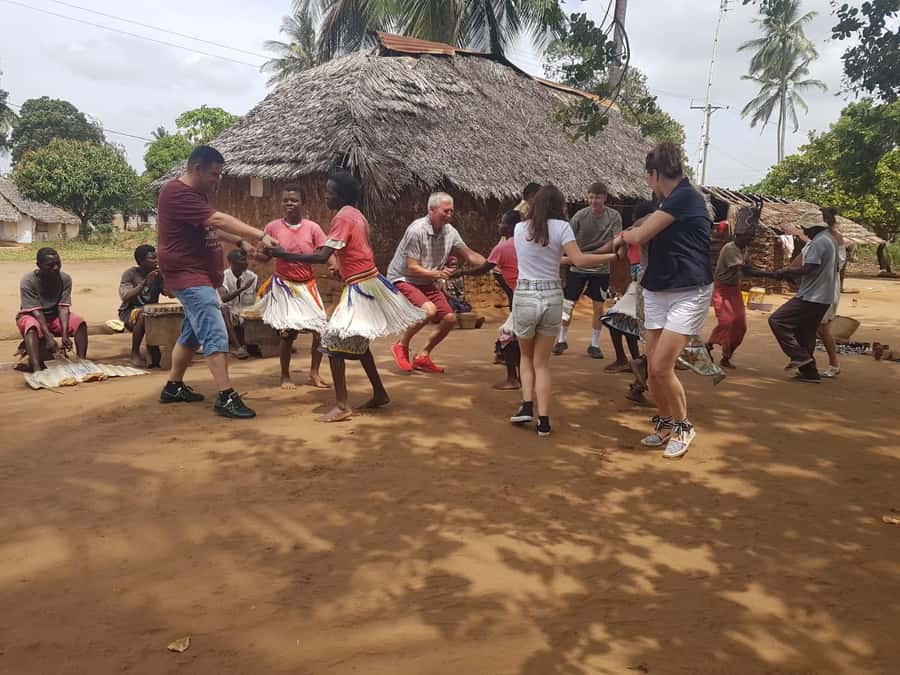
- Twelve Giriama dancers: Traditional dances carry stories about weddings, celebrations, and farewells, and you may be invited to join.
- A real village route: The three-hour outing includes Ibiza Market, a school beneath a giant baobab, a family homestead, a healer, and narrow village lanes.
- Coconut traditions: Taste madafu, watch coconut harvesting, and learn about palm wine tapping.
- Guide Samson: His warm, capable approach is one of the strongest parts of the experience.
- Budget for transport and gifts: A sedan costs $40 or a tuk-tuk $25, while food, drinks, and school gifts are separate.
- A useful cultural visit: You get more than a dance show, but you should be comfortable with simple conditions and an unscripted pace.
What this three-hour Diani experience is really about
At $35 per person, this is best understood as a short cultural visit rather than a full-day sightseeing tour. The price covers the village program, traditional dances, a healer visit, palm wine tasting, traditional clothing, and photos taken with your own equipment.
That is fair value if you want more than beach time. You are paying for access, local hosting, interpretation, and several different stops in one compact outing. The price is less attractive if you are mainly seeking a long dance performance or a meal, since food and drinks are not included and the transfer fee is extra.
The Giriama are one of the nine sub-groups of the Mijikenda people who live along Kenya’s coast. This matters because the tour is not simply a generic African dance show. It introduces you to a particular coastal community and links the music and dancing with food, family life, school, healing, and work.
The experience is described as natural rather than heavily staged. That can be its greatest strength, but it also means the timing and flow may feel less exact than at a formal cultural center. You are visiting working community spaces, so the most rewarding moments may come from a conversation, a demonstration, or an unplanned exchange.
Other cultural visits around Diani Beach:
- Diani Beach: Village tour on a bike with hotel pick-up
★ 5.0 · 7 reviews - Nairobi: Explore Kibera Slum with Local Guides
★ 4.9 · 365 reviews - Nairobi: Day Tour to Amboseli National Park & Maasai Village
★ 4.5 · 310 reviews
Starting at Ibiza Market
The first stop is Ibiza Market, an open-air trading area where locals buy and sell everyday goods. You may see fresh fish, food items, clothes, and the ordinary movement of a coastal market.
I like starting here because it gives you a quick sense of community life before you reach the village. A market shows what people use and trade, not just what an audience is shown for entertainment. It also gives your guide a natural place to explain local routines and point out details you might otherwise miss.
This is not presented as a long shopping stop. Expect a walk through the market rather than a dedicated buying session. If you want souvenirs, keep some cash with you, but do not assume every purchase is part of the $35 cost.
The market can also be the busiest and most exposed part of the visit. Wear comfortable shoes and dress for the coastal heat. Keep your belongings close, ask before photographing people, and let your guide set the tone.
Meeting students beneath the baobab tree
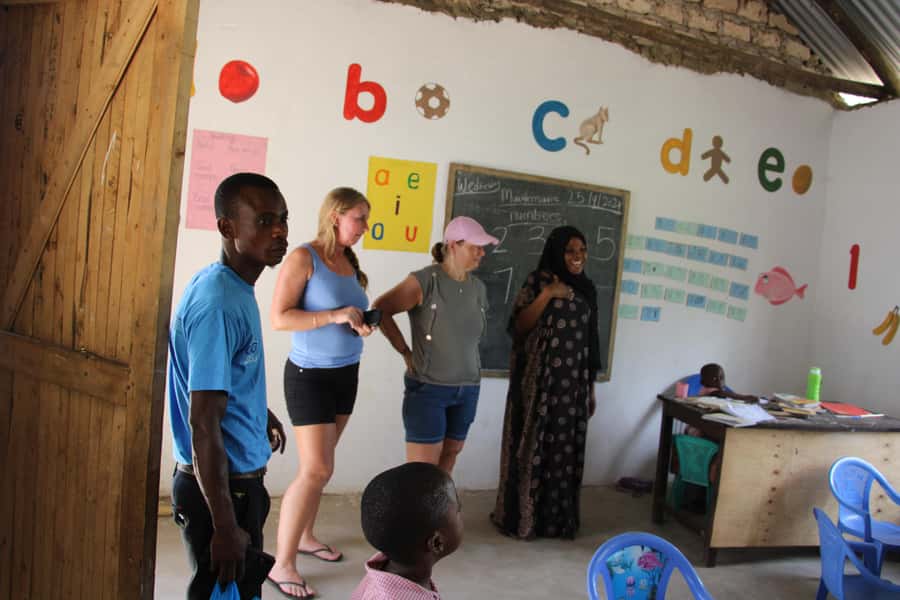
From the market, the tour continues to a community school shaded by a large baobab tree. Depending on the time of day, you may meet students and have a chance to speak with them.
This stop can be moving, but it deserves care. The school is not simply a photo backdrop. You are entering a place connected to children’s daily education, so gifts should be useful and offered through the guide or school staff rather than handed out randomly.
Small items such as pencils, crayons, notebooks, stickers, toys, balls, sweets, or clothes are suggested. A few people also choose to bring money to support the school. I would keep any giving modest, organized, and respectful. You do not need to arrive with a large donation to be welcomed.
The school visit may be one of the most memorable sections for families and anyone interested in local education. It may also feel uncomfortable if you expect a formal presentation or worry about the line between cultural exchange and charity. Go with humility. Listen first, take photographs only with permission, and remember that the children are at school, not performing for you.
Coconut water, ugali, and a family homestead
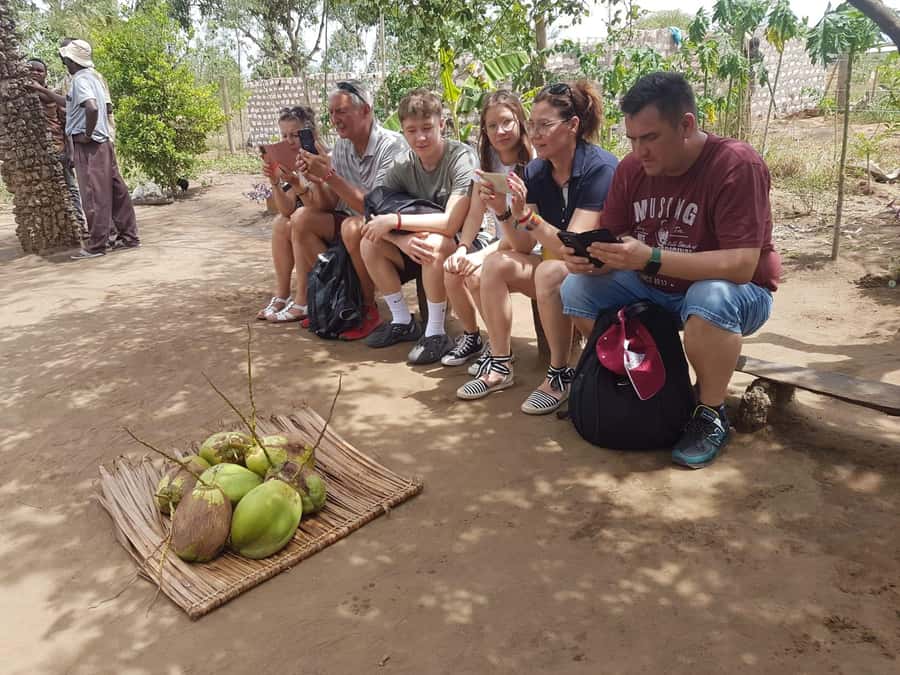
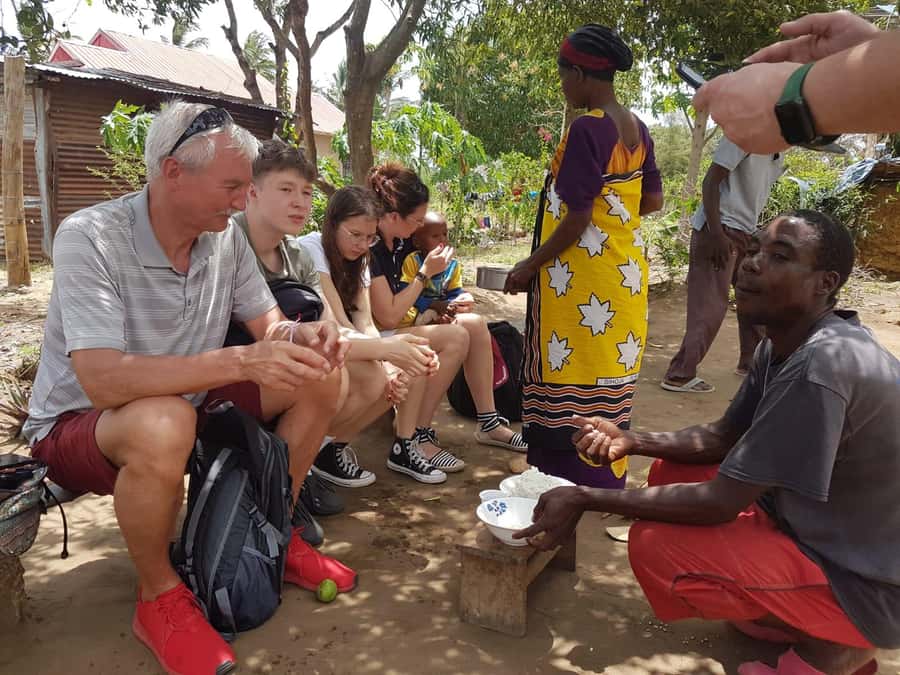
At a local homestead, you taste madafu, fresh coconut water, and learn about its place in coastal life. A host may climb a coconut tree to show how coconuts are harvested. You may also see how palm wine is tapped and sample it as part of the visit.
This is one of the tour’s most useful practical demonstrations. A coconut is not just a refreshing drink here. The visit shows how a familiar plant can connect food, drink, work, and local traditions. The climbing and tapping demonstration gives you something concrete to watch, rather than another talk from a distance.
If time allows, you may help prepare cashew nuts or ugali. Ugali is a staple dish made from maize flour, and seeing it prepared helps explain the food you may encounter elsewhere in Kenya. Some accounts of the visit describe tasty food and time spent in the kitchen, but the published inclusions do not cover a meal. Treat cooking as a demonstration and tasting opportunity, not a guaranteed lunch.
The home visit is where the tour can feel most personal. You may see part of a family kitchen, hear about daily routines, and share simple conversation. That closeness is valuable, though you should expect basic surroundings rather than tourist facilities. Bring water, use sun protection, and accept that village hospitality may not follow a strict timetable.
More coast days around Diani Beach:
- Diani Beach: Glass Boat Cruise to Robinson Island
★ 4.6 · 69 reviews - Diani: Sunset Canoe Tour along the River with Mangroves
★ 4.8 · 65 reviews - Diani Beach: Private African Pool Map Guided Tour
★ 4.7 · 52 reviews - Diani Taxi and Airport Transfers
★ 5.0 · 46 reviews
Visiting the mganga and learning about herbal care
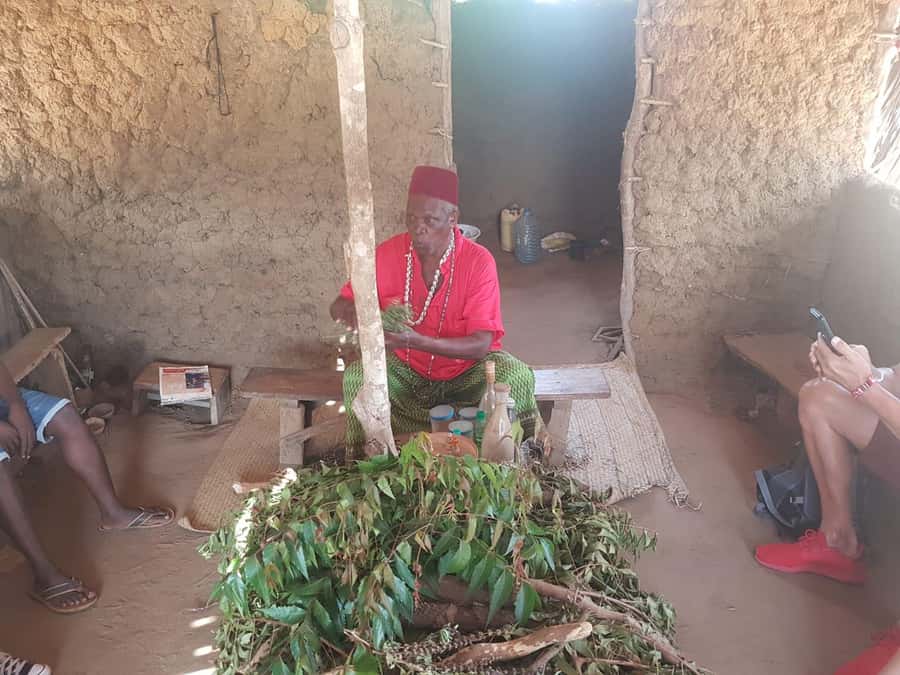
The traditional healer, or mganga, is another central stop. You learn how indigenous herbs are selected and prepared to treat different ailments, and how this knowledge has been passed through generations.
I appreciate this part because it adds context to the dance. The Giriama way of life is not reduced to music and costumes. Healing knowledge, food preparation, farming-related skills, and family customs all form part of the wider picture.
Keep your expectations sensible. This is a cultural explanation, not a medical consultation, and you should not treat any remedy shown during the visit as a substitute for professional medical care. The value is in understanding the role of the healer and the knowledge system around local plants.
This is also a good place to ask clear, polite questions through your guide. Avoid mocking beliefs or pressing for private information. The visit works best when you listen to how the community understands health rather than judging it by the standards of a clinic.
Walking to the Giriama dance arena
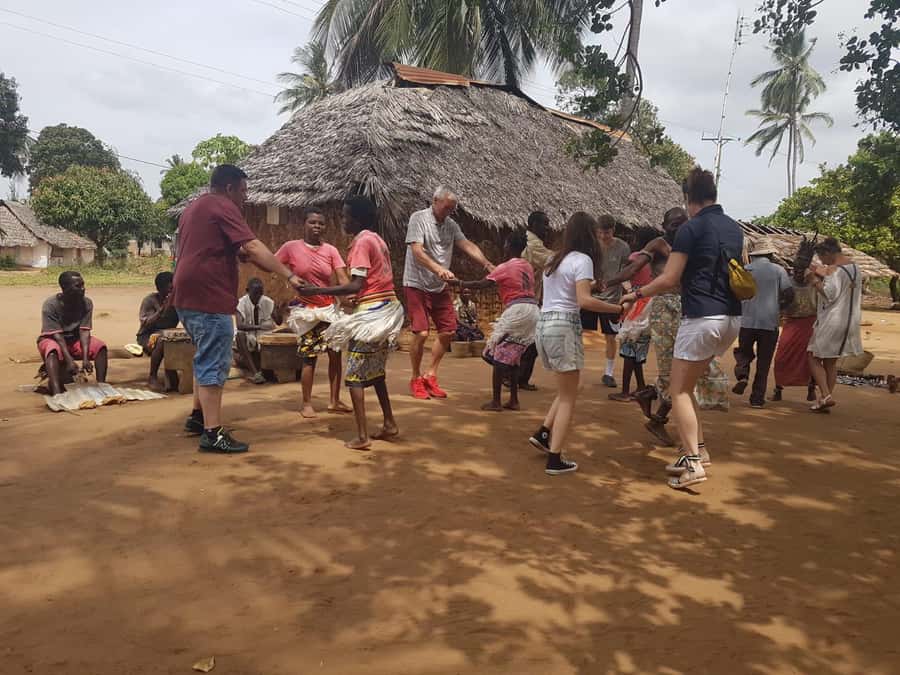
The final stop takes you through narrow village lanes to an arena where 12 dancers perform traditional Giriama dances. The dances can relate to weddings, celebrations, farewells, and other community events.
Traditional attire and music give the performance a clear sense of place. You are not only watching a routine. You are seeing how dance can carry social meaning, mark an occasion, and bring a group together.
You may be invited to dance, so do not arrive expecting to sit quietly at the edge. Participation is optional, but joining in for a few steps can turn the show into a shared exchange. The laughter and relaxed interaction are part of the appeal.
Here is the main caution: the dance segment may not be the strongest part for everyone. One particularly positive account praised the cooking, healer visit, and village explanations while suggesting that the dance section could be improved. If your priority is a long, highly polished cultural performance, you may find this show too short or informal. If you want a friendly village gathering with room to join in, it should suit you better.
What makes the local guide important
A good guide matters greatly on this tour because several stops depend on explanation and good manners. Samson is repeatedly singled out for being friendly, helpful, and able to make the day feel well organized. He is also credited with making the experience easier for first-time visitors.
That is important at the school, the healer’s home, and the family homestead. A local guide can explain what you are seeing, help you ask questions, and signal when a photograph or gift is appropriate. Without that bridge, the same route could feel intrusive or confusing.
The tour is offered in English and German. Professional photos are included using your own camera or phone, so charge your device and make sure you have enough storage. Ask before photographing children, homes, or people at the market.
There is also a free walking tour offered by the provider on Tuesdays and Thursdays. You need to communicate with the provider for the details, and it should be treated as a separate extra rather than assumed to be part of this three-hour visit.
Transport, timing, and the extra cost
The $35 price does not include pickup, waiting, or return transport. You need a vehicle to take you from your hotel through the village and back. The stated options are a sedan for $40 or a tuk-tuk for $25, with the final arrangement depending on your hotel location.
This changes the real cost, especially for a solo visitor. The experience becomes better value when shared by two or more people, since the vehicle cost can be divided. Ask about the total transport charge before you commit, rather than assuming hotel pickup is included because the booking information refers to pickup.
You should wait in your hotel lobby 10 minutes before the scheduled time if a pickup has been arranged. The activity itself lasts about three hours, but the drive to and from your hotel is separate and can add to your day.
The tour is listed as wheelchair accessible in one part of the information, but it is also marked as not suitable for wheelchair users. That is a clear inconsistency. If you use a wheelchair or have limited mobility, contact Kaaribu Experiences before booking and ask about the vehicle, market route, village paths, home access, and dance arena.
How to prepare for a respectful visit
Comfortable shoes are essential. You will walk through a market, village lanes, and family spaces, and the ground may not be as smooth as a hotel pathway.
I would bring:
- Small school supplies, if you want to contribute
- Some cash for souvenirs or an optional school donation
- Water and sun protection
- A charged phone or camera
- Clothing that is cool but respectful
- An open attitude toward simple food and village conditions
Alcohol and drugs are not allowed. Palm wine is part of the tasting, but that does not mean the outing is a drinking session.
The advice about sweets for children comes up often, but use judgment. Pencils, crayons, notebooks, balls, and other school items are more useful than large amounts of candy. Ask your guide how to distribute anything you bring so the exchange stays orderly and kind.
Who should book this Giriama village tour?
I would recommend it to you if you want local contact, enjoy asking questions, and prefer a mix of short visits over one fixed attraction. Families, first-time visitors to Kenya, and people staying in Diani who want a break from the beach will find plenty to take away.
It is also a good fit if you want to understand the people behind the coastal resort area. The market, school, kitchen, healer, and dance arena give you several angles on daily life in a short time.
I would hesitate if you want a private luxury outing, a guaranteed meal, a long formal performance, or a perfectly fixed schedule. The village setting is simple, the transport is extra, and the dance segment may not satisfy someone seeking a professional stage show.
At $35 per person, the core experience offers solid value, especially if you care about context and personal interaction. Just calculate the full price with transport, and remember that food and drinks are separate.
FAQ
How long does the Giriama cultural tour last?
The tour lasts three hours. Hotel travel time is separate and depends on your pickup location.
Is hotel pickup included in the $35 price?
No. You need transport to and from your hotel, and the vehicle cost is discussed after booking. A sedan is listed at $40, while a tuk-tuk is listed at $25.
What languages are available?
The tour is offered in English and German.
Is food included?
Food and drinks are not included. You may taste madafu and palm wine, and you may have the chance to help prepare cashew nuts or ugali.
Can I bring gifts for the children at the school?
Yes. Small items such as pencils, crayons, notebooks, toys, balls, sweets, or clothes are suggested. You can also ask about supporting the school financially.
Is the tour suitable for wheelchair users?
The information is inconsistent. It is marked as wheelchair accessible in one place and not suitable for wheelchair users in another. Contact Kaaribu Experiences before booking to confirm the current conditions.
Should you book it?
Book this tour if you want a grounded introduction to Giriama life and are happy to meet people in simple, working community spaces. The strongest elements are the school, family homestead, coconut and cooking demonstrations, traditional healer, and the personal guidance of Samson.
Before booking, confirm the transport fee, ask how much time will be given to the dance performance, and decide what you can bring for the school without turning the visit into a handout exercise. If you do that, this can be one of the more worthwhile ways to see something beyond Diani’s hotels and beach.
More Show in Diani Beach
- Nairobi: The Safari Cats Show Tickets & Buffet Dinner
★ 4.4 · 29 reviews - Kenya: Maasai Village Visit with Traditional Dance Show
★ 4.6 · 24 reviews
Just added around Diani Beach
- Mombasa: Snorkeling, Dolphin watching, seafood lunch.★ 4.5 · 3 reviews
- mangrove tour★ 4.2 · 4 reviews
- Kaya Kinondo Sacred Forest Guided Tour★ 4.4 · 3 reviews
- From Diani Beach: Funzi Island Full Day Excursion with Lunch★ 4.8 · 5 reviews
- From Mombasa/Diani: Tsavo East National Park Day Trip★ 5.0 · 7 reviews
- From Diani or Mombasa: Tsavo East National Park Day Trip★ 5.0 · 4 reviews
- From Diani: Full Day Shimba hills tour with Sheldrick Falls★ 3.7 · 10 reviews
- Diani: Snorkeling and Swimming at African Pool in Tiwi Beach★ 4.6 · 11 reviews
Cultural Village Visits, compared.

Day Tour to Amboseli National Park & Maasai Village
Read our review →



Kibera Slum Tour with Local Social Entrepreneurs
Read our review →

Giraffe Centre, Elephant Orphanage, and Bomas of Kenya Day Tour from Nairobi
Read our review →Browse the lists this tour appears in