
Reviewed · CULTURAL VILLAGE VISITS
Nairobi: Kibera Slum Tour with Local Social Entrepreneurs
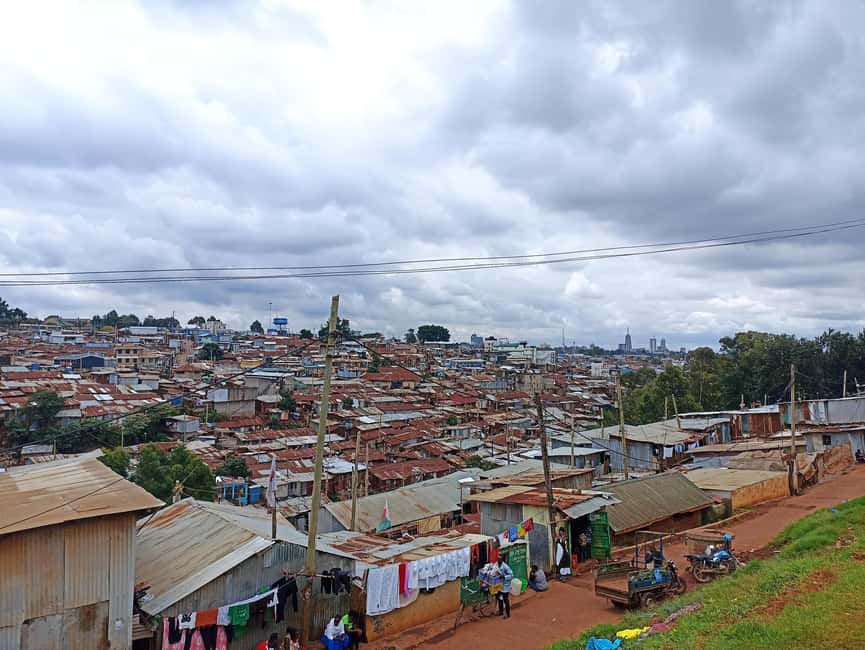
Kibera is not a sightseeing backdrop. It is home to more than 300,000 people in about three square kilometers, and this tour takes you into daily life with Luke, a guide who grew up here. You’ll visit a family home, a school, a children’s home, and small local businesses rather than simply viewing the neighborhood from a vehicle.
I like the personal side of the tour, especially the chance to meet Luke’s family and hear him explain water, housing, work, education, waste, and electricity from lived experience. I also like the practical community benefit: 30 percent of the tour revenue supports a children’s home and local school.
The main consideration is that this can be emotionally demanding. You will see hardship at close range, and a 3-hour walking route through narrow streets is not light entertainment. Come with humility, listen carefully, and remember that people’s homes and lives are not photo props.
Key points to know before you go
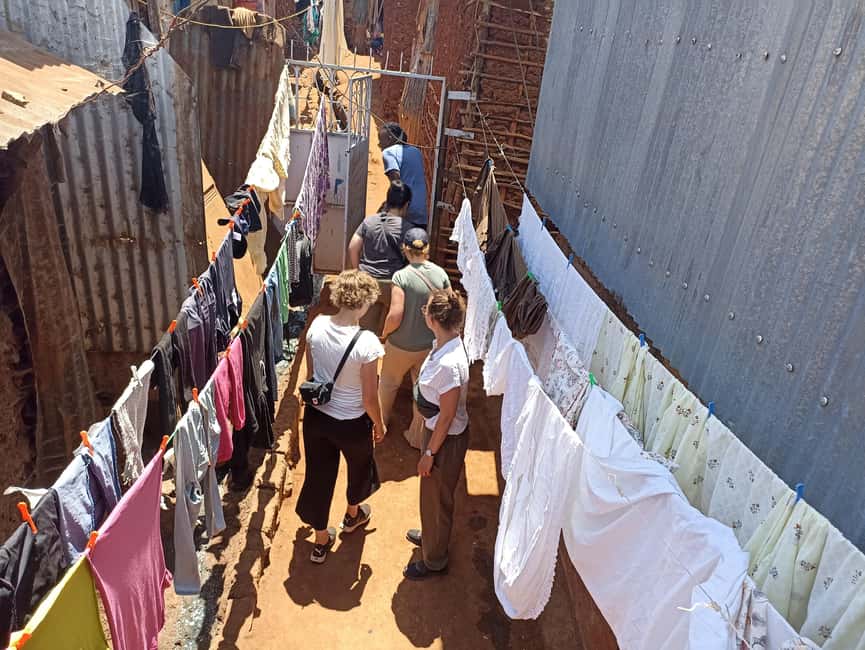
- Luke grew up in Kibera: His local connections shape the tour and help you meet residents in a respectful setting.
- The route has seven distinct stops: Expect Toi Market, a children’s home, Uweza Art Gallery, a viewpoint, a family home, Fairview Academy, and a recycling workshop.
- The tour supports local work: Part of the price helps provide food, shelter, education, stationery, and school supplies.
- The experience lasts up to three hours: Wear practical shoes and be ready to walk and listen.
- You can see creativity alongside hardship: Art, recycled bone crafts, schools, markets, and community care all form part of the visit.
- The meeting point is easy to reach: Meet near the security checkpoint at Greenhouse Mall off Ngong Road in Adams Arcade.
A visit to Kibera can easily go wrong if it treats poverty as a spectacle. This experience takes a better route. Luke, who was born and raised in Kibera, guides you through places connected to ordinary life, local work, education, and community support.
He is also a trained professional with a university degree, and he speaks English and Swahili. The strongest part of the tour is not any single stop. It is the way Luke connects each place to the larger story of Kibera, explaining how people manage daily challenges while building businesses, caring for children, and supporting one another.
The price is $40 per person. That is fair value for a private or small-group experience with a local guide, bottled water, several community visits, and a route that would be difficult to arrange independently. You are also helping fund local projects through the 30 percent community contribution.
Still, the price should not be your only test. This is not a polished city attraction. Plans can shift slightly, some visits may feel personal, and you need to approach the experience with care. If you want a comfortable bus tour with quick photo stops, choose something else. If you want context and direct conversation, this is a strong choice in Nairobi.
Meeting Luke at Greenhouse Mall
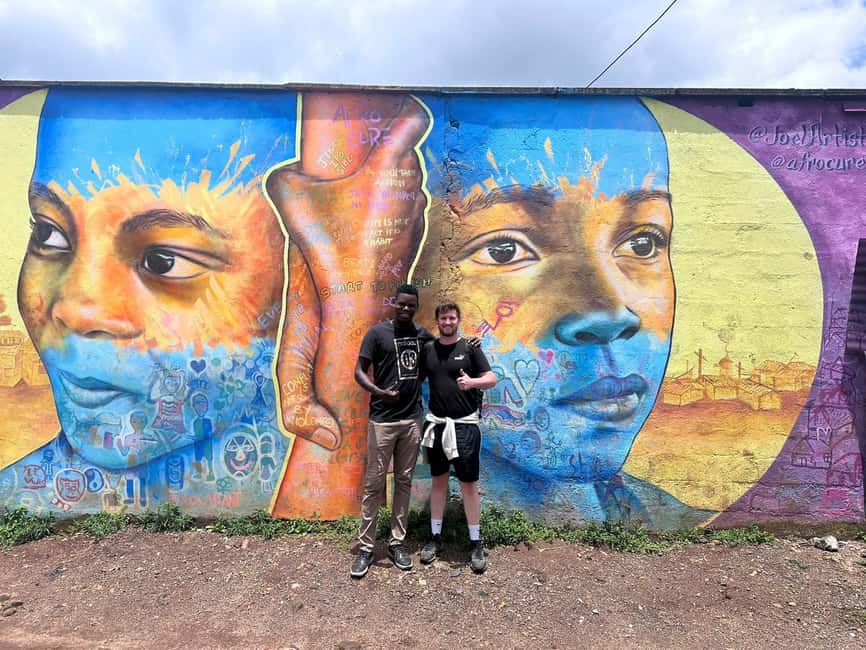
The tour begins at the entrance of Greenhouse Mall, off Ngong Road near Adams Arcade. You contact Luke on WhatsApp and meet him close to the security checkpoint after entering the mall.
This is a useful starting point. You can get water or a snack before setting off, and the mall gives you a clear public place to meet. The route then moves toward Toi Market and the Kibera area.
Luke’s communication is one of the practical strengths here. He is described as responsive on WhatsApp, punctual, and willing to adjust the timing. The tour offers flexible scheduling, so ask about the start time when you book.
You will want comfortable shoes, modest clothing, and a small amount of cash if you plan to buy crafts or other goods. Purchases are not included in the $40 price, but buying directly from local makers can be a useful way to support the people you meet.
Other cultural visits around Nairobi:
- Nairobi: Explore Kibera Slum with Local Guides
★ 4.9 · 365 reviews - Nairobi: Day Tour to Amboseli National Park & Maasai Village
★ 4.5 · 310 reviews - Masai village Day Tour Experience
★ 5.0 · 284 reviews
Toi Market and the local economy
Toi Market is described as Nairobi’s second-largest open-air market. It sells mainly second-hand clothing, much of it sourced from Europe, the United Kingdom, the United States, China, and elsewhere.
This stop gives you a quick lesson in how goods circulate through the city. The market is not just a place for visitors to browse. Local people from Kibera shop there for affordable clothing, and vendors make a living from the trade.
Luke can explain what you are seeing in a way a short walk alone cannot. You will notice movement, sales, clothing piles, and tight lanes, but the useful part is understanding the market’s role in neighborhood life.
Keep your belongings secure and stay close to your guide. The route is made for walking, and you should expect busy streets rather than a quiet museum visit. If you want to take photographs, ask first. That simple courtesy matters throughout the tour.
A children’s home and the question of responsible visits

The children’s home supports vulnerable children from Kibera with food, shelter, and education. Some children are orphans, while others have been rescued from difficult street situations.
This is often the most affecting stop. You may meet children, staff, and caregivers, including Mama Paschalia, who cares for about 18 orphans. The experience gives a face to the community support work that the tour helps fund.
I appreciate that the visit is tied to a practical contribution rather than being only a brief look at hardship. The tour’s community share supports the home and a local school, while visitors are encouraged to help with useful items such as maize flour and stationery.
At the same time, this is the point where good manners matter most. You are entering a place where children live, not a performance space. Listen to the caregiver, follow Luke’s instructions, and do not assume that close-up photographs or gifts are appropriate. A respectful visit may feel quieter and less dramatic, but it is more useful.
Uweza Art Gallery and Kibera’s creative side

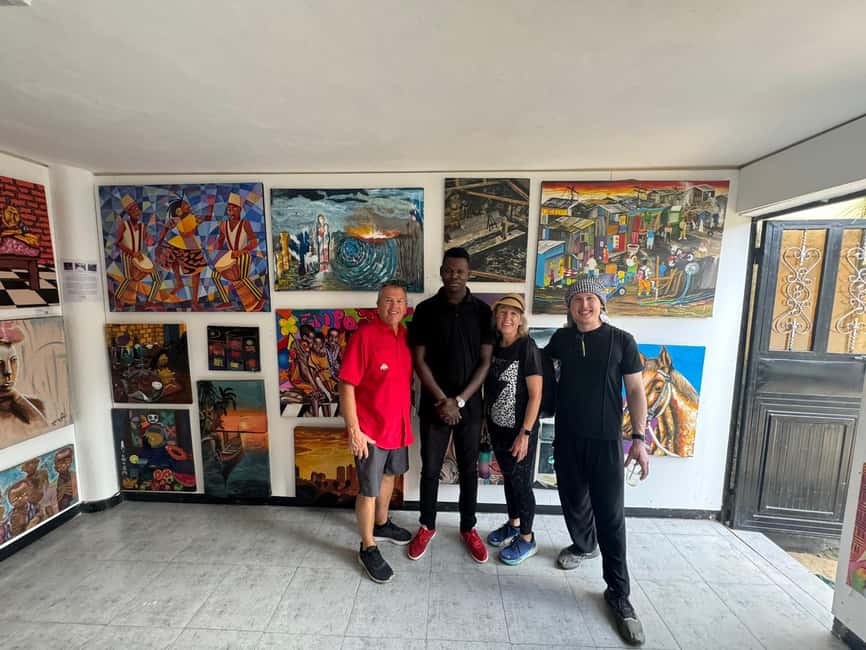
Uweza Art Gallery gives children and local artists a place to develop and show their work. The art is not an aside to the tour. It shows how creative work can offer both expression and a route toward income.
Luke explains the meaning behind the pieces and the role of the art center in the community. You may see work that reflects daily life, local identity, and personal hopes. The gallery also challenges the narrow picture many people carry of Kibera.
I like this stop because it changes the rhythm of the visit. After hearing about housing and poverty, you see skill, ambition, and pride. You are also given the option to support artists by purchasing artwork, though products are not part of the tour fee.
The gallery is a good place to ask questions. What does a certain image mean? Who made it? How does the center support young artists? Luke’s personal connection helps turn the stop into a conversation rather than a quick look around.
Same base, a completely different sort of day:
- Nairobi National Park Half-Day Tour; Free Wi-Fi connection
★ 5.0 · 878 reviews - Nairobi: National Park & Optional Elephants & Giraffe Center
★ 4.8 · 874 reviews - NAI NAMI: Nairobi Storytelling Tour with Street Children
★ 5.0 · 792 reviews - Nairobi National Park Half-Day Game Drive
★ 4.5 · 738 reviews
The Kibera viewpoint near the old railway line
Near Kibera Town Centre, the route reaches an elevated viewpoint close to the old Kenya Uganda Railway line. From here, you can see part of the settlement from above.
The view helps you understand Kibera’s scale and density. On the ground, narrow streets and small rooms make it hard to grasp how many people live within such a limited area. From above, the physical pressures become easier to see.
The viewpoint is also a useful pause. You can ask Luke about the area’s origins, growth, and relationship with Nairobi’s city center, which is about seven kilometers away. Kibera’s history is tied to migration, work, housing pressure, and changing urban life, and Luke’s own story gives those broad subjects a human frame.
Do not expect a full city panorama or a formal observation deck. This is a local viewpoint within the neighborhood, and the appeal is the context rather than polished facilities.
A 4 by 4 meter family home
The local home visit is one of the most revealing parts of the route. You see how a roughly 4 by 4 meter room can be arranged and meet a family living there.
This stop turns general talk about housing into something you can understand physically. Space, storage, privacy, cooking, sleeping, and family life all take on a different meaning when the room is so small.
Several versions of the tour have included a visit to Luke’s parents’ home. Meeting his family can make the experience feel more personal, but it also requires care. You are entering someone’s private space, so keep the visit brief, ask before taking pictures, and let the family guide the conversation.
I find this more useful than simply walking past rows of homes. You can ask Luke how families organize daily life, but avoid treating residents as objects of curiosity. The best approach is friendly, direct, and modest.
Fairview Academy and education under pressure
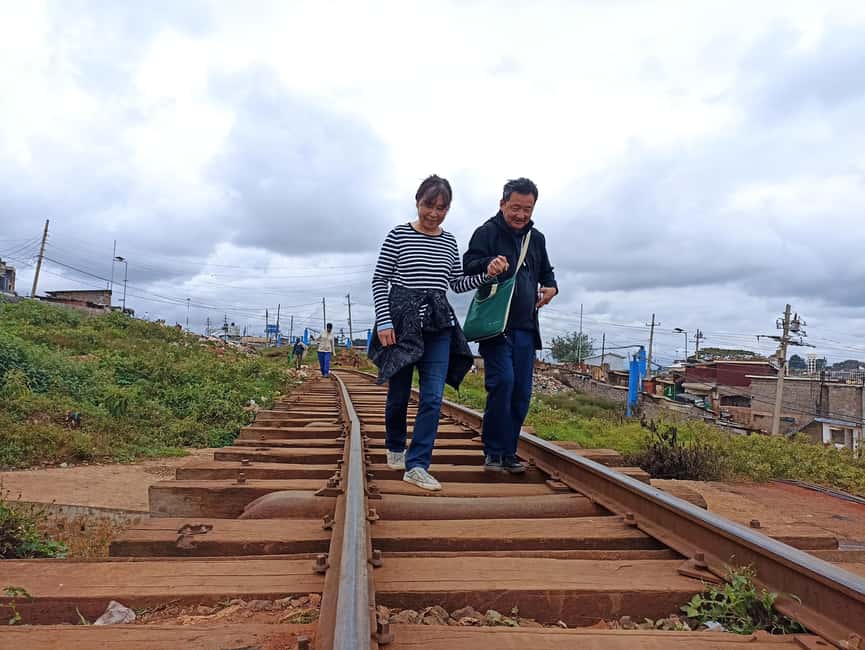
At Fairview Academy, you see children learning despite limited resources. The school visit shows the importance of education in a place where families may face unstable housing, unemployment, health problems, and unreliable services.
This stop also explains why the tour directs part of its revenue toward school supplies and stationery. A contribution to the school may be less visible than a dramatic donation, but pencils, notebooks, and basic materials help children take part in lessons.
The visit is especially useful for parents, students, teachers, and anyone interested in development work. It gives you a way to think about education not as an abstract solution, but as a daily effort carried out in difficult conditions.
Do not expect a large institution with extensive facilities. The value is in meeting the people involved and seeing the determination to keep learning going.
Victorious Bone Craft and practical recycling

Victorious Bone Craft is a local workshop that turns cow bones, cow horns, used brass padlocks, and camel bone into ornaments and other products.
This is one of the tour’s most distinctive stops. The workshop links employment, craft, and waste reduction. Materials that might otherwise add to pollution are reworked into items with value.
You can see how small-scale enterprise creates income and builds pride in local skill. If you like handmade goods, this is a sensible place to buy something directly, though purchases cost extra.
The workshop also gives the tour a constructive finish before you leave the neighborhood. Kibera’s problems are real, but so are the efforts to solve them through art, recycling, education, and local business.
The order of stops can be flexible. One visitor preferred spending more time with children and community workers rather than focusing on souvenirs, and Luke adjusted the experience. Ask in advance if one part of the route matters especially to you.
Safety, comfort, and the pace of the walk

Safety is a major concern for many people considering Kibera, especially solo women and families. Luke’s local background and connections are a clear advantage. He knows the streets, introduces you to people he trusts, and helps you avoid unwanted attention.
That does not mean you should stop using common sense. Stay with the guide, keep valuables out of sight, and ask before photographing people. You may also want to carry only what you need.
The route lasts up to three hours and includes walking through streets, markets, and community spaces. The ground and pace can vary, and the emotional weight of the visits may be tiring even if the physical walking is manageable.
The experience is not suitable for children under seven, babies under one year, or people over 95 according to the stated restrictions. If you have mobility concerns, discuss them with Luke before booking because the route includes several walking stops.
The final stop is listed as Olympic Estate, where you can order an Uber or Bolt for your next destination. The meeting information also identifies Greenhouse Mall as the meeting point, so confirm the exact end arrangement with Luke when you book.
What the $40 price really buys
At $40 per person, you are paying for more than a guided walk. The fee covers Luke’s time, bottled water, the market visit, community introductions, the children’s home, family home, art center, school, recycling workshop, and viewpoint.
The strongest value is access. Without a local guide born in Kibera, you would likely see only a fraction of these places, and you would lack the personal explanations that connect them.
The 30 percent contribution also matters. It supports a children’s home and a school with food, shelter, education, stationery, and other supplies. You should still ask Luke how the contribution is handled if that is important to your decision, but the stated community purpose gives the fee more weight than a standard sightseeing charge.
Do not expect every stop to feel equally long or formal. Some are working homes or small businesses, and the visit depends on the people present. That is part of the experience, but it also means you should value the human contact more than a fixed show.
Who should book this Kibera experience?
I would choose this tour if you want to understand Nairobi through local voices rather than only visiting major attractions. It suits adults, older children, students, photographers who ask permission, and people interested in housing, education, community work, entrepreneurship, and social development.
It is especially useful if you are uneasy about visiting Kibera alone. Luke’s local knowledge provides structure and reassurance, while the small-scale visits keep the focus on people and projects.
I would not choose it if you want a relaxed afternoon, a luxury setting, or a simple list of photo stops. You need to be ready for hard subjects and private spaces. The tour rewards patience, questions, and respect.
Should you book it?
Yes, if you want a serious and personal look at Kibera and understand that this is a community visit, not poverty entertainment. Luke’s local ties, family visit, flexible approach, and work with children give the tour substance.
Book it with realistic expectations. Wear practical shoes, bring modest clothing, ask before taking photos, and leave room in your schedule for conversation. At $40, the combination of local access and community support makes this one of Nairobi’s more meaningful half-day experiences.
FAQ
Where does the Kibera tour begin?
It begins at the entrance of Greenhouse Mall, off Ngong Road near Adams Arcade. Meet Luke near the security checkpoint after entering the mall.
How long does the tour last?
The tour is scheduled for a maximum of three hours.
Who leads the experience?
Luke leads the tour. He was born and raised in Kibera, holds a degree, speaks English and Swahili, and works as a local social entrepreneur. Other local guides, including Samuel, Victor, Clement, and others, may also assist on some tours.
What places will I visit?
The route includes Toi Market, a local children’s home, Uweza Art Gallery, a Kibera viewpoint, a local family home, Fairview Academy, and Victorious Bone Craft recycling workshop.
Does the tour visit a school?
Yes. The route includes Fairview Academy, a local school in Kibera.
Does any of the tour price support the community?
Yes. Thirty percent of the tour revenue supports a children’s home and local school, including help with school stationery and other school supplies.
Is bottled water included?
Yes. Bottled water is included in the tour price.
Are purchases included?
No. Clothing, artwork, crafts, and other products you choose to buy cost extra.
Is the tour suitable for young children?
It is not suitable for children under seven or babies under one year.
Can I cancel the booking?
You can cancel up to 24 hours in advance for a full refund.
Just added around Nairobi
- Nairobi: Horseback Riding Tour Through Maize Plantation★ 5.0 · 3 reviews
- Nairobi: Kibera Slum Compassionate Walking Tour★ 5.0 · 4 reviews
- Nairobi: Karura Forest Guided Walking Tour★ 5.0 · 4 reviews
- From Nairobi: Horseback Wildlife Safari with Transfer & Meal★ 4.6 · 7 reviews
- Nairobi: Hidden Gems and Local Secret Guided Walking Tour★ 4.9 · 20 reviews
- Nairobi: Hop on Hop off and Maasai market Collections Visit★ 3.5 · 10 reviews
- Nairobi: Karura Forest Horseback Riding Tour★ 4.8 · 11 reviews
- Nairobi: Guided Afternoon Tour to Bomas of Kenya.★ 3.1 · 4 reviews
Cultural Village Visits, compared.

Day Tour to Amboseli National Park & Maasai Village
Read our review →



Giraffe Centre, Elephant Orphanage, and Bomas of Kenya Day Tour from Nairobi
Read our review →
Giraffe Center, Elephant Orphanage, Beads Center & Bomas of Kenya Tour Nairobi
Read our review →Browse the lists this tour appears in