Reviewed · TOURS IN NAIROBI
8 Days Kenya and Tanzania Private Lodging Safari from Nairobi
Maasai Mara and Serengeti give you two great wildlife parks in one trip, with the route linking Kenya’s open grasslands to Tanzania’s endless plains. I like the private format, since your group travels with its own guide rather than sharing every game drive with strangers. I also like the comfortable tented lodges, which include beds, toilets, hot showers, and mosquito nets.
The main catch is the pace. You cover a lot of ground, including a border crossing and a long final transfer to Nairobi. The schedule also needs a careful check before booking, since Day 6 is labeled Lake Manyara but describes a Ngorongoro Crater visit.
Key points to know before booking
- Two famous safari regions in one trip: See Maasai Mara in Kenya, then continue into Serengeti and Ngorongoro in Tanzania.
- Private guiding: Your group has its own driver-guide, with guides including Chris, Nathan, Hassan, and David assigned on different departures.
- Comfortable tented lodging: Rooms have private toilets, hot showers, beds, and mosquito nets, with meals included.
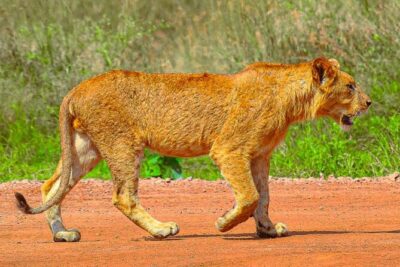
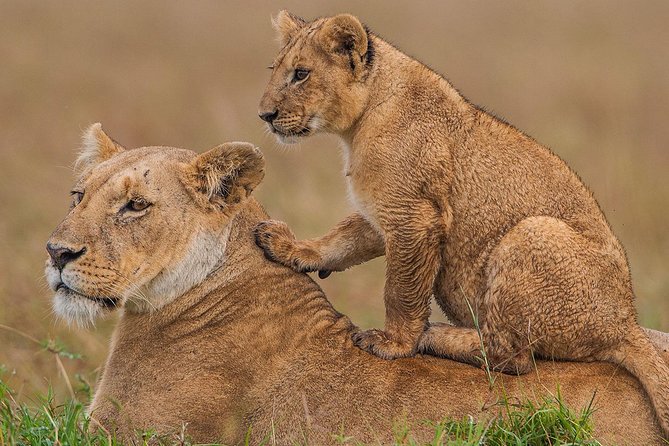
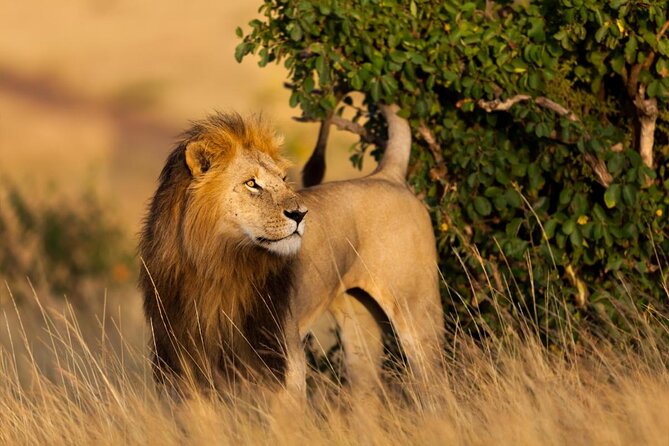
- Strong wildlife potential: The route is built around lions, elephants, cheetahs, leopards, hippos, birds, and the possible Big Five.
- A real cross-border journey: You cross at Isibania on the way into Tanzania and Namanga on the return to Nairobi.
- Extra costs to plan for: A Maasai village visit costs $20 per person, and a balloon safari costs $420.
Why this eight-day route works
This safari is designed for someone who wants the major northern Tanzania and southern Kenya sights without arranging separate trips. You begin in Nairobi and finish there, while the middle of the journey moves through four famous wildlife areas: Maasai Mara, Serengeti, Ngorongoro, and Lake Manyara.
I like the basic shape of the route. Maasai Mara gives you a strong opening, Serengeti provides the broadest game-viewing time, Ngorongoro adds a dramatic crater setting, and Lake Manyara brings a shorter bird and wildlife stop before the return to Arusha and Nairobi.
The price is listed at $4,594.60 per person. That is a serious spend, but it includes seven nights of full-board accommodation, park entrance fees, Ngorongoro conservation fees, bottled water, guides, a private safari vehicle arrangement, a Nairobi return shuttle, airport transfer, and the first night at Raha Suites. You are not simply paying for transport between parks. You are paying for permits, meals, lodging, border support, and a guide who can adjust game drives around animal activity.
Still, value depends on your expectations. The route has several long driving days, and the accommodation is described as mid-luxury rather than high-end luxury. Ask for the exact lodge names, vehicle details, and guide plan before paying. Also confirm the Day 6 schedule in writing.
A few more things to do around Nairobi worth a look
- Hell’s Gate National Park Private Bike Tour from Nairobi
★ 5.0 · 192 reviews - 3 days Masai Mara on Private 4×4 Land Cruiser
★ 5.0 · 130 reviews - Safe and Private Airport transfer in Nairobi
★ 5.0 · 76 reviews
Day 1: Nairobi to Maasai Mara by way of the Rift Valley
Pickup begins around 7 a.m. from your accommodation or the airport. The first useful stop is the Rift Valley viewpoint, where you can look across the escarpment and the lower plains. It is a brief stop, about 20 minutes, but it breaks up the drive and gives you a clear sense of the volcanic forces that shaped this part of East Africa.
You should reach your Maasai Mara lodge in time for lunch. Later, around 4 p.m., you head out for a two-hour evening game drive. This is a smart first safari outing because the light is softer, the day is cooler, and you get an immediate introduction to the reserve.
The drawback is the road time. Nairobi to Maasai Mara is not a quick hop, and arrival times can shift with road conditions. Keep your first morning simple. Wear comfortable clothes, carry water, and keep your camera ready for the viewpoint and the first wildlife sightings.
Day 2: A full Mara day and the Mara River
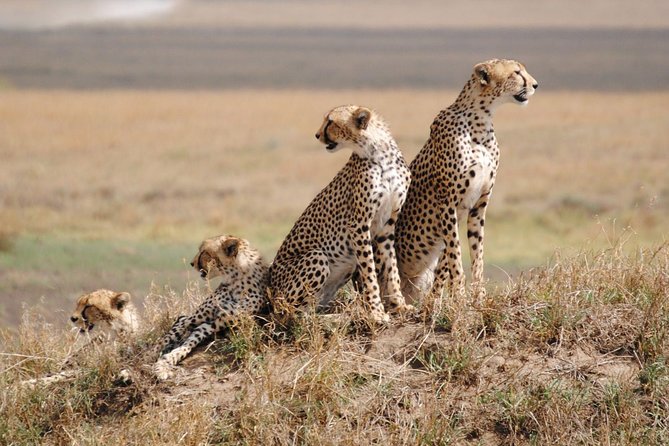
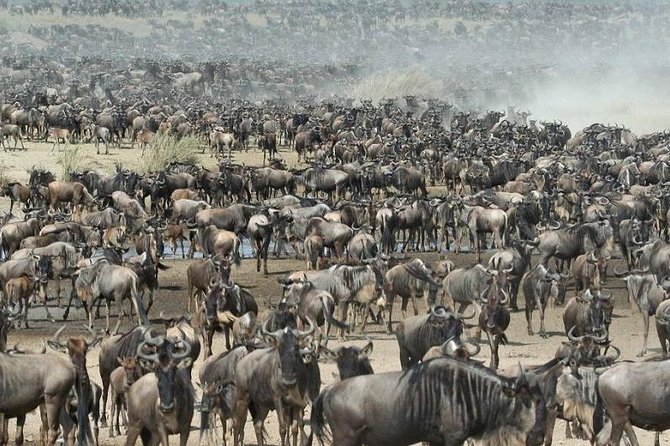
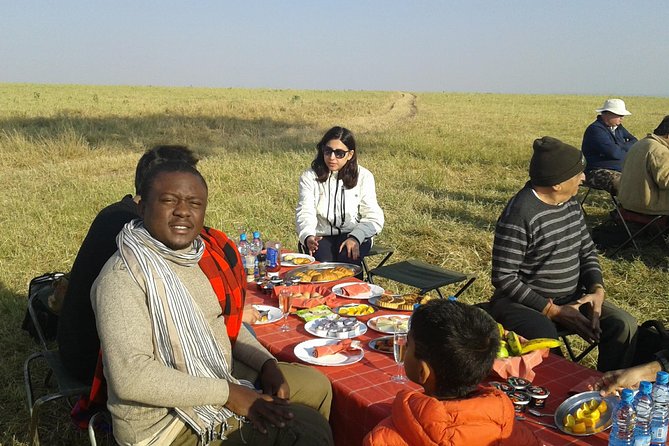
The second day gives you the most useful block of time in Kenya: a full-day game drive beginning at about 7:30 a.m. You carry a picnic lunch and continue toward the Mara River, one of the best-known areas connected with the wildebeest migration.
The reserve is known for open grassland, large concentrations of animals, and chances to see lions, elephants, cheetahs, leopards, and other wildlife. The migration is seasonal, with large herds generally arriving around July and leaving around November. That timing matters. Outside those months, the Mara can still offer excellent wildlife viewing, but you should not book this trip solely on the hope of seeing a river crossing.
Expect about six hours of game viewing, with roughly an hour connected to the Mara River area. Conditions can be dusty and bumpy, and picnic lunches are practical rather than elaborate. The reward is time in the reserve rather than a quick drive-by.
Later, you can visit a Maasai village for about an hour. The visit costs $20 per person and is optional. I would treat it as a chance to learn about local culture, but ask what the visit includes and how the fee is handled. Cultural visits are best when they allow real conversation and do not feel rushed.
Day 3: Leaving Kenya at Isibania
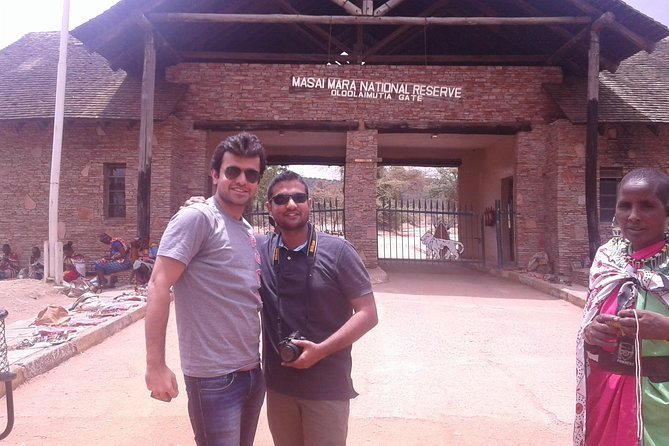
Day three begins early, with breakfast at 6 a.m. You exit Maasai Mara through the South Gate and drive about three hours to the Isibania border. The border process is expected to take about an hour, after which you meet your Tanzanian driver-guide.
This handover is an important practical detail. You may have one guide in Kenya and another in Tanzania, rather than one person accompanying you across both countries. Past departures have included guides such as Chris on the Kenya side and Hassan or other Tanzanian guides after the crossing. Names can vary, so confirm your guide assignments before departure.
After the border, you continue toward Serengeti and begin an evening game drive en route to the lodge. The transfer and the game drive make this a long day, but the timing gives you a first taste of Tanzania before dinner.
Keep your passport and required travel documents easy to reach. The border is not the day for a deeply packed camera bag. A small day bag, water, and patience will serve you better.
Same base, a completely different sort of day:
- Nairobi National Park Half-Day Tour; Free Wi-Fi connection
★ 5.0 · 878 reviews - Nairobi: National Park & Optional Elephants & Giraffe Center
★ 4.8 · 874 reviews - NAI NAMI: Nairobi Storytelling Tour with Street Children
★ 5.0 · 792 reviews - Nairobi National Park Half-Day Game Drive
★ 4.5 · 738 reviews
Day 4: Serengeti’s long game-viewing day
Serengeti means endless plains, and the park earns the name. Your fourth day is built around a full-day drive, beginning after breakfast at about 7 a.m., with a picnic lunch around 1 p.m. The route may include open grassland, scattered trees, rocky kopjes, and the Serengeti Hippo Pool.
This is the day when a good guide matters most. The guide has to read tracks, watch animal behavior, and decide when to stay with a sighting and when to move on. Chris, called the Safari Doctor by some returning clients, is praised for spotting camouflaged lions and explaining their behavior. Other named guides include Nathan and David, both noted for finding strong viewing positions and adapting the day to individual interests.
You have a chance at the Big Five, but no safari can promise every animal. Cheetahs, lions, leopards, elephants, hippos, and birdlife are all part of the route’s appeal. The Serengeti is large, so the drive can feel less concentrated than Ngorongoro. That spaciousness is also the point: you are seeing wildlife across a huge natural area rather than inside a small enclosure.
Plan for a full day in the vehicle. The comfort of the lodge matters here because you will want a proper shower and an unhurried dinner afterward.
Day 5: From Serengeti toward Ngorongoro
You leave Serengeti around 7 a.m. and continue toward Ngorongoro with a picnic lunch. Game viewing can continue along the way, so this is not merely a transfer. The route also includes the possibility of visiting Olduvai Gorge, one of the key paleoanthropological sites connected with early human evolution.
Olduvai adds an important human story to a trip otherwise centered on animals. It helps put the parks into a wider setting, showing that this area matters for both wildlife and the study of our earliest ancestors.
The day is listed at roughly six hours. Expect a mix of road travel and wildlife stops rather than a single long crater visit. Ask whether Olduvai Gorge entry or any related stop is included in your final price, since the included list clearly names park fees but does not spell out every optional site charge.
Day 6: Ngorongoro Crater and a schedule to verify
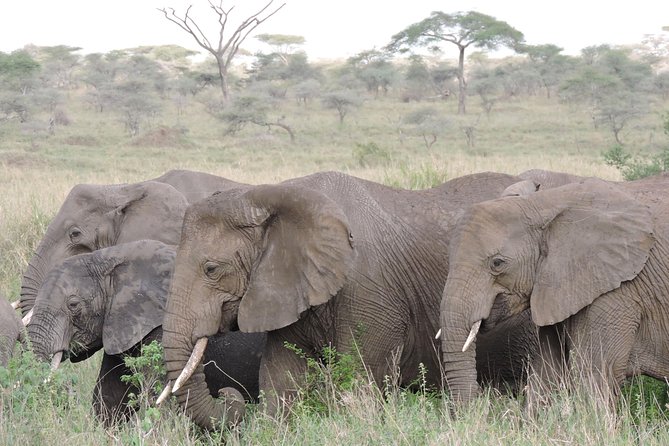
The supplied schedule labels this day Lake Manyara, but the description is clearly a half-day Ngorongoro Crater visit beginning at 6 a.m. You descend into the world’s largest inactive, intact volcanic caldera and carry a picnic lunch. The day ends around 1 p.m., followed by a return to the hotel and free afternoon time by the pool.
Ngorongoro is a different kind of safari from Serengeti. The crater’s enclosed setting can bring many animals into a more concentrated area, while the surrounding walls create a dramatic view from above and below. You may see a broad range of wildlife and birdlife, though sightings always depend on conditions.
The early start is worth noting. A 6 a.m. departure means a cooler, quieter morning, but you need to be ready quickly after breakfast. The afternoon pause is welcome after several long drives.
An optional coffee farm visit is also listed. Because the schedule has a naming mismatch, confirm three things before booking: where you sleep on this night, whether the crater visit is included, and when Lake Manyara actually takes place.
Day 7: Lake Manyara, then Arusha
Lake Manyara receives a half-day morning game drive beginning at 7 a.m. The park is known for birdlife, tree-climbing lions, and the chance to see pink flamingoes on the shallow waters of the lake.
The flamingoes are not guaranteed, but the bird focus gives this stop a different feel from the big-cat and open-plains days. The drive lasts about three hours, making it easier on your body than another full day in the vehicle.
Afterward, you continue to Arusha and should arrive around 4 p.m. Check-in is at Venus Premier Hotel, where you have a relaxing dinner before the final transfer. This overnight stop is practical rather than a major sightseeing event. It breaks up the return journey and gives you a bed, a meal, and a chance to repack before crossing back into Kenya.
Day 8: Arusha to Nairobi by private shuttle
Breakfast is scheduled for 6:30 a.m., followed by a 7 a.m. departure in a private car shuttle. You cross into Kenya at the Namanga border and are expected to reach Nairobi around 3 p.m.
The return transfer is included and ends with a drop-off at your Nairobi hotel or the airport. Do not schedule a tight onward flight unless the operator confirms the timing is safe. Border delays, road conditions, and the length of the drive can all affect arrival.
The tour says PCR testing can be organized in Tanzania, if required. Since testing rules can change, confirm current requirements before leaving home rather than relying only on the general trip description.
Lodging, meals, and comfort
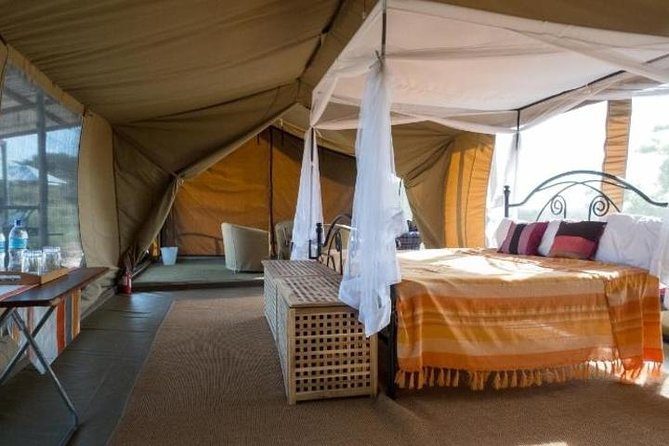
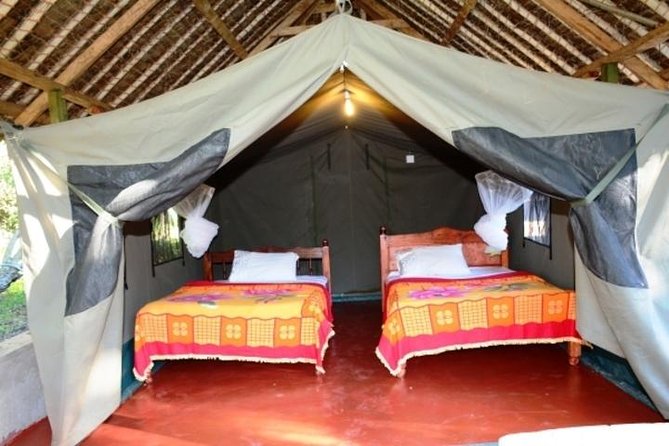
The accommodation is described as mid-luxury tented lodging. Each room has a bed, toilet, hot shower, and mosquito net. That is a useful middle ground for a safari: you get the atmosphere of sleeping close to the bush without giving up basic privacy and hot water.
All accommodation is on a full-board basis. Seven breakfasts, seven lunches, and seven dinners are included, along with at least one liter of bottled water per person per day in the vehicle. Drinks such as alcohol are not included.
The exact lodge names are not supplied, apart from Raha Suites for the first complimentary night and Venus Premier Hotel in Arusha. Ask for a night-by-night accommodation list. This is the simplest way to understand what the $4,594.60 price buys.
Guiding and the private format
The strongest part of this trip is likely to be the guiding. The guides are repeatedly praised for spotting animals that blend into the grass, explaining animal behavior, and adjusting the drive to suit the group. Chris is known for finding a camouflaged male lion and explaining how a pride works together. Nathan has been singled out for his Mara knowledge, while Hassan and David have also been named as helpful, capable guides.
The private setup means your own group participates in the activity. That gives you more say over photo stops, animal sightings, pace, and conversation. It does not mean every day is short or leisurely. Private transport improves control, but it cannot remove the distances between parks.
The real value of the $4,594.60 price
This price makes more sense when you count the pieces: two countries, four major wildlife areas, park fees, conservation fees, full-board lodging, bottled water, private guiding, airport transfer, Nairobi return transport, and border assistance.
It is less attractive if you want a slow, luxury-first safari with several nights in one camp. This program keeps moving and includes long road transfers. You are paying for range and convenience, not a quiet single-park retreat.
A balloon safari is available for $420, and the Maasai village visit costs $20. Both are extra. I would only add the balloon flight if the early start and cost fit your priorities, since the standard itinerary already has plenty of wildlife time.
Should you book this safari?
Book it if you want a well-packed Kenya and Tanzania route, value private guiding, and prefer one organized price covering parks, meals, lodging, and transfers. It suits first-time safari visitors who want the Mara, Serengeti, Ngorongoro, and Lake Manyara in one trip.
Think twice if you dislike long drives, border crossings, early starts, or changing guides. Before booking, get the exact lodge list, confirm the Day 6 correction, ask who will guide each country, and verify your airport drop-off timing.
The experience earns its price through access and range, but it asks you to trade some comfort and free time for more parks. If that is the trade you want, this is a strong way to see a large slice of East Africa in eight days.
FAQ
How long is the safari?
The safari lasts approximately eight days, with seven nights of accommodation included.
Where does the safari begin and end?
It begins in Nairobi, with pickup from your accommodation or the airport. It ends with drop-off at a Nairobi hotel or airport after the return from Arusha.
Is this a private tour?
Yes. Only your group participates in the private tour or activity.
Are meals included?
Yes. The package includes seven breakfasts, seven lunches, and seven dinners on a full-board basis.
Are park entrance fees included?
Yes. Entrance fees for the national parks and Ngorongoro conservation fees are included.
How much do the optional activities cost?
The Maasai village visit costs $20 per person. A balloon safari costs $420. Drinks such as alcohol are not included.
Can I cancel for a full refund?
You can cancel at least 24 hours before the experience starts for a full refund. Changes or cancellations made less than 24 hours before the start time are not accepted for a refund.
Just added around Nairobi
- Visit kibera Slum the chocolate city★ 4.8 · 3 reviews
- 3 days maasai mara migration safari★ 4.5 · 7 reviews
- Maasai Mara Day Trip★ 5.0 · 15 reviews
- 4 Days Tour Landcruiser in Masai Mara and Lake Nakuru★ 5.0 · 10 reviews
- 4 Days Safari to Lake Nakuru N/P and Maasai Mara N/R★ 5.0 · 18 reviews
- Day Tour to Nairobi national park, Elephants, and Giraffe Center★ 3.5 · 8 reviews
- Wildebeest Migration in Masai Mara and Sightseeing 4 Days Tour★ 4.5 · 6 reviews
- Vegans special safari★ 4.5 · 4 reviews
Tours in Nairobi, compared.
Nairobi National Park Half-Day Tour; Free Wi-Fi connection
Read our review →
National Park & Optional Elephants & Giraffe Center
Read our review →
NAI NAMI: Nairobi Storytelling Tour with Street Children
Read our review →