

Reviewed · CITY SIGHTSEEING TOURS
City Tour/Feel Like a local for a moment
Nairobi is easiest to understand from the street, not through a bus window. This small-group outing uses matatus, shared minibuses used by locals, to connect central Nairobi with three suburbs and everyday places such as City Market and Two Rivers Mall. You also get lunch, a guided Maasai Market visit, and plenty of time to ask questions.
I like the eight-person limit, which keeps the day personal and makes discussion with guides such as Harriet, Daisy, Winnie, and Maxine much easier. I also like the chance to eat Kenyan food and travel by public transport instead of simply moving between polished tourist sights.
The main consideration is comfort and pace. You will walk, use shared transport, and spend time in busy public places, so good shoes and a flexible attitude matter. The six-hour day can also feel full if you prefer a slow, private sightseeing tour.
What makes this Nairobi day different
- Matatu travel: Use Nairobi’s shared minibuses to move between neighborhoods and see how the city gets around.
- A tiny group: The tour accepts no more than eight people, allowing direct conversation with your guide.
- Local shopping stops: City Market and Maasai Market offer different looks at daily buying and selling.
- Kenyan food: Lunch is included, with an optional street food tasting for a more adventurous meal.
- Practical guidance: Guides including Harriet, Daisy, Winnie, and Maxine help with safety, questions, and market bargaining.
- Useful preparation: Bring a passport copy or your original passport, wear sturdy shoes, and leave flashy jewelry at home.
Seeing Nairobi through a matatu window
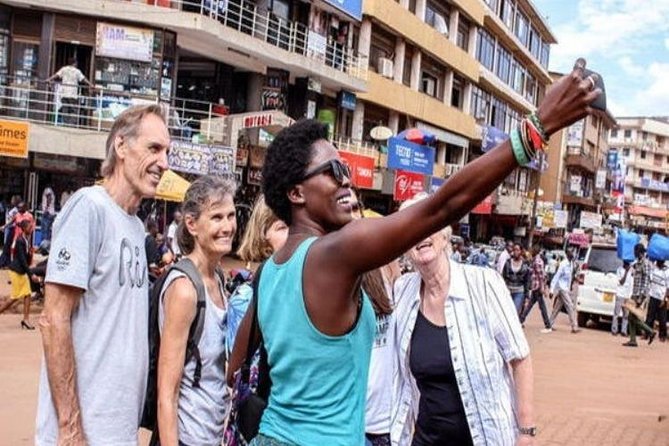
The heart of this experience is the way you move through Nairobi. Instead of staying in a private vehicle, you ride public transportation between parts of the city. That adds a little noise, waiting, and unpredictability, but it also gives you a clearer sense of how Nairobi works for the people who live there.
A matatu is a shared minibus, not a sightseeing vehicle. You should expect a practical ride rather than a polished one. The payoff is that the city becomes more than a collection of landmarks. You see how neighborhoods connect, how people shop, and how local transportation fits into the daily rhythm.
The guides are central to the experience. Harriet has been praised for making people feel safe and unhurried, while Daisy has guided visitors through cultural sites and explained what they were seeing. Maxine has also been singled out for her friendly, caring approach, and Harriet and Winnie are known for helping with market bargaining.
Since the group is capped at eight, you can ask direct questions without trying to be heard over a large crowd. That matters in Nairobi, where a good explanation can add context to an ordinary street, shop, or bus ride. I would use this day to ask about food, neighborhoods, transport, work, and the city’s past and present.
More city-side trips in Nairobi:
- Nairobi Historical Walking City Tour
★ 5.0 · 258 reviews - Nairobi Cultural and Historical City Tour with a Local
★ 5.0 · 67 reviews - Nairobi Walking Tour: Downtown & City Tour
★ 4.8 · 32 reviews
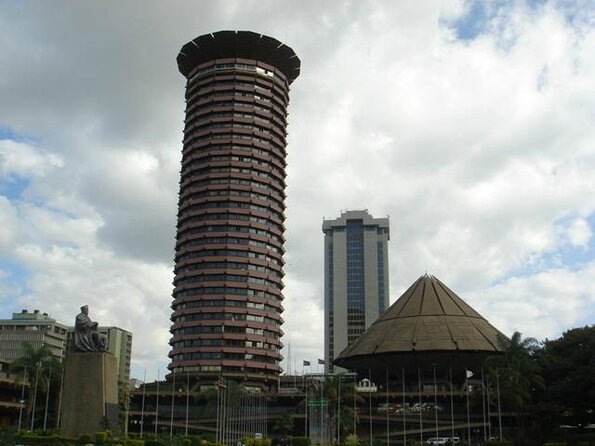
Kenyatta International Conference Center and the city center
The morning begins at BataWatalii Lane at 8:00 a.m. From there, the first listed stop is Kenyatta International Conference Center. You get about 15 minutes to take a picture at the Kenyatta Monument.
This is a brief orientation stop rather than a long architectural visit. It gives you a recognizable starting point in central Nairobi and a chance to hear about the role of the conference center and the monument in Kenya’s public life. Because the stop is short, do not expect time for a lengthy visit inside the building.
The tour’s rules about photography are worth noting. You should not bring a dedicated camera because photography in town is not allowed, but your phone is fine. Keep your phone use sensible and follow your guide’s instructions. A quick photo at the monument is part of the planned stop, but this is not a day built around taking pictures everywhere.
City Market, meat shopping, and daily commerce
The next stop is City Market, where you spend about 15 minutes seeing the meat-shopping area used by local shoppers. This is a quick visit, but it adds something that a standard monument tour often misses: a look at an ordinary place where people buy food.
You may find this part more interesting than a formal attraction because your guide can explain what you are seeing and answer questions in real time. The point is not to linger over every stall. It is to notice how food shopping works and how different the scene feels from a supermarket designed for international visitors.
This stop may not suit anyone who dislikes strong smells, crowded market settings, or close-up views of food preparation. Keep your belongings secure and follow the guide through the market. The short timing helps keep the visit focused.
Two Rivers Mall and modern Nairobi
The tour then heads to Two Rivers Mall for about 45 minutes. It is described as the biggest mall in Kenya, and the purpose here is to let you shop like a local in a modern commercial setting.
That may sound less exotic than a market, but it is an important counterpoint. Nairobi is not only historic sites, street stalls, and public minibuses. It is also a city where people shop in large contemporary centers. Two Rivers gives you a chance to compare a formal mall with the open market stops later in the day.
You might use this time for a snack, a look at local retail life, or a short break from the road. The stop is included in the tour, but purchases are not listed as part of the price, so budget separately for anything you buy.
The 45-minute visit is long enough to look around without turning the morning into a shopping trip. If you prefer museums and monuments to malls, this will probably be the least compelling stop. I still find it useful because it shows another side of Nairobi and keeps the day from presenting the city as a single, simplified experience.
Same base, a completely different sort of day:
- Nairobi National Park Half-Day Tour; Free Wi-Fi connection
★ 5.0 · 878 reviews - Nairobi: National Park & Optional Elephants & Giraffe Center
★ 4.8 · 874 reviews - NAI NAMI: Nairobi Storytelling Tour with Street Children
★ 5.0 · 792 reviews - Nairobi National Park Half-Day Game Drive
★ 4.5 · 738 reviews
Lunch and a taste of Kenyan food

Lunch is included, which improves the value of the $55 price. You do not need to arrange a separate midday meal, and eating together gives you more time with the guide and the other people in your group.
The exact restaurant and menu are not specified, so you should not book this expecting a particular dish. The food is presented as Kenyan, and the optional street food tasting offers another way to try local flavors. If you enjoy eating your way through a city, ask your guide what is being served and which street foods are suitable for you.
One useful detail comes from the experience of earlier participants: local food and a local bus ride were especially important parts of the day. That pairing makes sense. Food tells you about the city, while the matatu shows you how people move through it.
Alcoholic drinks are not included. Bottled water is included, which is practical during a six-hour outing, but you may still want to carry a small amount of cash for snacks or personal purchases.
Maasai Market and the art of bargaining
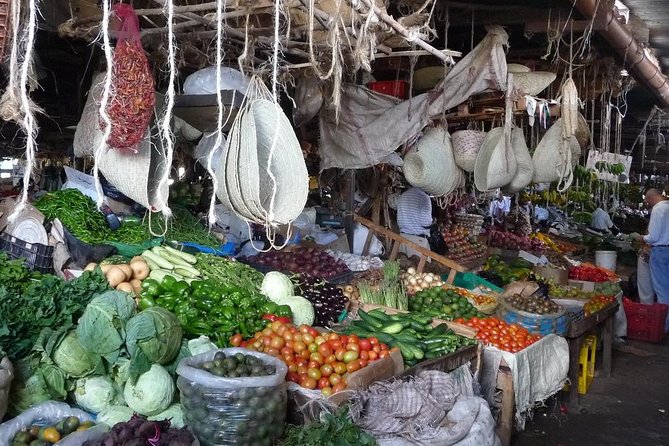
The Maasai Market is the longest named stop, with about one hour set aside for shopping. The guide helps you shop and bargain, with the goal of getting local prices rather than accepting the first amount quoted.
This is where a small group and a local guide can make a real difference. Bargaining can be awkward when you do not know the normal range, the tone to use, or when to walk away. Harriet and Winnie have been praised for helping with this part, so you can ask your guide to explain the process before you begin.
Treat the hour as a guided introduction, not a guarantee that every item will be the cheapest possible price. Your guide can help, but you still decide what to buy and how much to spend. Keep purchases manageable because you will continue traveling by public transportation and walking.
The market is also a good place to practice respectful shopping. Ask before handling items, listen to the guide, and avoid turning the people working there into photo subjects. Since the tour asks you not to bring a camera, your phone should be used carefully and only when appropriate.
A day built around conversation
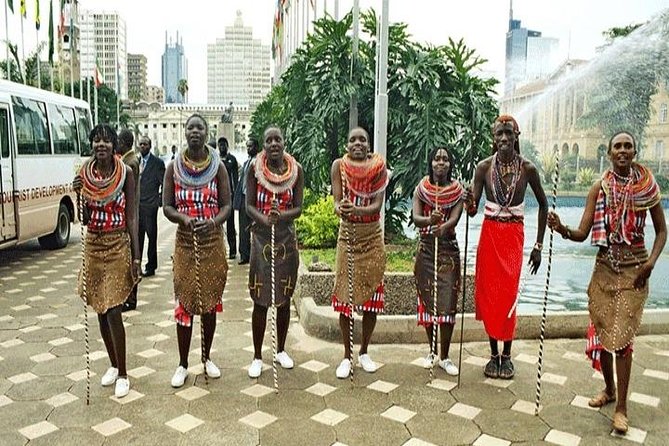
One of the tour’s strongest features is the time set aside for questions. This is not simply a sequence of stops with a guide pointing out buildings. The experience is designed around discussion about Kenyan history, life in Nairobi, transport, food, and neighborhoods.
The six-hour length gives the day room to breathe, though the schedule still covers a lot. You move among central sights, markets, a large mall, and residential areas using public transport. The result is more varied than a short downtown walk, but less predictable than a private vehicle tour.
The small group helps in practical ways. You can hear explanations, ask follow-up questions, and raise concerns without slowing down a large party. If you are traveling alone, it also offers a social setting without the fixed feel of a large coach group.
At the same time, the tour is not a private custom day. The stops and timing are set, and the public transportation element means that the experience may not move at exactly the same speed as a private car. I would choose it for contact and context, not for maximum efficiency.
What to bring and what to leave behind

Wear good walking shoes. Sandals and high heels are specifically discouraged, and that advice makes sense given the walking, market surfaces, and public transportation.
Carry a copy of your passport showing the main page and the visa stamp, or carry your original passport. Keep it secure. You should also leave flashy jewelry and other valuables behind. The operator specifically warns against carrying conspicuous valuables in town.
A phone is acceptable, but a dedicated camera is not. Bring only what you need for the day. Bottled water is provided, and lunch and public transportation fees are included.
Service animals are allowed, and most people can participate. Still, the combination of walking, shared minibuses, markets, and a full six-hour schedule may not suit everyone. If you need a slower pace or private transport, this may not be the right fit.
Is $55 a fair price for six hours?
At $55 per person, this tour offers solid value if you want several parts of Nairobi handled in one outing. The price includes an in-person guide, lunch, bottled water, and public transportation fees. It also includes the guidance that can make market shopping and matatu travel much easier for a first-time visitor.
The value is less about admission tickets, since the listed stops have no separate admission charge. You are paying for the guide’s time, route planning, transportation, food, and local interpretation. That is a fair exchange for someone who wants more than a quick photo stop.
The price is less attractive if you want private transportation, a long museum visit, or a tightly controlled schedule. You are not paying for luxury. You are paying for access to ordinary parts of Nairobi and the chance to ask questions along the way.
The experience is often booked well ahead, with an average booking lead time of 59 days. If your dates are fixed, I would not leave it until the last minute, especially because the small group is limited to eight people.
Who should book this Nairobi experience?
I would recommend it to a first-time visitor who wants an introduction to Nairobi that includes daily life, food, shopping, and public transport. It also suits solo visitors and couples who enjoy talking with a guide rather than listening to a long speech from a distance.
You will likely get the most from this day if you are curious, comfortable with shared transportation, and happy to spend time in markets. It is a good choice for anyone who wants to understand how residents shop, travel, and spend time in different parts of the city.
I would be more cautious if you need a private car, dislike markets, or want to photograph every stop. The camera restriction is important, and the public-transit format requires more flexibility than a conventional sightseeing drive.
Cancellation is free up to 24 hours before the 8:00 a.m. start time. Changes or cancellations made within 24 hours are not refunded, and poor weather can lead to a different date or a full refund.
Should you book it?
Book this tour if you want Nairobi explained by people who know the city and you like the idea of riding a matatu, eating Kenyan food, and bargaining at Maasai Market. The small group, included lunch, and guides such as Harriet, Daisy, Winnie, and Maxine add real practical value.
Skip it if you want a private, polished sightseeing day with guaranteed photo stops and no public transportation. For an authentic introduction to Nairobi at a moderate price, this is a strong choice, provided you arrive in good shoes and ready to adapt to the city’s pace.
FAQ
How long does the Nairobi tour last?
The experience lasts approximately six hours.
What time and where does the tour begin?
It begins at 8:00 a.m. at BataWatalii Lane in Nairobi, Kenya.
Where does the tour end?
The activity ends back at the meeting point.
How many people can join the tour?
The group is limited to a maximum of eight people.
Is lunch included?
Yes. Lunch, bottled water, public transportation fees, and an in-person guide are included.
Is street food included?
Street food tasting is optional. Lunch is included, but alcoholic beverages and anything not specifically mentioned are not included.
What should I bring?
Wear good shoes and carry a copy of your passport showing the main page and visa stamp, or bring your original passport. Leave flashy jewelry and other valuables at home.
Can I cancel for a full refund?
Yes, if you cancel at least 24 hours before the experience’s start time. Cancellations or changes made less than 24 hours before the start are not refunded or accepted.
Just added around Nairobi
- Nairobi: Horseback Riding Tour Through Maize Plantation★ 5.0 · 3 reviews
- Nairobi: Kibera Slum Compassionate Walking Tour★ 5.0 · 4 reviews
- Nairobi: Karura Forest Guided Walking Tour★ 5.0 · 4 reviews
- From Nairobi: Horseback Wildlife Safari with Transfer & Meal★ 4.6 · 7 reviews
- Nairobi: Hidden Gems and Local Secret Guided Walking Tour★ 4.9 · 20 reviews
- Nairobi: Hop on Hop off and Maasai market Collections Visit★ 3.5 · 10 reviews
- Nairobi: Karura Forest Horseback Riding Tour★ 4.8 · 11 reviews
- Nairobi: Guided Afternoon Tour to Bomas of Kenya.★ 3.1 · 4 reviews
City Sightseeing Tours, compared.

Tusks, Fort Jesus, Old Town, Beach and City Tour
Read our review →
Nairobi Cultural and Historical City Tour with a Local
Read our review →
Private City Tour with Fort Jesus & Haller Park
Read our review →

Mombasa Half-Day City Tour with Fort Jesus and Haller Park
Read our review →
Browse the lists this tour appears in