

Reviewed · CULTURAL VILLAGE VISITS
Kevins Kibera Slum Tours
Kibera is not a sightseeing backdrop. It is a home, workplace, school community, and place of sharp contrasts. On this private Nairobi tour, Kevin or his brother Ismael leads you through the neighborhood where they grew up, introducing you to local projects, family members, workshops, and daily life.
I like two things right away: the guide is a lifelong Kibera resident, and the tour reaches beyond a quick walk past poor housing. You visit a school, a family home, a bone workshop, and the main market. The main drawback is the ground under your feet. Paths can be steep, muddy, uneven, and tricky after rain, so this is not a good choice if you have serious balance or walking problems.
Key points to know
- Local leadership: Kevin and his brother Ismael grew up in Kibera and are familiar faces in the community.
- A private four-hour visit: Your group tours alone, with hotel pickup and drop-off in Nairobi.
- Several meaningful stops: Expect a school or orphanage, a bone workshop, the family home, landfill, train track, and main market.
- A physically demanding walk: Closed-toe shoes are essential, and muddy or broken paths can require care.
- A personal encounter: Visiting the guide’s home helps turn statistics about poverty into a human story.
- A strong value for the right visitor: At $65 per person, the cost includes a private local guide and round-trip city transfers, but not food or drinks.
Meeting Kibera through a local guide
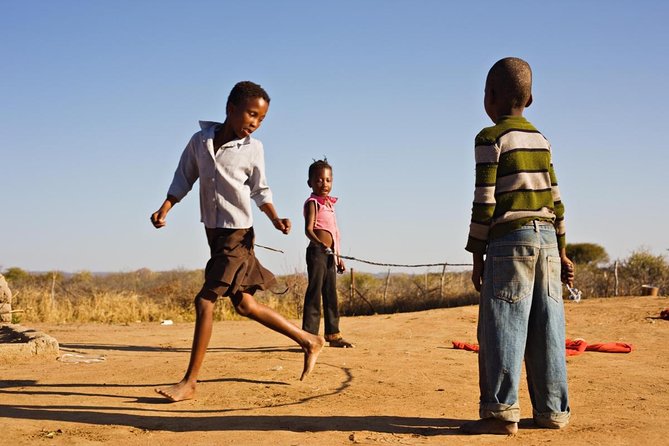
The tour starts at 8:00 a.m., with pickup from your hotel in Nairobi. The early start matters. You get moving before the day becomes hotter, and a private pickup removes the need to arrange your own transport to the neighborhood.
Kevin leads some departures, while his brother Ismael guides others. Both grew up in Kibera, and that local connection shapes the whole experience. You are not simply following a guide who has memorized a few facts. You are walking with someone who knows the streets, families, schools, and community projects from personal experience.
That does not make the visit comfortable in the usual sightseeing sense. You will see difficult living conditions, exposed hazards, limited services, and crowded paths. But the guide can explain what you are seeing in human terms, including the work being done by local schools, families, and small community groups.
I value that difference. A short visit to Kibera can easily become a sad collection of images. A local guide gives you context and helps you meet people as neighbors and workers, not as scenery.
The tour is private, which is another practical advantage. Your group can ask questions without holding up a large party, and the guide can adjust the pace within reason. It also gives the experience a more personal feel, especially when you visit the family home.
Other cultural visits around Nairobi:
- Nairobi: Explore Kibera Slum with Local Guides
★ 4.9 · 365 reviews - Nairobi: Day Tour to Amboseli National Park & Maasai Village
★ 4.5 · 310 reviews - Masai village Day Tour Experience
★ 5.0 · 284 reviews
Walking the main streets, paths, and train track area

The walking portion lasts about three hours. Expect a changing route rather than a polished attraction with clear paths and formal signs.
You may walk along the main street market, where residents shop and work. This is one of the better places to notice the ordinary rhythm of Kibera. The tour is not only about hardship. It also shows the places where people buy what they need, earn money, meet one another, and carry on with family life.
The route also includes the train track area and a landfill. These stops bring the harder side of the visit into view. You may see how limited infrastructure affects daily routines and how people live close to waste, broken surfaces, and other hazards. The guide’s explanations are especially useful here because the physical setting can be difficult to understand without local background.
Take the walking warning seriously. The ground can be precarious, with uneven surfaces and muddy sections after rain. One person described the walk as unsuitable for anyone who has difficulty with balance or agility. That is not a minor footnote. Wear shoes with a good grip, keep your hands free, and expect them to get very dirty.
The tour is not designed as a gentle stroll. If you are comfortable walking for several hours over rough ground, you should be fine. If you need smooth pavement, regular seating, or easy access, choose another Nairobi activity.
A school and orphanage that add hope to the visit
The school and orphanage are among the most important stops. You see how children study in a place where money, space, and supplies can be limited. The visit also shows the local effort behind education, including small schools and programs that work to support children without strong family support.
This part can be emotionally heavy. You may find yourself thinking about the gap between the children’s energy and the dangers around them. At the same time, the school offers a more hopeful view. It shows people trying to create opportunities rather than waiting for outside help.
The guide can explain the role of education in Kibera and the work being done to help promising students continue their studies. Some local efforts focus on helping the brightest children reach boarding schools. Those details give the stop a practical purpose. You are not only looking at a difficult setting. You are learning how families and community workers try to change what comes next.
Be respectful around children. Follow the guide’s direction about photographs and conversation, and remember that a school is a place of work, not a stage for visitors. The value of this stop comes from listening and learning, not from collecting dramatic pictures.
Visiting Kevin’s house and meeting the family
A visit to Kevin’s house and family is the most personal part of the tour. Depending on the guide, you may meet Kevin’s family or Ismael’s family and see a home connected to the guide’s own life.
This stop changes the tone. Instead of discussing Kibera only in terms of poverty, you see a household where people laugh, talk, disagree, and welcome a visitor. That ordinary family contact is important. It reminds you that the neighborhood is made up of individual lives, not one single story.
The family visit also explains why a local guide matters so much. Kevin and Ismael are not simply taking you through a place they studied from a distance. Their connection to Kibera gives the tour a personal center, and their standing in the community helps you move through the area with more ease.
Still, you should approach this part with humility. A private home is a generous invitation. Ask before taking photos, avoid intrusive questions, and allow the family to set the tone. If you do that, the visit can be one of the most memorable parts of your time in Nairobi.
Same base, a completely different sort of day:
- Nairobi National Park Half-Day Tour; Free Wi-Fi connection
★ 5.0 · 878 reviews - Nairobi: National Park & Optional Elephants & Giraffe Center
★ 4.8 · 874 reviews - NAI NAMI: Nairobi Storytelling Tour with Street Children
★ 5.0 · 792 reviews - Nairobi National Park Half-Day Game Drive
★ 4.5 · 738 reviews
Bone crafts, small enterprise, and local work

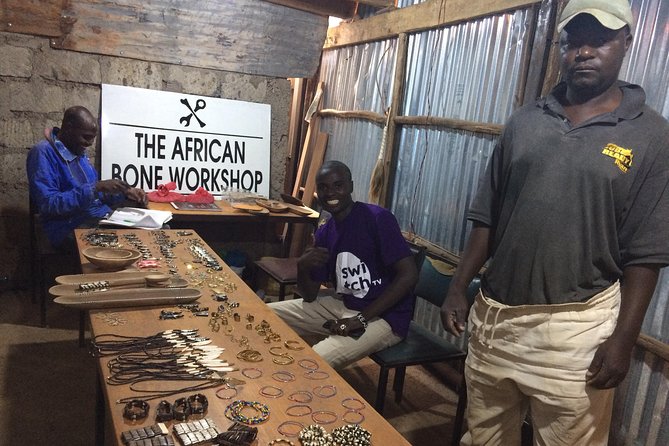
The African bone workshop offers a look at a different side of Kibera: practical work and small business. Cow bone is turned into jewelry and other crafts. The workshop shows skill, patience, and resourcefulness, and it gives you something concrete to consider if you want to support local makers.
Some tours also include a community empowerment group that makes bags. This detail may vary by departure, so treat it as a possible addition rather than a guaranteed stop. The confirmed route includes the bone workshop.
I like this part because it gives the visit a productive focus. Kibera is not only a place receiving aid. It is also a place where people make goods, run businesses, teach children, and build income from limited resources.
You may have the chance to buy a craft, but food and drinks are not included in the $65 price. The tour information does not promise purchases, meals, or refreshments, so bring any money you may need and do not expect a food stop to be part of the package.
What the $65 price really covers

At $65 per person, this is not the cheapest way to spend a morning in Nairobi. The value comes from what is included: a private tour, a local guide, hotel pickup, and hotel drop-off within the city.
A private tour matters here. Kibera is a complicated place to visit, and moving with Kevin or Ismael gives you local direction, personal introductions, and someone who can explain the setting as you go. You are also not paying separately for a taxi to and from the neighborhood.
The price is easier to justify for couples, families, or small groups who want a focused and personal experience. It may feel less attractive if you are mainly looking for a low-cost walk or a quick photo stop.
The tour can also carry value beyond sightseeing. You learn about local schools, family life, small enterprise, and community effort in one morning. That makes it a strong choice for someone who wants Nairobi to include more than wildlife parks and major landmarks.
The rating is 4.9 from 213 ratings, with 98 percent recommending the experience. Those numbers suggest consistent satisfaction, but the practical details matter more for your decision: rough walking, emotionally difficult scenes, and variable pickup timing. One visitor reported a pickup arriving an hour later than expected, so keep some flexibility in your morning and confirm the meeting details before setting an important connection afterward.
Safety, comfort, and respectful behavior
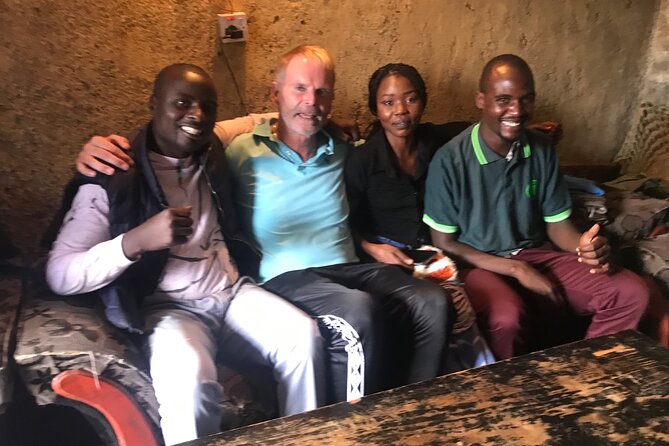
The tour is private, and the guides are familiar members of the community. The experience is designed for most people who can manage the walk, and solo women have described feeling safe while accompanied by Ismael.
That said, safety is not the same as comfort. The route includes crowded streets, rough surfaces, children, waste areas, and places where you need to watch every step. Stay close to your guide and follow instructions. Do not wander off to explore alone.
Wear closed-toe shoes that you do not mind ruining. Long pants and simple clothing are sensible, although the supplied information does not require a specific dress code. Carry only what you need, keep valuables secure, and avoid flashy equipment.
The emotional side deserves equal attention. You may feel sadness, discomfort, gratitude, anger, or even frustration about the lack of clean water, toilets, showers, and public support. Those reactions are normal. Try to turn them into curiosity and respect rather than pity.
Ask questions about systems and daily life. Listen when the guide explains local projects. If you want to help, ask what support is useful instead of handing out items to children along the route. The experience is strongest when it treats people as participants in their own community.
Is this a good family tour?

Families with older children may find the visit meaningful. One family with children aged eight and nine described it as a powerful experience, especially because the school and home visits made the place easier to understand.
Parents should prepare children in advance. Explain that Kibera is a real neighborhood, not an attraction built for visitors. Talk about asking permission before taking photos and about responding politely when people greet them.
The walking conditions are the main concern. Young children who tire quickly, or anyone who struggles on uneven ground, may not enjoy the three-hour route. The provider says most people can participate, but that does not remove the need for steady footing and basic stamina.
For families who can manage the route, the private format helps. You can ask the guide to explain difficult subjects in a way your children understand, and you can pause for questions without a large group waiting.
Booking details and cancellation flexibility
The tour begins at 8:00 a.m. and lasts about four hours, including the walking portion and city transfers. Pickup and drop-off are offered from any hotel accommodation in Nairobi.
A mobile ticket is provided, and confirmation arrives when you book. The tour is private, so only your group takes part.
You can cancel for a full refund up to 24 hours before the start time. Changes or cancellations made inside that 24-hour window are not accepted for a refund. The cut-off uses Nairobi local time.
The experience requires good weather. If poor weather causes cancellation, you can choose another date or receive a full refund. This matters because rain can make the paths much harder to manage.
Who should book Kevin’s Kibera Slum Tours?
I would choose this tour if you want a direct, personal look at Nairobi and are prepared to listen as much as you look. It suits people interested in community life, education, local enterprise, and the realities behind a city’s rapid growth.
It is especially suitable for:
- Visitors who want a private experience with a local guide
- Solo visitors who prefer organized movement through an unfamiliar area
- Families with children who can handle a long, uneven walk
- Anyone interested in community schools and local projects
- People willing to face difficult conditions without treating them as entertainment
I would skip it if you need easy pavement, quiet sightseeing, or a light morning. The route can be physically demanding, and some scenes may stay with you long after the tour ends.
Should you book it?
Book it if you want to meet Kibera through people who live there, rather than simply look at it from a vehicle or read about it from afar. Kevin and Ismael bring personal history, family access, and community connections that give the visit unusual depth.
Just arrive with sturdy shoes, an open mind, and realistic expectations. This is not a polished attraction. It is a serious, human visit that can be hopeful, upsetting, and highly memorable in the same morning. For the right visitor, the $65 cost is fair because it supports a private local experience and removes the trouble of arranging transport yourself.
FAQ
How long does Kevin’s Kibera Slum Tour last?
The experience lasts approximately four hours. About three hours are spent at Kibera, with the remainder allowing for pickup and drop-off arrangements.
What time does the tour start?
The tour starts at 8:00 a.m.
Does the tour include hotel pickup?
Yes. Pickup and drop-off are offered from hotel accommodation anywhere in Nairobi.
Is the tour private?
Yes. Only your group participates in the activity.
Who leads the tour?
The tour is led by Kevin or his brother Ismael, both of whom grew up in Kibera.
What places can I visit during the tour?
The route includes an African bone workshop, an orphanage school, Kevin’s house and family, a landfill, the train track area, and the main street market.
Is food included?
No. Food and drinks are not included in the tour price.
Just added around Nairobi
- Nairobi: Horseback Riding Tour Through Maize Plantation★ 5.0 · 3 reviews
- Nairobi: Kibera Slum Compassionate Walking Tour★ 5.0 · 4 reviews
- Nairobi: Karura Forest Guided Walking Tour★ 5.0 · 4 reviews
- From Nairobi: Horseback Wildlife Safari with Transfer & Meal★ 4.6 · 7 reviews
- Nairobi: Hidden Gems and Local Secret Guided Walking Tour★ 4.9 · 20 reviews
- Nairobi: Hop on Hop off and Maasai market Collections Visit★ 3.5 · 10 reviews
- Nairobi: Karura Forest Horseback Riding Tour★ 4.8 · 11 reviews
- Nairobi: Guided Afternoon Tour to Bomas of Kenya.★ 3.1 · 4 reviews
Cultural Village Visits, compared.


Day Tour to Amboseli National Park & Maasai Village
Read our review →


Kibera Slum Tour with Local Social Entrepreneurs
Read our review →

Giraffe Centre, Elephant Orphanage, and Bomas of Kenya Day Tour from Nairobi
Read our review →
Giraffe Center, Elephant Orphanage, Beads Center & Bomas of Kenya Tour Nairobi
Read our review →Browse the lists this tour appears in