
Reviewed · CULTURAL VILLAGE VISITS
Maasai Village: Cultural Experience of The Maasai Tradition
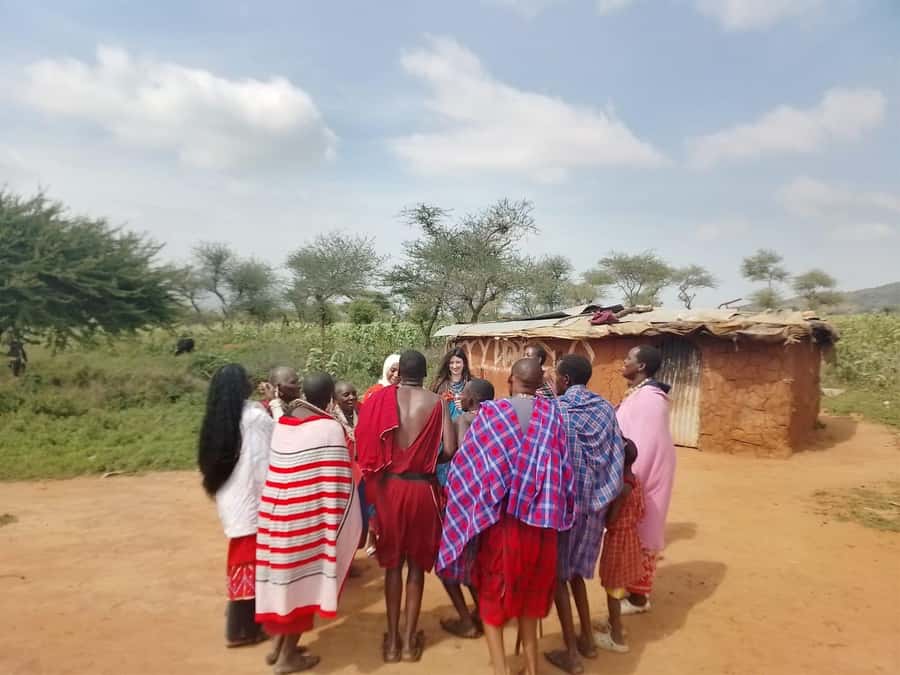
The most memorable part of this six-hour outing is the hands-on contact. You do not simply watch a dance and leave. You learn to make fire without matches, cook ugali with local women, try Maasai beadwork, and step inside a manyatta, a traditional hut made from mud, sticks, and cow dung. I like that these activities give you something to do while explaining why the customs matter.
I also like the small group size, limited to 10 people, and the chance to meet local guides such as Jen and Ben when they are assigned to your outing. The weak point is the price clarity: the advertised $55 does not include the separate $30 admission fee per person, and some people find the visit smaller and more commercial than the word village suggests.
Key points to know before you go
- A hands-on cultural visit: Make fire, prepare ugali, create beadwork, and enter a traditional manyatta.
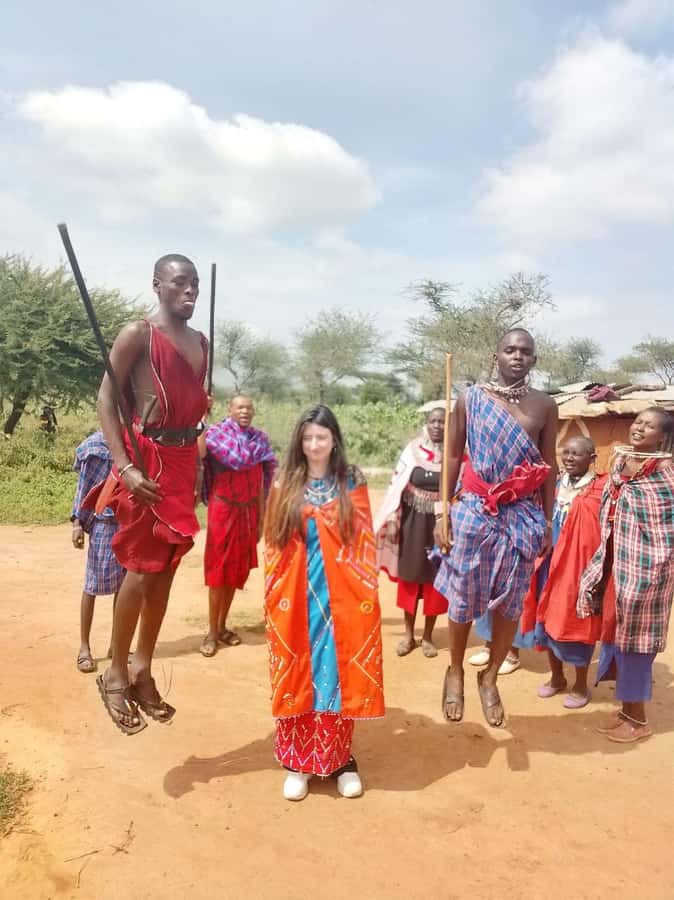
- A lively welcome: Maasai warriors and women present songs and the well-known jumping dance.
- A small settlement, not necessarily a large village: The visit may involve only a few huts and one family group.
- A long road section: The drive from Nairobi takes you from city streets toward open savanna scenery, with one account describing roughly two hours each way.
- Extra cost at the entrance: Add $30 per person for admission, plus any food, drinks, or personal purchases.
- A flexible booking: You can cancel up to 24 hours ahead for a full refund and reserve without paying immediately.
From Nairobi streets to open Maasai country
The day starts with pickup anywhere within Nairobi. After you provide your address, the operator sends a pickup time and exact meeting point. That is useful in a city where hotel entrances and road access can vary, but you should still allow time for traffic.
The drive is part of the experience. The scenery changes from urban Nairobi to wider, drier country and open savanna views. Your English-speaking driver provides commentary about Kenya’s different cultures and ecosystems, giving the road time more purpose than a simple transfer.
Do not treat this as a quick stop just outside the city. A long drive can take up much of the six-hour schedule. One booking account described about two hours on the road to the settlement, so bring water, sun protection, and something comfortable for the journey. The supplied bottled water helps, but meals and extra drinks are not included.
Other cultural visits around Nairobi:
- Nairobi: Explore Kibera Slum with Local Guides
★ 4.9 · 365 reviews - Nairobi: Day Tour to Amboseli National Park & Maasai Village
★ 4.5 · 310 reviews - Masai village Day Tour Experience
★ 5.0 · 284 reviews
A welcome of singing, dancing, and jumping
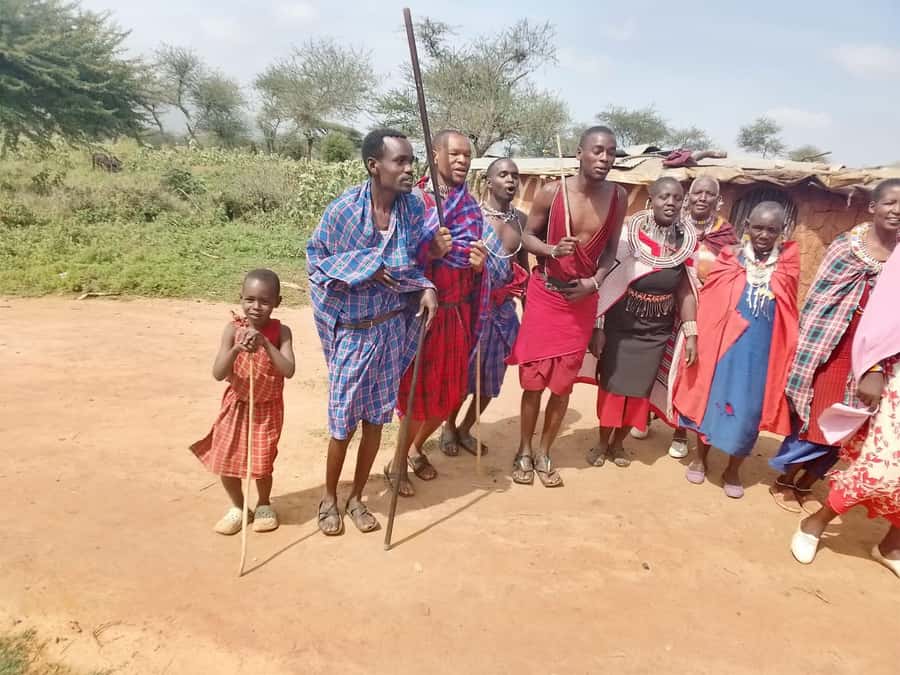
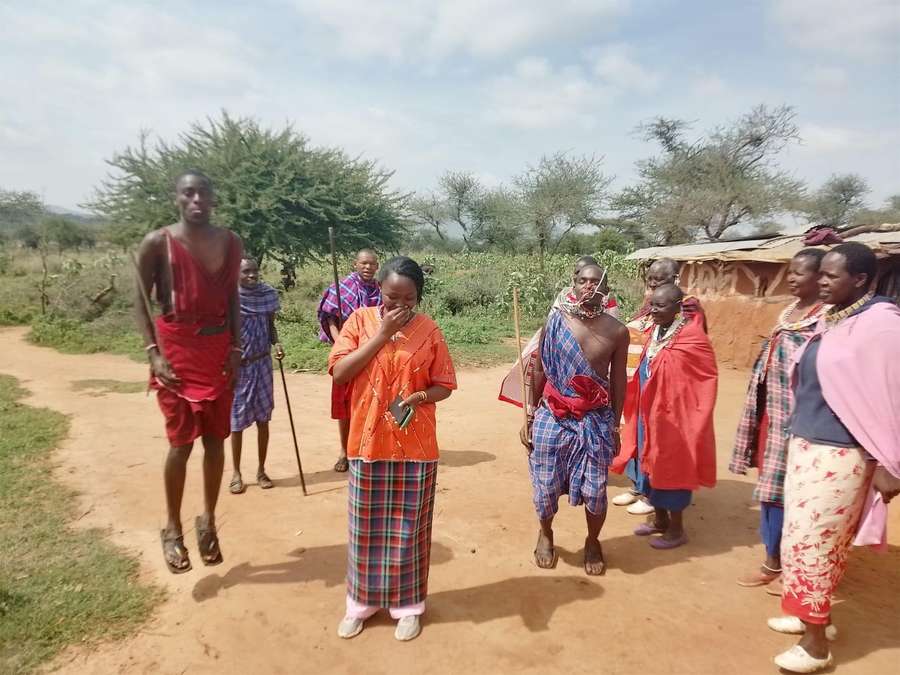
Arrival begins with a lively welcome from Maasai warriors and women. Songs and the jumping dance provide an immediate introduction to ceremony, movement, and community pride.
The dance is a highlight for many people, but I suggest watching with respect rather than treating it as a staged photo prop. You are encouraged to take pictures, yet this is still a social meeting. Ask before photographing close-up portraits, and give people time to speak instead of rushing from one pose to the next.
The small group limit of 10 makes conversation easier. You can ask about customs, family life, cattle, and the meaning of the clothing and beadwork. The strongest moments come when you use the performance as a starting point for questions rather than the whole purpose of the visit.
Making fire without matches
One of the most useful demonstrations shows how Maasai people traditionally start a fire without modern matches. You get to try the technique yourself, which turns a familiar survival skill into a physical challenge.
This activity also helps explain the practical knowledge behind daily life. Fire is not just a trick for visitors. It connects to cooking, warmth, and household routines. You might need patience and several attempts, so do not expect to master it instantly.
I like this part because it avoids a museum-style explanation. You handle the materials, watch the method, and learn through doing. The activity is simple, but it gives you a better sense of the work involved in ordinary tasks.
Cooking ugali with local women
You then work with local women to prepare ugali, a staple Kenyan dish. The activity offers a direct way to learn about food and household roles without reducing the visit to a lecture.
Ugali is made from maize meal, and the cooking process is part of the lesson. Follow the instructions closely, take your turn, and ask about when the dish is served and what it accompanies. Meals are not included as part of the tour, so do not assume this cooking session replaces lunch.
This is also a good point to remember that cultural activities can feel personal. You are entering a setting where people live and work, not attending a cooking school. A patient, polite approach will make the exchange more comfortable for everyone.
Same base, a completely different sort of day:
- Nairobi National Park Half-Day Tour; Free Wi-Fi connection
★ 5.0 · 878 reviews - Nairobi: National Park & Optional Elephants & Giraffe Center
★ 4.8 · 874 reviews - NAI NAMI: Nairobi Storytelling Tour with Street Children
★ 5.0 · 792 reviews - Nairobi National Park Half-Day Game Drive
★ 4.5 · 738 reviews
Beadwork that carries identity
Bead-making is another hands-on activity. Maasai beadwork is not simply decorative. Colors, patterns, and jewelry form part of personal and cultural identity, and the finished pieces can carry meaning beyond their appearance.
You can try making a small piece and then purchase handmade jewelry if you wish. The money from these sales goes directly to the village, giving your spending a clear local purpose. Still, buy only what you genuinely want. A cultural purchase feels better when it is a choice, not an obligation created by pressure.
The beadwork is also one of the easiest activities to continue thinking about after the visit. A necklace or bracelet can remind you of the people who explained its use and the time you spent learning the process.
Inside a traditional manyatta
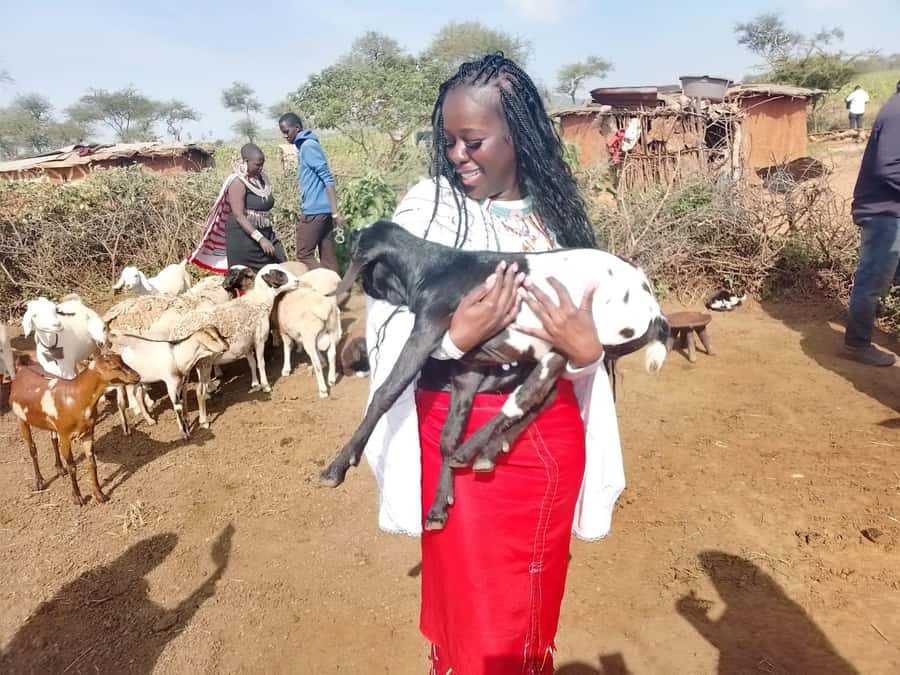
A manyatta is built from mud, sticks, and cow dung. Entering one gives you a close look at building methods, household space, family structure, and everyday responsibilities.
The hut is modest and practical. Space is arranged for living rather than display, and the guide explains how homes are made and how daily tasks are handled. This is one of the more valuable parts of the experience because it connects architecture to family life.
Keep your expectations realistic. The word village may suggest a large settlement, but the visit can involve a small family group and only a couple of huts. That does not make the manyatta less interesting, but it does change the scale of the experience. If you want a broad community tour with many homes and residents, this may feel limited.
The livestock market on selected days
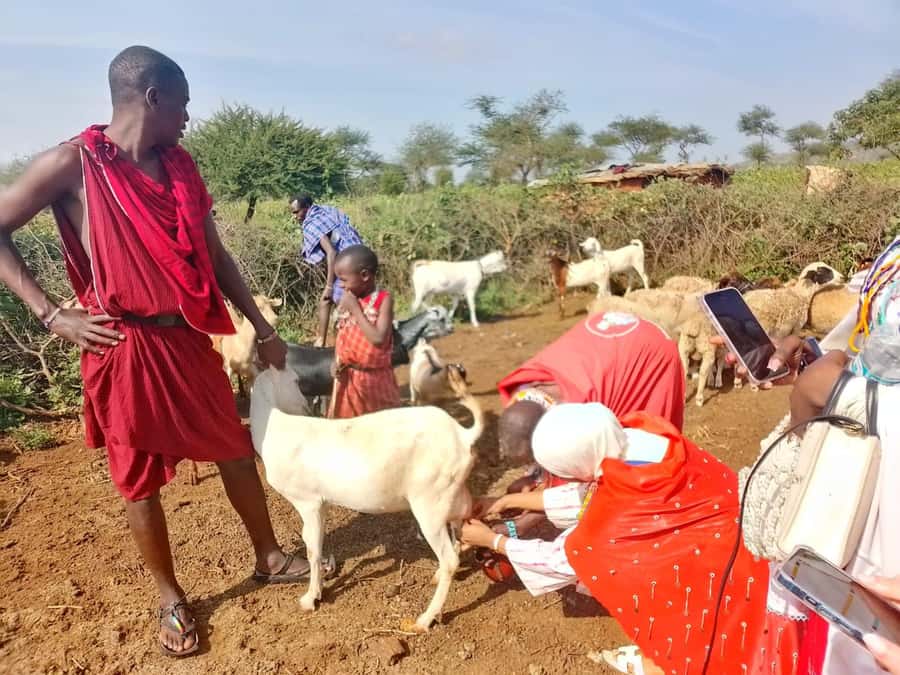
On some days, the outing includes a visit to one of Kenya’s larger livestock markets. You may see Maasai herders trading cattle, goats, and sheep, offering a look at the economic side of rural life.
This is a useful addition because it places cattle at the center of more than tradition. Livestock can shape work, family decisions, trade, and social relationships. A market shows those practical connections better than a presentation alone.
The market is available only on selected days, so do not book expecting it as a guaranteed part of every outing. Ask about the date when you reserve if this is a major reason for choosing the experience.
How authentic will it feel?
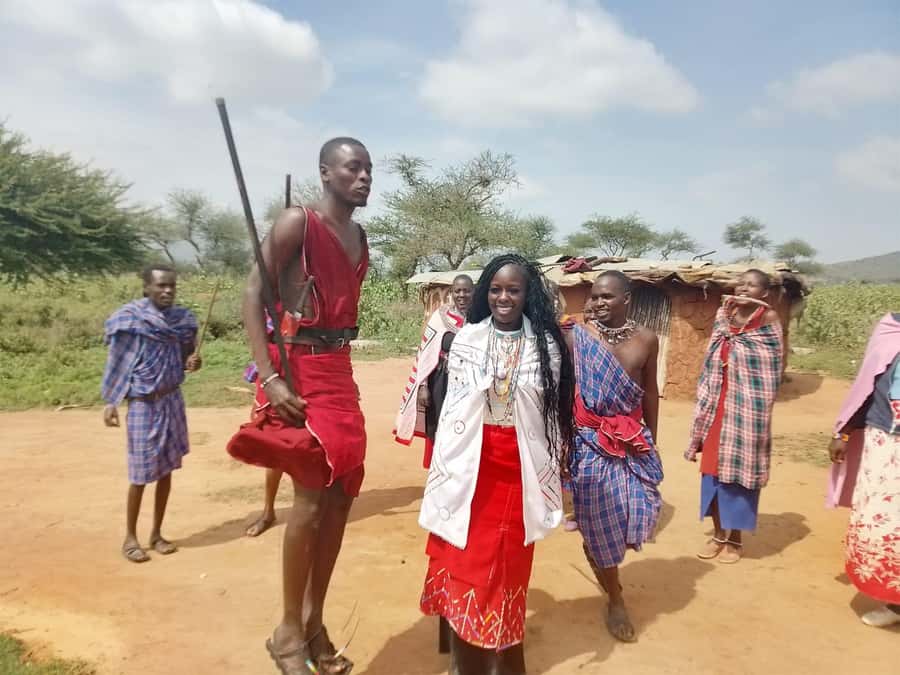
The visit aims to offer direct contact rather than a large commercial attraction. You speak with local people, enter a family home, take part in household activities, and have time for questions.
At the same time, the experience is arranged for paying customers. The welcome dance, beadwork sales, admission charge, and photo opportunities are all part of that reality. Some people find the visit educational and personal. Others feel the setting is too commercial or too small to match their expectations of a Maasai village.
I would describe it as a hosted cultural encounter, not an untouched look at Maasai life. That distinction matters. You can still learn a great deal, but you should not expect to observe everyday life without the presence of a tour group.
The separate admission fee also affects how the experience feels financially. The listed price is $55 per person, but you must add $30 per person for entry. Meals, extra drinks, and personal purchases cost more. Before booking, calculate the full amount for your group rather than comparing only the headline price.
Guides, group size, and the social side
The tour uses an English-speaking driver or guide, and names associated with the experience include Jen and Ben. Ben received especially warm praise for being friendly and helpful, while Jen and Ben were described as accommodating and focused on making the visit run well.
A guide can shape this outing more than the transport itself. A good guide helps you ask respectful questions, explains what you are seeing, and keeps the day from becoming a series of disconnected demonstrations. You should tell the guide what interests you, especially if you want more context about cattle, family life, architecture, or beadwork.
The group is capped at 10. That is small enough to make conversation possible and less awkward during hands-on activities. It also means the experience depends on everyone being willing to participate. This is not the best choice if you prefer to keep to yourself or avoid photos and social contact.
What to bring and what to expect physically
Wear comfortable shoes and bring a hat, sunscreen, a camera, and water. High heels are not allowed, and you should not go barefoot. The ground around a rural settlement may be uneven, so sturdy, practical footwear is the sensible choice.
The activity is social and includes photography. If you want private time or dislike being in group pictures, say so clearly. Ask before taking close photos of people, homes, or children, even when the general atmosphere feels welcoming.
The information is mixed on mobility access. One part of the booking details says wheelchair access is available, while another says the activity is not suitable for wheelchair users or people with mobility impairments. I would not rely on the accessibility label without confirming the route, vehicle, ground conditions, and hut access directly before booking.
Is six hours enough?
Six hours gives you time for the road journey, welcome, demonstrations, cooking, beadwork, hut visit, and conversation. It is enough for a focused introduction, not a full study of Maasai life.
The schedule may feel well balanced if you want several activities in one day. It may feel rushed if you want long, quiet conversations or extensive photography. The drive also takes a large share of the time, so the cultural portion is not six full hours at the settlement.
I like the length for a Nairobi stay because it fits into one day without requiring an overnight trip. You should simply think of it as a half-day cultural outing plus substantial transport, rather than six hours spent entirely in the village.
Who should book this experience?
I would choose this for you if you want an active introduction to Maasai customs and prefer meeting people through shared tasks. The fire-making, ugali cooking, beadwork, dance, and manyatta visit give you several ways to take part.
It suits first-time visitors to Kenya who want something beyond wildlife viewing, especially if they have limited time in Nairobi. It also works for people who enjoy small groups, guided conversation, and photography.
I would hesitate if your main goal is a large, noncommercial community visit. The settlement may be much smaller than expected, and the admission charge can make the total feel high. You should also reconsider if you have significant mobility limitations, unless the operator gives you a clear, specific accessibility plan.
Should you book the Maasai village experience?
Book it if you value personal contact and hands-on learning more than scale. The best parts are the small group, direct explanations, manyatta visit, beadwork, ugali cooking, and chance to try traditional fire-making. The welcome dance and songs add energy, while the possible livestock market brings useful economic context.
Go in with accurate expectations. You are paying for a hosted cultural visit to a small settlement, not entering a large village untouched by tourism. Add the $30 admission fee to the $55 advertised price, confirm whether the livestock market is running, and ask about accessibility before you commit.
With those points clear, this can be a worthwhile way to spend a day from Nairobi, especially when you take time to ask questions and treat the people you meet as hosts rather than performers.
FAQ
How much does the Maasai village experience cost?
The listed price is $55 per person. A separate admission fee of $30 per person is not included. Meals, extra drinks, and personal expenses also cost extra.
How long does the experience last?
The activity lasts six hours. This includes pickup, the drive from Nairobi, cultural activities, and the return journey.
Is hotel pickup included?
Yes. Pickup and drop-off are provided from locations within Nairobi. After booking, you provide your address and receive a pickup time and exact pickup spot.
What language is used during the tour?
The driver or guide speaks English.
What activities are included?
You can take part in fire-making, ugali cooking, Maasai beadwork, a traditional dance and song welcome, and a visit inside a manyatta. A livestock market visit is available on selected days.
Is the livestock market included every day?
No. The market visit is offered only on selected days. Check availability for your chosen date if this is important to you.
Can I take photographs?
Photography is part of the social experience, and you can take pictures. It is still sensible to ask before taking close-up photographs of people or inside homes.
Is the activity suitable for wheelchair users?
The information is inconsistent. One section describes the activity as wheelchair accessible, while another says it is not suitable for wheelchair users or people with mobility impairments. Confirm the exact conditions with the operator before booking.
Can I cancel the booking?
You can cancel up to 24 hours in advance for a full refund. The reserve-now, pay-later option lets you hold a place without paying immediately.
Just added around Nairobi
- Nairobi: Horseback Riding Tour Through Maize Plantation★ 5.0 · 3 reviews
- Nairobi: Kibera Slum Compassionate Walking Tour★ 5.0 · 4 reviews
- Nairobi: Karura Forest Guided Walking Tour★ 5.0 · 4 reviews
- From Nairobi: Horseback Wildlife Safari with Transfer & Meal★ 4.6 · 7 reviews
- Nairobi: Hidden Gems and Local Secret Guided Walking Tour★ 4.9 · 20 reviews
- Nairobi: Hop on Hop off and Maasai market Collections Visit★ 3.5 · 10 reviews
- Nairobi: Karura Forest Horseback Riding Tour★ 4.8 · 11 reviews
- Nairobi: Guided Afternoon Tour to Bomas of Kenya.★ 3.1 · 4 reviews
Cultural Village Visits, compared.

Day Tour to Amboseli National Park & Maasai Village
Read our review →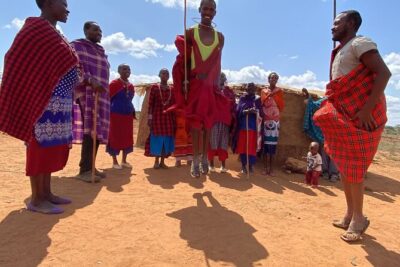

Kibera Slum Tour with Local Social Entrepreneurs
Read our review →

Giraffe Centre, Elephant Orphanage, and Bomas of Kenya Day Tour from Nairobi
Read our review →Browse the lists this tour appears in