

Reviewed · CULTURAL VILLAGE VISITS
Afternoon Kibera Slum Tour
Kibera is most active in the afternoon, making this a close-up look at the businesses, markets, and community groups that keep Nairobi’s best-known informal settlement moving. With Lucas and Elijah as guides, you’ll walk through Toi Market, meet local social enterprises, and hear personal stories connected to life in Kibera.
I like the direct contact with working community projects, especially Victorious Bone Craft and the Power Women Group. I also like that this is a private tour, so your group can ask questions without competing with a busload of strangers. The main drawback is simple: this is a serious walking tour, and four hours on foot may feel long in the afternoon heat.
Key points to know before booking

- Afternoon timing: You see Kibera during its busiest operating hours, when markets and small enterprises are active.
- Four-hour walking route: Expect a substantial walk, not a drive-by visit. Comfortable shoes matter.
- Toi Market stop: This open-air market is described as Nairobi’s second largest and a major part of Kibera’s economy.
- Community-led visits: The route includes Kibera Pride Orphanage, Victorious Bone Craft, and Power Women Group.
- Private format: Only your group takes part, allowing room for questions and a more personal pace.
- Good value at $60: The fee includes all fees and taxes, with an accredited guide and community visits included.
Seeing Kibera as a working community

Kibera is often reduced to a headline about poverty. That narrow view misses what you come to see here: people working, trading, organizing, creating, and supporting one another.
This afternoon tour aims to show Kibera during its peak operating hours. That timing matters. You are not visiting a quiet neighborhood after the day has ended. You are walking through a place where the market economy and local groups are active around you.
I appreciate that the route includes more than a general walk through residential areas. Toi Market gives you a look at commerce. Victorious Bone Craft shows how discarded materials can become saleable goods. Power Women Group brings a personal and social side to the visit.
The tour also takes you to Kibera Pride Orphanage, which houses more than 25 vulnerable children from the settlement. This stop can be emotionally difficult, so approach it with respect. You are not visiting a sightseeing attraction in the usual sense. You are entering a community space connected to real lives.
Other cultural visits around Nairobi:
- Nairobi: Explore Kibera Slum with Local Guides
★ 4.9 · 365 reviews - Nairobi: Day Tour to Amboseli National Park & Maasai Village
★ 4.5 · 310 reviews - Masai village Day Tour Experience
★ 5.0 · 284 reviews
Meeting at Greenhouse Mall on Ngong Road
The stated meeting point is Greenhouse Mall along Ngong Road, where an accredited guide meets your group before the walk begins. Pickup is offered, but you should confirm the exact arrangement when booking if you need transport from your hotel or another address.
A central meeting point can be useful if you prefer to make your own way there. It also gives you a clear place to begin rather than trying to locate a guide inside Kibera itself.
The experience lasts about four to six hours, with the main walking visit listed at four hours. That is enough time for several stops, questions, and a slower look at community projects. It is not a quick photo stop that can be squeezed into a spare hour between other Nairobi plans.
Because the visit is private, your group is the only group taking part. I see this as one of the strongest practical features. Conversations about poverty, health, children, and local livelihoods need room for thoughtful questions. A private format can also make it easier for the guide to adjust the pace, though the total walk remains substantial.
Toi Market and Kibera’s daily economy
Toi Market is one of the first major stops and is described as the second largest open-air market in Nairobi. The market serves as a backbone of Kibera’s economy, so this part of the walk helps explain how goods, sellers, and shoppers connect within the settlement.
The value here is not simply seeing rows of stalls. The market gives you a practical way to understand how people earn money and meet daily needs. It is a working place, not a staged display created for visitors.
Since the tour takes place in the afternoon, you should expect the market to be operating at full pace. That can make the visit more interesting, but it may also make walking slower and more demanding. Keep your attention on the guide and the people around you, and follow any advice given about photography and personal space.
I would not book this tour expecting a polished attraction with signs explaining every stop. The point is direct contact and conversation. Your guide provides the context, and your questions help shape the visit.
Kibera Pride Orphanage and the human side of the tour

Kibera Pride Orphanage houses more than 25 vulnerable children from the area. Including it on the route shifts the focus from the market economy to the ways local people support children facing difficult circumstances.
This stop may be especially meaningful if you want to understand how community care operates beyond formal institutions. At the same time, it calls for sensitivity. You should not treat children or their home as scenery, and you should follow the guide’s instructions about photographs and interaction.
The experience can carry emotional weight. A visit to an orphanage is not a light sightseeing stop, and some people may find it uncomfortable. That is not necessarily a flaw, but it is a reason to think about your expectations before booking.
I like that the tour places this stop alongside businesses and social groups. Kibera is shown through several lenses: commerce, craft, organized support, and personal stories. You get a wider picture than you would from a short walk focused only on visible hardship.
Same base, a completely different sort of day:
- Nairobi National Park Half-Day Tour; Free Wi-Fi connection
★ 5.0 · 878 reviews - Nairobi: National Park & Optional Elephants & Giraffe Center
★ 4.8 · 874 reviews - NAI NAMI: Nairobi Storytelling Tour with Street Children
★ 5.0 · 792 reviews - Nairobi National Park Half-Day Game Drive
★ 4.5 · 738 reviews
Victorious Bone Craft and recycling with a purpose
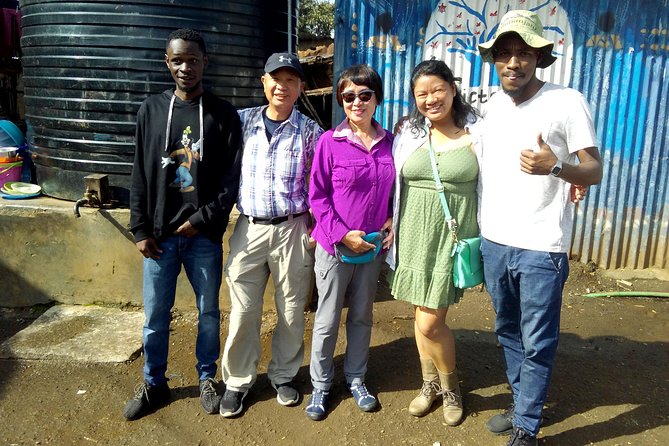
Victorious Bone Craft specializes in turning domestic animal bones into jewelry. This is one of the most distinctive stops on the route, both because of the material and because it shows a small enterprise built around reuse.
The workshop gives you something concrete to look at and discuss. You can see how a material that might otherwise be discarded becomes a product with economic value. It also connects environmental practicality with income generation.
This is the kind of stop I find useful on a community tour. It is not just a story told by a guide. It is a working example of a local group developing a skill and a product outside the formal settlement system.
You should still keep the scale of the visit in mind. The available information does not promise a hands-on jewelry-making session or a purchase requirement. Think of it as a chance to learn about the group’s work and see its approach to recycling.
Power Women Group and personal stories

The Power Women Group is made up of women who are victims of HIV/AIDS. The visit offers a direct connection to women who have organized around difficult personal and health circumstances.
This may be the most personal part of the walk. You are invited to listen to their stories and learn how the group operates. The value comes from hearing about people as individuals and community members, not as statistics.
It is also the point where respectful listening matters most. Questions should be considerate, and you should avoid treating a personal account as entertainment. If you prefer tours that stay light and purely visual, this stop may feel too serious. If you want a more honest look at social challenges and local responses, it adds real substance.
Lucas and Elijah are praised for combining a professional approach with a personal touch. That balance is important here. A guide who can answer questions clearly while keeping the conversation respectful makes a major difference in how this stop feels.
Why the guides matter on a walking route
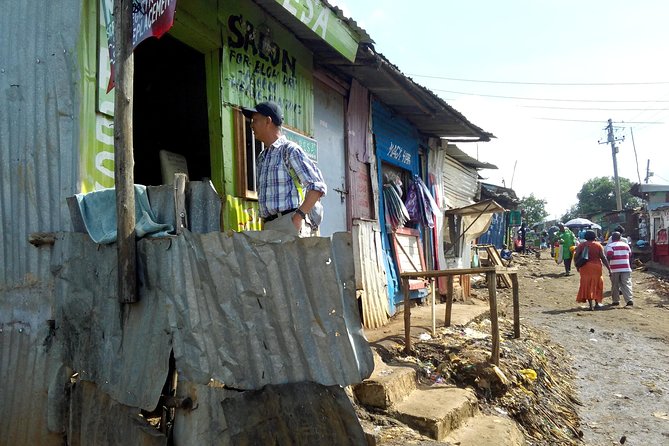
The guide is the main bridge between you and Kibera. Lucas and Elijah are described as professional, personal, and able to answer questions. Those qualities matter more here than a memorized list of facts.
A walking tour through an informal settlement can feel confusing without context. The guide helps you understand what you are seeing, introduces the community groups, and gives you a way to ask about subjects that may be hard to interpret from the outside.
I would use the walk to ask practical questions about the groups you visit, how the enterprises work, and how the community supports itself. The private format should make that easier than it would be in a large group.
The guide also sets the tone. Kibera should not be presented as a collection of problems for outsiders to inspect. A good guide can help you see the humor, effort, enterprise, and social ties that exist alongside hardship. This is where the tour’s emphasis on peace, love, and unity becomes more than a slogan.
Walking, timing, and what $60 gets you
The price is $60 per person. That includes all fees and taxes, and the experience is private for your group. Alcoholic beverages are not included, though that is hardly a concern on a walking visit of this kind.
I think the price makes the most sense for people who value a private guide and community access. You are paying for several hours, an accredited guide, and visits to multiple local projects rather than a short panoramic look at Nairobi.
The value is less clear if you want a passive sightseeing activity. You will be walking a lot, asking questions, and processing serious subjects. The tour asks more from you than a standard city attraction, both physically and emotionally.
Wear comfortable shoes and bring what you need for a long afternoon on foot. The supplied details do not specify the exact walking distance, shade, or restroom arrangements, so ask the operator if any of those points are important to you.
The tour requires good weather. If poor weather causes cancellation, you can choose another date or receive a full refund. You can also cancel for a full refund up to 24 hours before the start time. Inside that window, the payment is not refunded, and changes are not accepted.
Who will get the most from this experience
I would recommend this tour to you if you want to look beyond Nairobi’s standard sights and meet people involved in local enterprises. It suits adults and older children who can manage a long walk and listen respectfully to difficult stories.
It is also a good fit if you prefer private guiding. Your group can focus on the questions that matter to you, and the guide can give more attention to your pace and interests.
You may want to skip it if you have limited mobility, dislike walking for several hours, or want a relaxed activity with little emotional pressure. The available information says most people can participate, but it does not provide detailed accessibility information.
I would also think carefully before bringing very young children. The route includes an orphanage and a group connected to HIV/AIDS, so the subject matter may not suit every family.
Should you book the Afternoon Kibera Slum Tour?
Book it if you want a serious, people-focused afternoon with direct contact with Kibera’s market, craftspeople, women’s group, and community care work. The strongest reasons are the private format, the range of stops, and the personal guidance associated with Lucas and Elijah.
Do not book it expecting a quick photo opportunity or a polished attraction. You will walk, listen, and confront subjects that can be uncomfortable. At $60, I consider it a fair choice for someone who values context and community contact, provided you arrive prepared for the physical and emotional demands.
FAQ
Where does the tour begin?
The guide meets you at Greenhouse Mall along Ngong Road in Nairobi.
Is pickup available?
Pickup is offered. Confirm the pickup details when booking if you need collection from a specific location.
How long does the tour last?
The experience lasts approximately four to six hours. The Kibera visit itself is listed as four hours.
Is the tour conducted in the afternoon?
Yes. The tour is scheduled for the afternoon, when Kibera is described as being at peak operating hours.
Is this a private tour?
Yes. Only your group participates in the activity.
What places are visited?
The route includes Toi Market, Kibera Pride Orphanage, Victorious Bone Craft, and Power Women Group.
What is special about Toi Market?
Toi Market is described as the second largest open-air market in Nairobi and an important part of Kibera’s economy.
Are fees and taxes included in the price?
Yes. All fees and taxes are included. Alcoholic beverages are not included.
Can I cancel the tour for a refund?
You can receive a full refund if you cancel at least 24 hours before the start time. Cancellations within 24 hours are not refunded. If poor weather causes the operator to cancel, you will be offered another date or a full refund.
Just added around Nairobi
- Visit kibera Slum the chocolate city★ 4.8 · 3 reviews
- 3 days maasai mara migration safari★ 4.5 · 7 reviews
- Maasai Mara Day Trip★ 5.0 · 15 reviews
- 4 Days Tour Landcruiser in Masai Mara and Lake Nakuru★ 5.0 · 10 reviews
- 4 Days Safari to Lake Nakuru N/P and Maasai Mara N/R★ 5.0 · 18 reviews
- Day Tour to Nairobi national park, Elephants, and Giraffe Center★ 3.5 · 8 reviews
- Wildebeest Migration in Masai Mara and Sightseeing 4 Days Tour★ 4.5 · 6 reviews
- Vegans special safari★ 4.5 · 4 reviews
Cultural Village Visits, compared.


Day Tour to Amboseli National Park & Maasai Village
Read our review →



Kibera Slum Tour with Local Social Entrepreneurs
Read our review →

Giraffe Centre, Elephant Orphanage, and Bomas of Kenya Day Tour from Nairobi
Read our review →Browse the lists this tour appears in