

Reviewed · CULTURAL VILLAGE VISITS
HALF DAY TOUR MASAI VILLAGE FROM NAIROBI WITH PICKUP&DROPOFF
A manyatta is more than a cluster of huts. It is a working Maasai settlement, built around cattle, family life, ceremony, and protection. On this six-hour outing from Nairobi, you visit Bisil, walk through a traditional village, watch music and dance, and get time to ask questions about customs that are difficult to understand from a city hotel or wildlife lodge.
I like two things in particular: the chance to speak with a guide connected to the community, such as Alfred on some departures, and the clear focus on daily life rather than a staged wildlife stop. William has also driven some tours, earning praise for being punctual and helpful. The main consideration is price: at $445 per person, plus a $30 entry fee, this is a costly half-day unless personal contact and cultural explanation matter more to you than a long list of sights.
Key points to know before booking
- A real manyatta visit: See circular huts made from mud, sticks, grass, and cow dung, along with the thorn fence used to protect cattle.
- Maasai-led explanation: Some departures are guided by Alfred, a member of the village who speaks English and explains local customs.
- Four hours at Bisil: Expect time for a guided visit, free time, dance, photography, shopping, and a safety briefing.
- Nairobi pickup included: Collection is available in Kilimani, Lavington, Kileleshwa, Westlands, Embakasi, Karen, Parklands, and Syokimau.
- Extra cost to budget: The $30 per-person entry fee is separate from the $445 tour price.
- Small practical comforts: A car, bottled water, English-speaking guide, and drop-off back in several Nairobi districts are included.
Why a Maasai manyatta is worth seeing

The most useful way to think about this experience is as a cultural visit, not a safari. You are not going to search for lions or elephants. You are going to see how a Maasai settlement is organized and hear how cattle shape work, family life, social customs, and ceremony.
The huts are built from local materials: mud, sticks, grass, and cow dung. Their rounded form and thick construction help insulate the interior from outdoor conditions. Around the settlement, a tall thorn fence helps keep livestock together and offers protection from predators.
That fence also explains why the village layout matters. A manyatta is not simply a group of homes placed at random. Its circular arrangement connects domestic life with the safety of the animals that support the community.
I find this kind of visit most useful when you arrive with questions. Ask how cattle fit into everyday life, what the huts are made from, and why the settlement is arranged as it is. The value comes from the explanation, not just from taking pictures of the buildings.
Other cultural visits around Nairobi:
- Nairobi: Explore Kibera Slum with Local Guides
★ 4.9 · 365 reviews - Nairobi: Day Tour to Amboseli National Park & Maasai Village
★ 4.5 · 310 reviews - Masai village Day Tour Experience
★ 5.0 · 284 reviews
Leaving Nairobi for Bisil
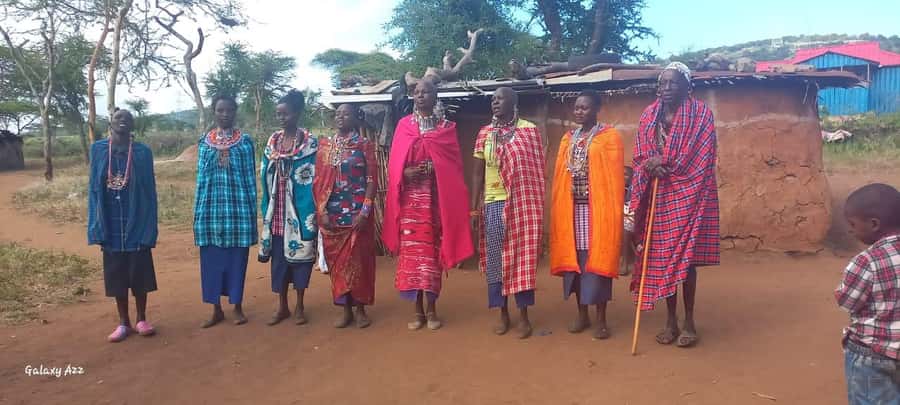
The tour offers pickup from eight parts of Nairobi: Kilimani, Lavington, Kileleshwa, Westlands, Embakasi, Karen, Parklands, and Syokimau. Drop-off is available in the same general set of areas, with the listed return points including Kilimani, Kileleshwa, Embakasi, Westlands, Karen, Syokimau, Parklands, and Lavington.
Transport is provided by car, and bottled water is included. The six-hour duration covers the full outing, while the main visit in Bisil is scheduled for about four hours. The exact balance between driving and time at the village will depend on your pickup point and the day’s arrangements, so I would keep your schedule free rather than planning a tight appointment afterward.
This pickup service adds real value if you are staying in Nairobi and do not want to arrange a separate driver. It also makes the experience easier for first-time visitors who may not know the roads or the best way to reach Bisil.
The tradeoff is cost. At $445 per person, transport is part of what you are paying for, but the total rises to $475 per person once the separate $30 entry fee is added. For a solo visitor, that is a serious expense for six hours. It makes more sense if you place a high value on a private-feeling cultural outing, a guide who can answer questions, and the convenience of hotel pickup and return.
Entering the manyatta and understanding its design
Your visit begins with a safety briefing, then moves into the settlement itself. The manyatta is made up of small, rounded huts built with mud, sticks, grass, and cow dung. These materials may sound basic, but they reflect practical building knowledge and the use of what is available locally.
The circular form gives the settlement a strong visual character. The huts sit within a fenced area designed to protect cattle from predators such as lions. Since cattle herding is central to Maasai life, the fence is not a decorative feature. It is part of the village’s daily function.
You should pay attention to the relationship between the homes, the livestock area, and the surrounding barrier. That arrangement tells you more about the community than a quick photograph does. The village is a place where shelter, animals, protection, and social life are closely linked.
The visit also gives you a chance to consider how different the idea of home can be. These huts are compact and made from natural materials, yet they are designed for the local setting. I prefer this sort of explanation to a simple display of traditional objects because it connects construction with everyday needs.
Meeting a guide who can explain Maasai customs
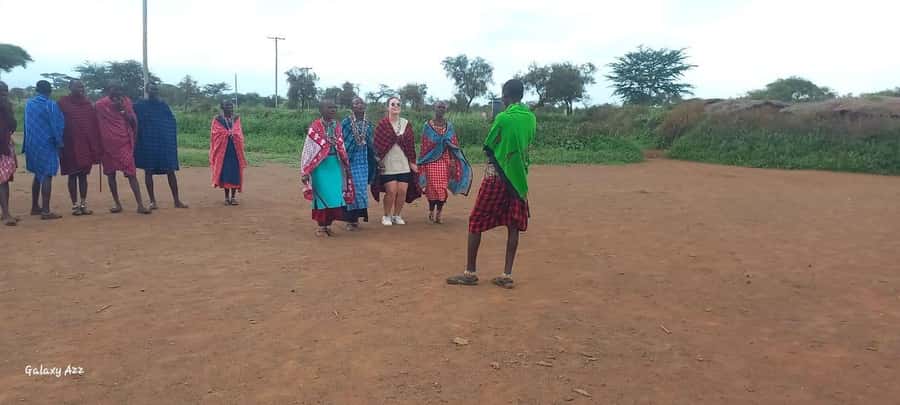
The guide can make or break this experience. English is the tour language, and Alfred, who has guided some departures, is a member of the village. That connection matters because you can ask about customs and traditions with someone who knows the community directly.
A guide who can explain the meaning behind a ceremony, a dance, a building method, or a piece of beadwork gives the visit more weight. Without that context, you might see a hut, a red shuka, or a group dance and leave with only a handful of photographs.
The available feedback points to clear communication as a strength. One departure was praised for easy communication with the Maasai, while another noted that a village member spoke English very well and helped explain daily life. Those details are especially useful if you want more than a short performance.
Guide assignments may vary, so I would not assume Alfred will lead every departure. William has also driven some tours and was described as punctual, kind, and helpful. If a particular guide is important to you, confirm that before booking rather than treating it as guaranteed.
Same base, a completely different sort of day:
- Nairobi National Park Half-Day Tour; Free Wi-Fi connection
★ 5.0 · 878 reviews - Nairobi: National Park & Optional Elephants & Giraffe Center
★ 4.8 · 874 reviews - NAI NAMI: Nairobi Storytelling Tour with Street Children
★ 5.0 · 792 reviews - Nairobi National Park Half-Day Game Drive
★ 4.5 · 738 reviews
Watching music, dance, and ceremony
Traditional music and dance are part of the Bisil visit. The schedule includes a dance show and a traditional dance performance, along with time for a safety briefing, photographs, and a general tour.
This is likely to be the most theatrical part of the day, but that does not make it useless or false. Music and dance are linked to Maasai ceremonies and social life, and the performance gives you a visible way to encounter that cultural tradition.
Still, keep your expectations sensible. A scheduled dance is a presentation for visitors, not the same as arriving during a private community ceremony. The best approach is to watch respectfully, listen to the explanation, and avoid reducing the whole visit to a photo opportunity.
You may also have time to ask how music and dance fit into community life. That conversation is worth more than simply watching the movement. If you enjoy cultural performances but want some background as well, this part of the outing should suit you.
Seeing cattle at the center of daily life
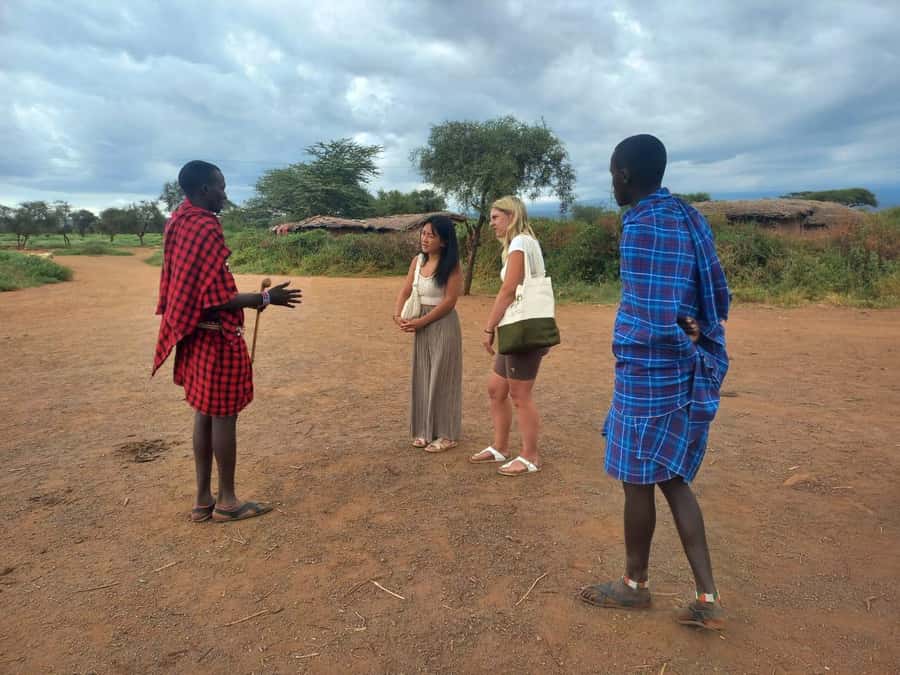
Maasai life revolves around cattle herding. That fact shapes the village layout, the protective fence, daily tasks, and the broader social structure you hear about during the visit.
The experience may include discussion of cattle rearing, herding, and milking. The supplied details do not promise a specific hands-on activity, so you should not book expecting to milk an animal or join a herd. Instead, expect the guide to place cattle within the story of the community.
This is one of the strongest reasons to choose the visit over a quick cultural stop. The focus is not only on clothing, huts, or dance. You get a look at the economic and social system that connects those features.
The red shukas and beadwork are familiar symbols of Maasai identity, but the guide can help you see them as part of a living culture rather than costume alone. Ask questions, but do so with courtesy. A good cultural visit depends on listening as much as looking.
Browsing beadwork without pressure
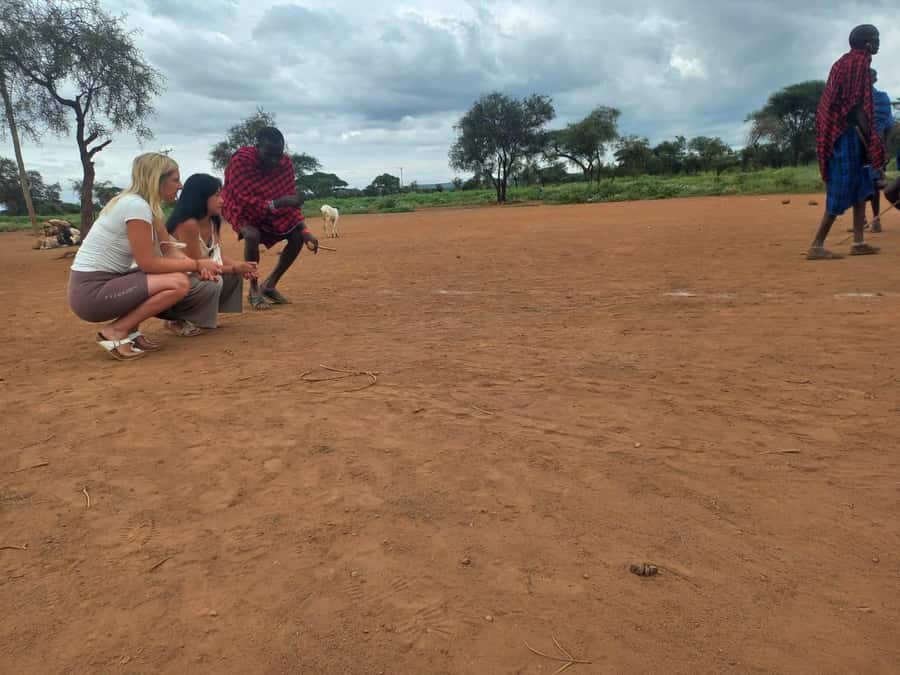
The tour includes an arts and crafts market visit and free time for shopping. Maasai beadwork is one of the most recognizable forms of local craft, and you may find beads or other handmade items for sale.
One useful detail is that buying is not compulsory. You can look without feeling that you must purchase something. That gives you room to compare items, ask about the work, and decide if a piece is worth carrying home.
Shopping can still change the tone of a village visit, so be clear about what you want. If you are interested in beadwork, ask about the design and how it was made. If you do not want to buy, a polite no is enough.
I would also keep this portion in perspective. The market is an added part of the outing, not the main reason to pay the tour price. The stronger parts are the village setting, the guide’s explanation, and the chance to understand cattle-based life.
Four hours at Bisil, with room to set your own pace
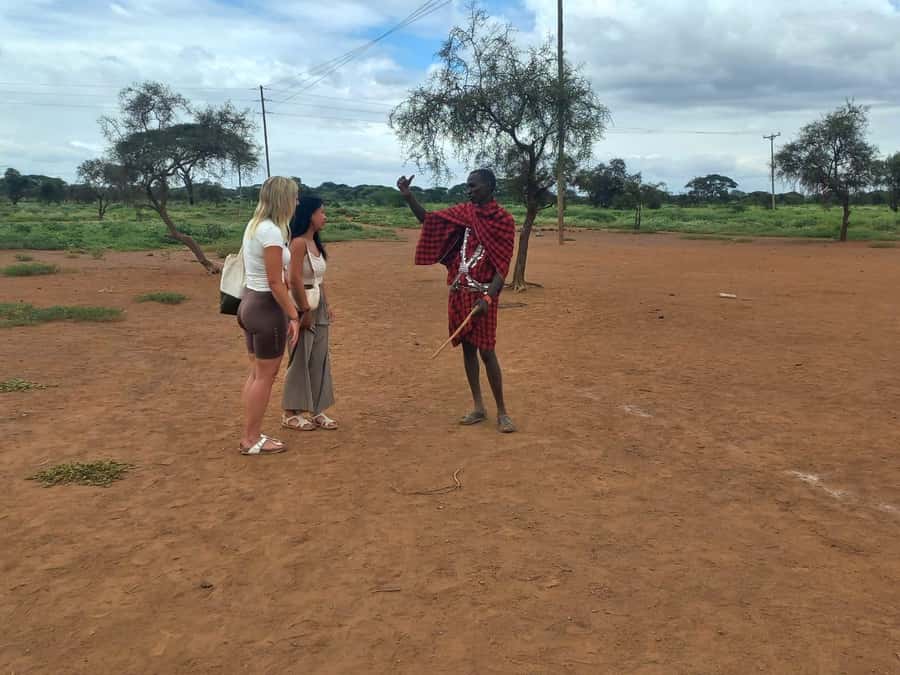
The Bisil portion lasts about four hours and includes a guided tour, a visit, a photo stop, free time, shopping, music, dance, and the safety briefing. That is a generous amount of time for a half-day outing, especially if you prefer not to rush between short stops.
The schedule gives you more than one way to enjoy the visit. You can focus on buildings and village design, watch the performance, speak with the guide, take photographs, or browse the crafts. You are not locked into a single short presentation.
Free time is important here. It allows you to return to a detail that caught your attention or ask a question after the main explanation. If you are photographing people or homes, use that time to be respectful and follow the guide’s direction.
The itinerary also mentions a sunrise option, but the supplied information does not explain whether every departure begins at sunrise or whether this depends on availability. Check the start time before booking. The tour lasts six hours, and availability determines the starting time.
Is $445 a fair price for this half-day?
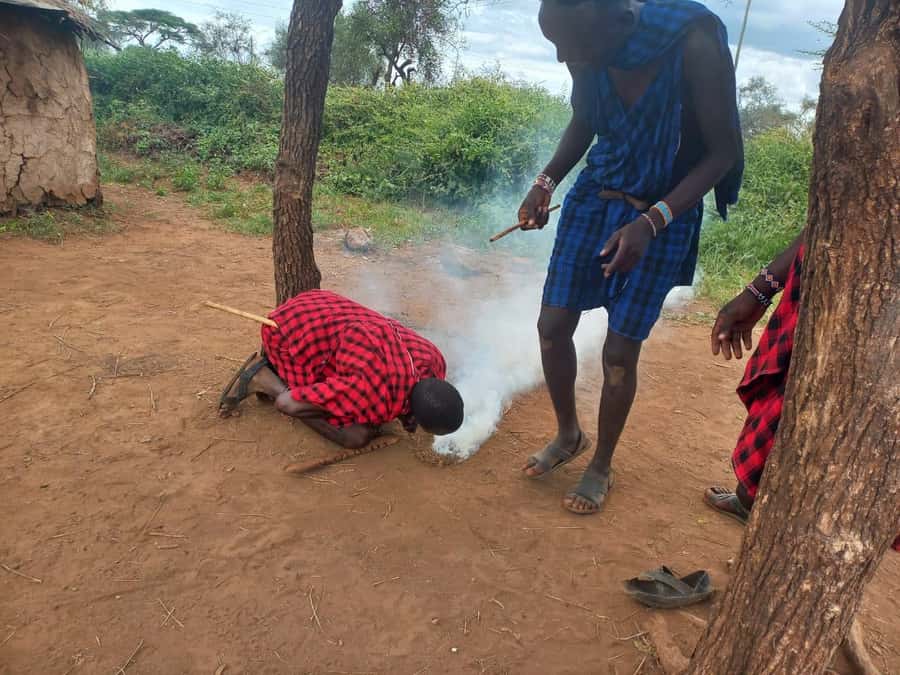
The headline price is $445 per person, and entry costs another $30. That puts the known total at $475 per person before any optional purchases at the craft market.
For a cultural tour of six hours, this is expensive. The price may be easier to justify if you are staying in Nairobi, want door-to-door transport, prefer a car rather than a larger bus, and care about having an English-speaking guide who can explain local life. It is less attractive if you are mainly looking for a low-cost outing or a quick photo stop.
The value depends on what you want from Kenya. If your trip already includes a wildlife safari and you want a direct cultural experience, this gives your itinerary a different focus. You see construction methods, village organization, cattle-based life, dance, beadwork, and traditional customs in one visit.
I would compare the total price against your own priorities, not just the number of hours. A longer tour is not automatically better. If the guide makes the setting understandable and the transport saves you a day of planning, the expense may feel worthwhile. If you would rather spend $475 on several activities, this may be too steep.
Who should book this Maasai village visit?

I would recommend it most strongly to you if you:
- Want cultural context rather than another wildlife activity
- Prefer a guided visit with time for questions
- Are staying in one of the listed Nairobi pickup areas
- Enjoy traditional building, music, dance, and handmade crafts
- Are comfortable paying extra for car transport and local explanation
- Want an outing that can fit into one day without leaving Nairobi for several nights
Families may appreciate the direct look at huts, cattle, music, and craftwork, though the tour data does not specify child pricing or a children’s program. The experience is wheelchair accessible, which is useful for travelers who need that feature, though you should still confirm the exact village conditions before departure.
It is less suited to you if your main goal is wildlife viewing, a large number of attractions, or the lowest possible price. It also may not satisfy you if you expect a private ceremony or extensive hands-on work with animals. The advertised program centers on a guided visit, cultural explanation, dance, shopping, and free time.
Booking details that matter
The tour is offered in English with a live guide. You can cancel up to 24 hours before departure for a full refund, and the reserve-now, pay-later option allows you to hold a place without paying immediately.
The tour advertises skip-the-ticket-line access, but the separate $30 entry fee still applies. Bring that cost into your budget from the start so the final price does not surprise you.
Pickup and drop-off are available in the named Nairobi districts, but you should select the correct location when arranging the tour. Since the experience lasts six hours and start times depend on availability, check the departure time before making other plans.
Bottled water is included. The transport is by car, and the guide speaks English. Items bought at the craft market are not included, so treat shopping as optional.
Should you book this Bisil experience?
Book it if you want a focused introduction to Maasai village life and you value direct explanation, convenient pickup, and enough time to look around without rushing. The strongest features are the manyatta’s practical design, the role of cattle, the traditional dance, and the chance that a village member such as Alfred will answer your questions.
Think twice if $475 per person feels high for six hours or if you are hoping for a safari. This is a cultural visit, not a wildlife drive. For the right person, the price buys access, transport, and interpretation of a living community. For a budget-conscious visitor, it may be better viewed as a special-interest outing rather than a general Nairobi day trip.
FAQ
Where does this Maasai village tour take place?
The visit takes place in Bisil, in central Kenya, with pickup and drop-off available from selected areas of Nairobi.
How long does the tour last?
The complete experience lasts six hours. The visit in Bisil is listed as about four hours.
What is a Maasai manyatta?
A manyatta is a traditional Maasai settlement made up of small, rounded huts built with materials such as mud, sticks, grass, and cow dung.
What is included in the price?
The tour includes transport by car, a guide, and a bottle of water.
Is the village entry fee included?
No. The entry fee is $30 per person and is paid separately from the tour price.
How much does the tour cost?
The listed price is $445 per person, not including the separate $30 entry fee.
Which Nairobi areas offer pickup?
Pickup is available from Kilimani, Lavington, Kileleshwa, Westlands, Embakasi, Karen, Parklands, and Syokimau.
Which language does the guide speak?
The live tour guide speaks English.
Is traditional dance part of the experience?
Yes. The program includes a dance show and a traditional dance performance connected with Maasai culture.
Can I buy Maasai beadwork?
Yes. The visit includes time at an arts and crafts market where beadwork and other crafts may be available. Shopping is optional, and you are not required to buy anything.
Just added around Nairobi
- Nairobi city walking and historical tour★ 5.0 · 11 reviews
- Nairobi: Chocolate City Kibera Slum Walking Tour★ 4.9 · 13 reviews
- Nairobi City Orientation Guided Tour with Lunch at Carnivore★ 4.6 · 20 reviews
- Nairobi: National Park, Elephant Sanctuary, & Giraffe Center★ 4.2 · 10 reviews
- Nairobi: Beads Factory Tour with Pickup & Coffee★ 5.0 · 7 reviews
- Nairobi: 1 Hour Gastronomic and Street Food tour of Nairobi★ 5.0 · 6 reviews
- Nairobi: 3-Day Amboseli National Park Shared Safari Package★ 4.1 · 5 reviews
- Nairobi: 3-Day Maasai Mara Safari★ 4.4 · 8 reviews
Cultural Village Visits, compared.

Day Tour to Amboseli National Park & Maasai Village
Read our review →


Kibera Slum Tour with Local Social Entrepreneurs
Read our review →

Giraffe Centre, Elephant Orphanage, and Bomas of Kenya Day Tour from Nairobi
Read our review →Browse the lists this tour appears in