Reviewed · TOURS IN NAIROBI
Nairobi City Walk Tour
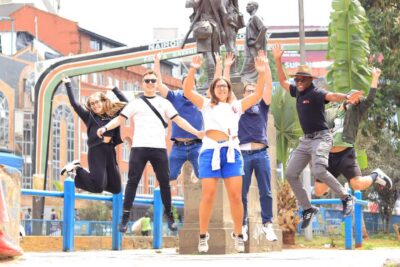
Nairobi’s story unfolds block by block on this walking tour, from the calls of Jamia Mosque to Maasai crafts, colonial-era buildings, government landmarks, and the green open space of Uhuru Park. Guides John and Samson explain how Kenya’s capital grew around the railway and how many communities shaped city life.
I like the range of stops, especially the chance to compare City Market with the Maasai Market, and I like that John can guide in Spanish as well as English. The tour also gives you a useful first look at Nairobi before you explore on your own. The main drawback is simple: you walk for nearly three hours, and the group can reach 50 people.
The $20 price is fair for a guided introduction to central Nairobi, with fees and taxes included. You should note that private transport is not provided, and admission to the KICC rooftop is extra. The meeting point is at the Carrefour St. Ellis on Wabera Street, and the tour returns there.
Key points at a glance

- A full central Nairobi circuit: Visit 12 landmarks in about 2 hours 40 minutes, including parks, markets, religious buildings, museums, and government sites.
- Strong local guidance: John and Samson lead the walk, with certified guiding in English and Spanish.
- Good souvenir time: City Market and the Maasai Market provide two different places to look for Kenyan crafts and traditional items.
- A useful city orientation: The route links Nairobi’s railway beginnings, political center, religious life, and modern skyline.
- Extra cost to watch: The KICC rooftop admission is not included in the $20 price.
- Easy to cancel: You receive a full refund if you cancel at least 24 hours before the start time.
Why this walk is a smart first look at Nairobi

I like city walks that explain how separate sights fit together. This one does that well. You move from religious and civic buildings to markets, green space, museums, and an elevated city view, so Nairobi feels like a living capital rather than a collection of isolated attractions.
The route also brings together several parts of Kenya’s identity. You see Muslim and Catholic places of worship, government buildings, university life, traditional crafts, public parks, and records of the country’s past. The guides add the local viewpoint, with John especially praised for his clear explanations, friendly manner, and ability to answer questions.
At $20 per person, the value comes from the guidance rather than from admission tickets. Almost every stop is free, and you are paying for someone to connect the sights, help you find your way through the center, and explain Nairobi’s development. The KICC rooftop is the one stated exception, since its admission is not included.
The published score is 5 out of 5 from 12 ratings, with a 100 percent recommendation rate. That is a small sample, so I would not treat it as a guarantee, but the consistent praise points to the same strengths: clear explanations, a personable guide, good navigation, and a useful overview of the city.
Other trips that set out from Nairobi:
- Nairobi National Park Half-Day Tour; Free Wi-Fi connection
★ 5.0 · 878 reviews - Nairobi: National Park & Optional Elephants & Giraffe Center
★ 4.8 · 874 reviews - NAI NAMI: Nairobi Storytelling Tour with Street Children
★ 5.0 · 792 reviews
Starting at Jamia Mosque and McMillan Library
The walk begins at Jamia Mosque, described as the biggest mosque in Kenya. You spend about 10 minutes here, long enough for the guide to explain its place in central Nairobi and the religious side of the city.
You then continue to the McMillan Memorial Library. Built in 1929 by William McMillan’s wife in his memory, the library gives the route an older civic feel. It is a short stop, only about 10 minutes, but it helps show that Nairobi’s central district is not only about newer offices and modern roads.
These first two stops set up an important theme: Nairobi has many layers close together. A major mosque and an old library sit within the same walk, and your guide can help you understand how the city developed around them.
City Market and the search for Kenyan souvenirs
City Market is one of the more useful stops if you want to take something home. The market sells traditional items made by people from different Kenyan communities, including Maasai goods. You have about 20 minutes here.
I would use this time to look rather than rush into a purchase. The market is a chance to compare styles, ask questions, and get a feel for the kinds of crafts sold in central Nairobi. Since the tour also includes the Maasai Market later, you get two opportunities to browse rather than relying on a single souvenir stop.
The short time limit keeps the walk moving, but it also means you may not have time for a long negotiation or a careful search through every stall. If shopping is your main goal, consider returning to a market after the tour. If you simply want an introduction to Kenyan crafts, 20 minutes gives you a helpful start.
The University of Nairobi and a changing capital

The University of Nairobi receives about 20 minutes. It is identified as the oldest and biggest university in East Africa, making it an important part of the city’s intellectual and public life.
This stop also gives the tour a change of pace. After the mosque, library, and market, you see an institution linked to education and national development. Your guide can place the university within the wider story of modern Nairobi, rather than treating it as just another building on the route.
The itinerary does not promise an indoor visit or a campus tour, so expect an outside explanation and a look at the area rather than a formal university program. That is typical of a city orientation, where the goal is context and location.
Same base, a completely different sort of day:
- Nairobi National Park Half-Day Game Drive
★ 4.5 · 738 reviews - Nairobi: Historic and Modern Highlights Walking Tour
★ 4.8 · 703 reviews - Safari Tour; Nairobi National Park
★ 4.5 · 594 reviews - 3 Days Masai Mara Group Joining
★ 5.0 · 486 reviews
Maasai Market and Uhuru Park

The Maasai Market is another 20-minute stop and is described as one of the best places for souvenirs. It focuses on Maasai items but also includes crafts connected with other Kenyan communities.
The two market visits work well together. City Market gives you a broad look at traditional products from across Kenya, while the Maasai Market places greater attention on Maasai designs and goods. You can compare the two and decide where you would prefer to shop later.
Next comes Uhuru Park, a 15-minute stop in the middle of Nairobi. The park is one of the route’s clearest reminders that this is a green capital. Its open setting breaks up the built-up center and gives you a place to pause during a long walk.
Do not expect a long park visit. Fifteen minutes is enough for an introduction and some breathing room, but not for a leisurely stroll through every part of the grounds. The value here is the contrast: Nairobi’s urban center includes a major public park close to civic buildings and commercial streets.
The cathedral, Parliament, and the KICC rooftop
The Cathedral Basilica of the Holy Family is a 10-minute stop. This Catholic church adds another religious landmark to the route and shows the mix of faith communities found in central Nairobi.
The tour then moves to the Kenyatta International Conference Center, known as KICC. You spend about 15 minutes here, with the chance to see the city from the rooftop. This is one of the strongest visual moments on the walk because an elevated view helps you understand the shape of central Nairobi.
There is an important cost detail. KICC rooftop admission is not included, even though most other listed stops have no admission charge. Bring this extra expense into your budget if the city view matters to you.
Parliament of Kenya follows, with about 10 minutes at the site. The description identifies it as the place where members of Parliament hold meetings. This stop puts you near the country’s political center, though the itinerary does not describe an interior visit or a parliamentary session.
Together, KICC and Parliament show Nairobi’s modern national role. One is a major conference and skyline landmark, while the other connects the city to Kenya’s government. The guide’s explanation is especially useful here because the buildings mean more when you understand their place in the country’s public life.
The railway, National Archives, and Jeevanjee Gardens
The Nairobi Railway Museum is included as a 10-minute stop. The railway, built by the British with the help of Indian workers, is described as a key force in the creation of Nairobi.
That detail matters. Nairobi’s growth was tied to transport, and the railway helps explain why the city became an important center. The stop is brief, so you should expect a short explanation and an outside look rather than a full museum visit. If railway history is a major interest, you may want separate time for the museum, but the tour gives you the essential connection between rail and city growth.
The National Archives on Moi Avenue is another 10-minute stop. It holds artifacts and documentation connected with Kenya’s government history since independence. This is a valuable contrast with the market stops, where the focus is on living craft traditions. Here, the emphasis is on stored records, objects, and the public history of the nation.
The final stop is Jeevanjee Gardens, a small park in Nairobi. Like Uhuru Park, it adds a little open space to an otherwise central-city route. At 10 minutes, it serves as a calm closing point before you return to the meeting place.
What the timing tells you about the day
The stated duration is about 2 hours 40 minutes. The stop times add up to that length, so the schedule is tightly organized. You spend 10 minutes at several landmarks, 15 minutes at Uhuru Park and KICC, and 20 minutes at each market and the university.
That pace suits you if you want a broad orientation in one afternoon. You will see plenty, but you will not have long at each place. The walk is about range and explanation, not extended museum visits or slow photography stops.
The route is on foot, and private transportation is not included. The start and finish are both at the Carrefour St. Ellis, PR7F+G34, on Wabera Street. The meeting point is near public transportation, which makes it practical if you are already in central Nairobi.
The maximum group size is 50 people. That is a fairly large walking group, so the experience may feel less personal than a small private walk. On the other hand, the published feedback gives John and Samson credit for speaking clearly, answering questions, and navigating the city well. If you want a quieter, highly tailored walk, confirm the expected group size before booking.
The guide makes the difference
John is the guide most often named in the supplied comments, and the descriptions of his work are consistent. He is presented as young, energetic, friendly, clear in his explanations, and strong at city navigation. One Spanish-speaking account praises his fluent Spanish and the useful information he shared about daily life in Nairobi and Kenya.
Samson is also named as a guide, leading one walk with John. The tour includes a certified guide in English and Spanish, so it suits both language groups. If your Spanish is stronger than your English, this is a useful point to confirm when booking.
The best feature of a local walking tour is the chance to ask questions as you go. The published comments repeatedly highlight that the guide was open to questions and willing to explain different issues. That matters more than a long memorized speech, especially in a city where religion, colonial history, government, trade, and modern life meet within a short distance.
Who should book this Nairobi walk
I would choose this tour if you have limited time in Nairobi and want a broad introduction before making your own plans. It is also a good fit if you prefer walking to sitting in a vehicle and want to see ordinary city spaces alongside major landmarks.
It suits first-time visitors, solo visitors who want a guided orientation, and anyone interested in how Nairobi’s history connects with present-day city life. The market stops are useful if you want an early look at Kenyan crafts, while the parks and KICC provide variety during a long walk.
You should think twice if you dislike a quick pace, large groups, or city walking. The tour includes 12 stops, and some visits last only 10 minutes. It also does not include private transport, and the KICC rooftop costs extra.
Confirmation arrives at booking, and most people can participate. Free cancellation is available up to 24 hours before the start time. Cancellation within 24 hours is not refunded, and changes made inside that period are not accepted.
Should you book it?
Book this Nairobi City Walk if you want a reasonably priced, guide-led introduction to the capital, with history, markets, parks, religion, politics, and city views in one route. The strongest reasons are the range of sights, the local explanations from John or Samson, and the option of English or Spanish guidance.
Skip it if you want long visits inside museums, a private guide, or a relaxed shopping day. For most first-time visitors with one free afternoon, I think the $20 cost is sensible. Just wear comfortable walking shoes, allow for the nearly three-hour schedule, and set aside extra money for the KICC rooftop.
FAQ
How much does the Nairobi City Walk Tour cost?
The tour costs $20 per person. All fees and taxes are included, but admission to the KICC rooftop is not included.
How long does the walking tour last?
The tour lasts approximately 2 hours and 40 minutes.
Where does the tour start?
It starts at Carrefour St. Ellis, PR7F+G34, Wabera Street, Nairobi.
Where does the tour finish?
The activity ends back at the meeting point.
Which languages are available?
The certified guide can lead the tour in English or Spanish.
Is private transportation included?
No. Private transportation is not included. The experience is a walking tour, and the meeting point is near public transportation.
What is the maximum group size?
The tour can include a maximum of 50 people.
Can I cancel for a full refund?
Yes. You can cancel at least 24 hours before the start time for a full refund. Cancellations or changes made less than 24 hours before the start time are not accepted, and the amount paid is not refunded.
Just added around Nairobi
- Visit kibera Slum the chocolate city★ 4.8 · 3 reviews
- 3 days maasai mara migration safari★ 4.5 · 7 reviews
- Maasai Mara Day Trip★ 5.0 · 15 reviews
- 4 Days Tour Landcruiser in Masai Mara and Lake Nakuru★ 5.0 · 10 reviews
- 4 Days Safari to Lake Nakuru N/P and Maasai Mara N/R★ 5.0 · 18 reviews
- Day Tour to Nairobi national park, Elephants, and Giraffe Center★ 3.5 · 8 reviews
- Wildebeest Migration in Masai Mara and Sightseeing 4 Days Tour★ 4.5 · 6 reviews
- Vegans special safari★ 4.5 · 4 reviews
Tours in Nairobi, compared.

Nairobi National Park Half-Day Tour; Free Wi-Fi connection
Read our review →
National Park & Optional Elephants & Giraffe Center
Read our review →
NAI NAMI: Nairobi Storytelling Tour with Street Children
Read our review →