
Reviewed · TOURS IN NAIROBI
Nairobi: Explore Maasai Market for Unique Souvenirs
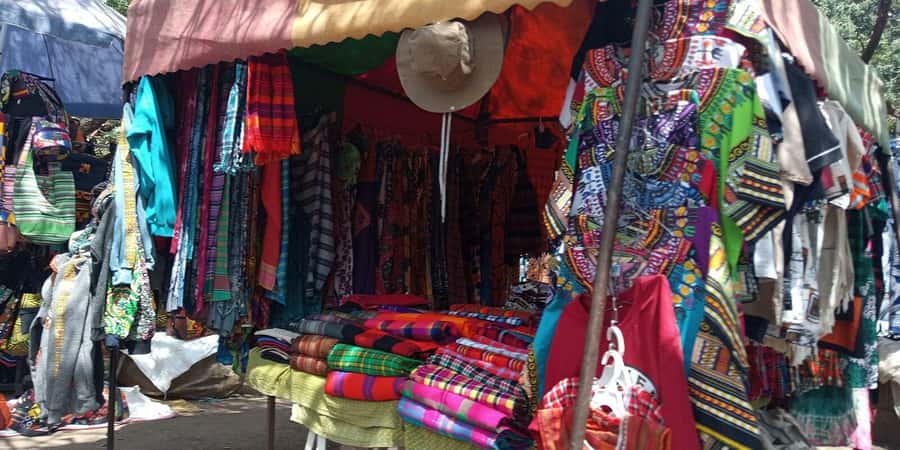
Nairobi’s Maasai Market is less a tidy row of souvenir stalls than a moving, social shopping experience. With a local guide beside you, you can learn how to bargain without turning every purchase into a wrestling match, hear the stories behind the crafts, and find makers you might miss on your own. I especially like the direct contact with artisans and the guide’s help with prices, quality, and language.
The $10 price is easy to justify if you plan to buy gifts or want a short introduction to central Nairobi. I also like that the route can include small craft shops, wholesale outlets, and a little city sightseeing. The main drawback is that the market changes location on some weekdays, so confirm the meeting details and allow for a crowded, sometimes persistent sales atmosphere.
Key points to know before you go
- Learn to bargain with a local guide: Eric or Erick can help you judge prices, translate, and keep negotiations friendly.
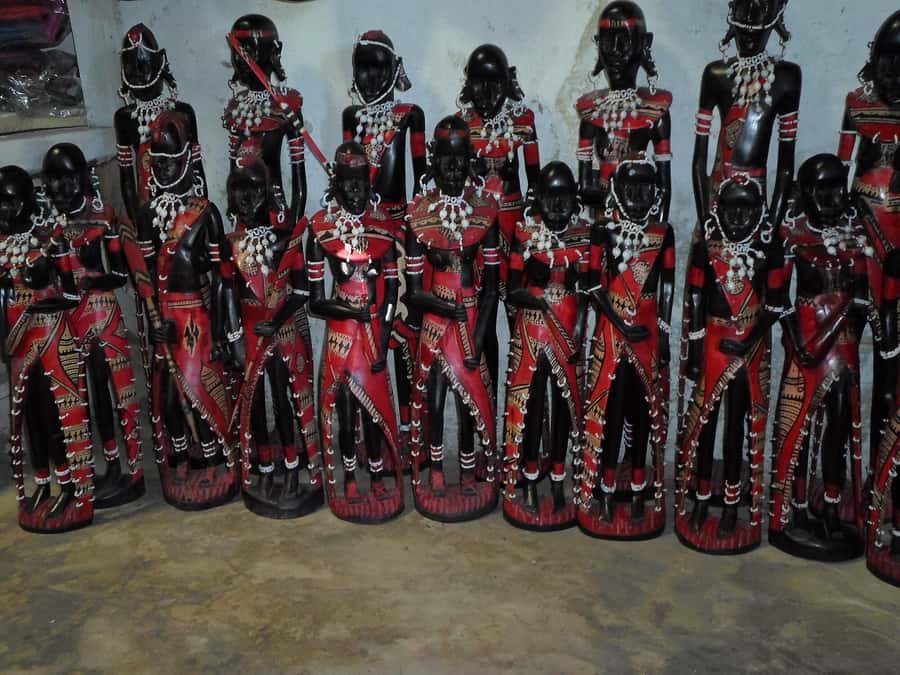
- Meet people who make the goods: You may speak with artisans and social-impact entrepreneurs working in jewelry, beadwork, textiles, carvings, and paintings.
- Shop beyond the main market: The walk can include city-center gift shops, craft production sites, and even a wholesale store.
- Bring Kenyan shillings or other cash: Not every seller accepts cards, and cash makes small purchases easier.
- Expect a changing market location: The Maasai Market moves on some weekdays, though it does not move on weekends.
- Allow time for a real walk: Comfortable shoes, sun protection, and secure bags will make the outing much easier.
A two-hour introduction to Nairobi’s craft trade
This experience gives you a practical way to shop in central Nairobi without having to work out every detail alone. You meet your English-speaking guide near Hilton Arcade on Mama Ngina Street, then set out on foot through the city center.
The advertised activity lasts two hours. The route is flexible, so the exact balance between shops, the Maasai Market, artisan visits, and sightseeing depends on what you want to buy. If you are hunting for jewelry, you can spend more time comparing beadwork. If you need gifts for several people, your guide can point you toward shops with a wider range of prices and goods.
The walk is important. This is not simply a ride to one market, followed by a quick stop. You can visit local gift and craft shops first, then continue to the open-air market and other selling or production centers if you still have time and energy.
One small point needs care: the route details also identify Bata as the start and return marker, while the meeting instructions name Hilton Arcade along Mama Ngina Street. I would confirm the exact meeting point with KCOOP Tours & Travels before setting out. That is especially useful if you are arriving by taxi or have a tight schedule.
A few more things to do around Nairobi worth a look
- Traditional Kenyan Cooking Class & Local Market Tour
★ 5.0 · 129 reviews - Memorable Daily KIBERA Slums/Toi Market Tour with Locals (2 hours)
★ 5.0 · 29 reviews - Authentic Kenyan Cooking Class & Market Tour in Nairobi
★ 5.0 · 12 reviews
Starting at Hilton Arcade on Mama Ngina Street
Hilton Arcade gives you a clear central meeting point near Nairobi’s main city-center shopping area. From here, your guide can help you get oriented before the shopping begins.
The first part may include local gift shops and craft stores. This is a useful warm-up because you can see how prices and quality differ before you reach the main market. You may also find goods in a calmer setting, which helps if you dislike negotiating at every stall.
Use this opening section to explain what you want. Tell your guide if you prefer small, easy-to-pack gifts, larger decorative pieces, clothing, jewelry, paintings, or items made from beads and textiles. The route is described as customizable, so your priorities matter.
You can also ask for help with a simple errand in town or add a short city-center walk if shopping does not fill the entire outing. Keep your expectations realistic, though. This is a short walking experience, not a full Nairobi city tour.
Finding the Maasai Market and its changing location
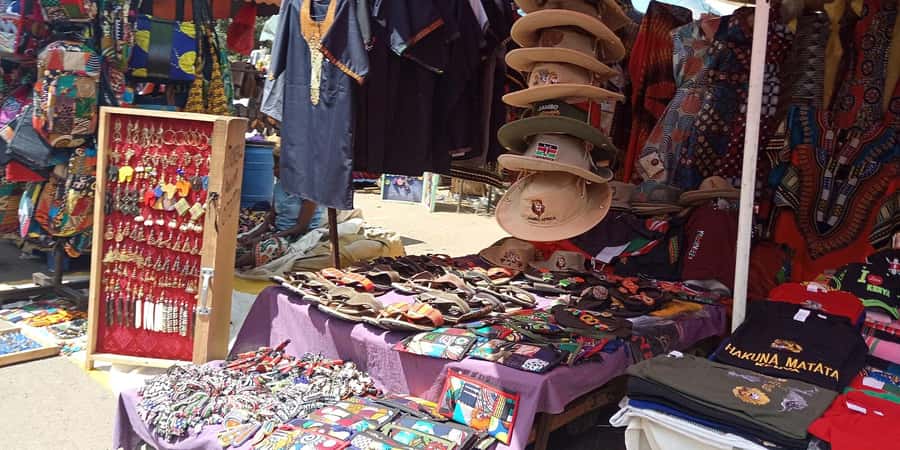
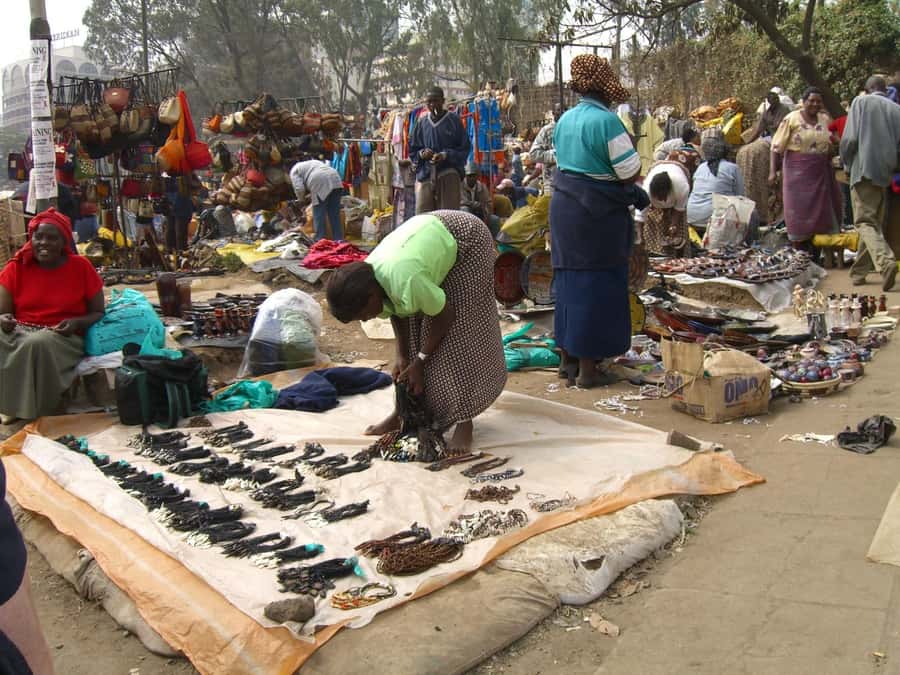
The Maasai Market is an open-air market where Kenyan makers and vendors sell handmade jewelry, textiles, carvings, paintings, beadwork, and other crafts. The market does not remain in one place every day. It moves during the week, while the location stays the same on weekends.
That detail affects your planning. If you have only one free morning or afternoon, ask for the current location when you book or before you leave for the meeting point. A local guide takes much of the guesswork away, but the market’s schedule still matters.
Once you arrive, expect a colorful and active scene with many sellers offering similar types of goods. You may be approached several times. That is part of the shopping culture here, though it can feel intense if you prefer quiet browsing.
The best approach is polite and firm. Say hello, look carefully, ask the price, and take time before deciding. You do not need to buy from the first person who speaks to you. Your guide can help you compare costs and avoid paying far more than necessary.
Bargaining without making it awkward
Bargaining is one of the main reasons to book this experience rather than visit the market alone. A guide can explain the local rhythm of negotiation and help you keep it good-natured.
The aim is not to force the lowest possible price. Handmade work takes time, and a fair deal should work for both sides. Your guide can help you understand when a price seems high, when the quality justifies a higher cost, and when a seller is offering a reasonable figure.
Translation support also helps. You may want to ask how a piece was made, what materials were used, or what a pattern means. Without language help, you might simply hear a price and move on. With a guide, the exchange can become a short conversation.
The experience also prepares you for persistent sellers. A friendly no is often enough. If you are interested, say so clearly and keep the conversation focused on the item. If you are not interested, do not feel pressured to continue.
Same base, a completely different sort of day:
- Nairobi National Park Half-Day Tour; Free Wi-Fi connection
★ 5.0 · 878 reviews - Nairobi: National Park & Optional Elephants & Giraffe Center
★ 4.8 · 874 reviews - NAI NAMI: Nairobi Storytelling Tour with Street Children
★ 5.0 · 792 reviews - Nairobi National Park Half-Day Game Drive
★ 4.5 · 738 reviews
What you can buy and how to judge quality
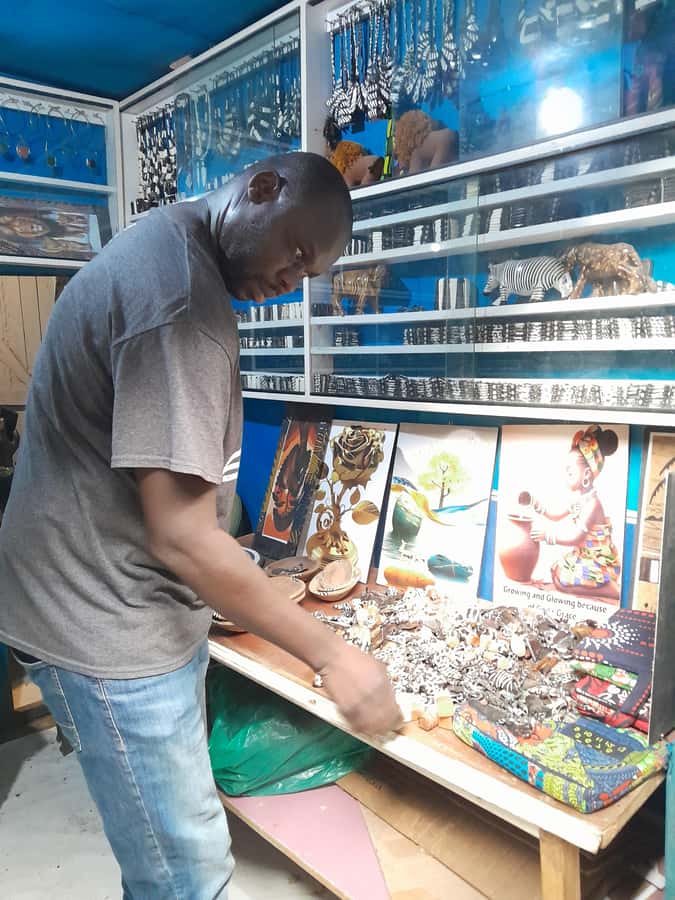
The selection can include handmade jewelry, beadwork, textiles, carvings, paintings, and other small crafts. You may find traditional-looking pieces alongside modern designs made for the gift market.
For jewelry and beadwork, check that clasps, threads, and connections feel secure. Look closely at the finish rather than judging only by color. With carvings, inspect the surfaces and ask how the piece was made. For textiles, check the stitching and fabric weight, especially if you plan to pack the item or use it often.
A guide cannot turn every purchase into a museum-quality object, but can help you identify solid workmanship and understand what you are buying. That is particularly helpful when several stalls sell similar goods at different prices.
The guide may also help with bulky shopping. If you buy a larger carving or several pieces, assistance carrying them can save you from spending the rest of the walk with your arms full. The experience does not promise shipping or delivery, so ask about those arrangements directly if you purchase something large.
Meeting artisans and social-impact entrepreneurs
The strongest part of this outing is the chance to meet people connected to the handmade trade. You may speak with artisans who make the goods or with local entrepreneurs who sell crafts and support community-based work.
That contact gives your shopping more meaning. Instead of choosing an anonymous souvenir from a hotel shelf, you can ask who made the item, how it was produced, and what the design represents. You also get a better sense of the work behind a piece before you pay for it.
The activity is presented as a way to support direct local trade. That does not mean every item in every shop is made by the person selling it, so ask questions. A good guide can help you tell the difference between locally made work, items bought through a wholesale outlet, and goods that may have passed through several sellers.
The option to visit a wholesale shop is useful for practical gift buying. Small local shop owners also buy goods there, and prices may be especially low. The tradeoff is that a wholesale setting may feel less personal than meeting an individual maker. If direct contact matters most to you, tell your guide before spending too much time there.
A flexible route instead of a fixed checklist
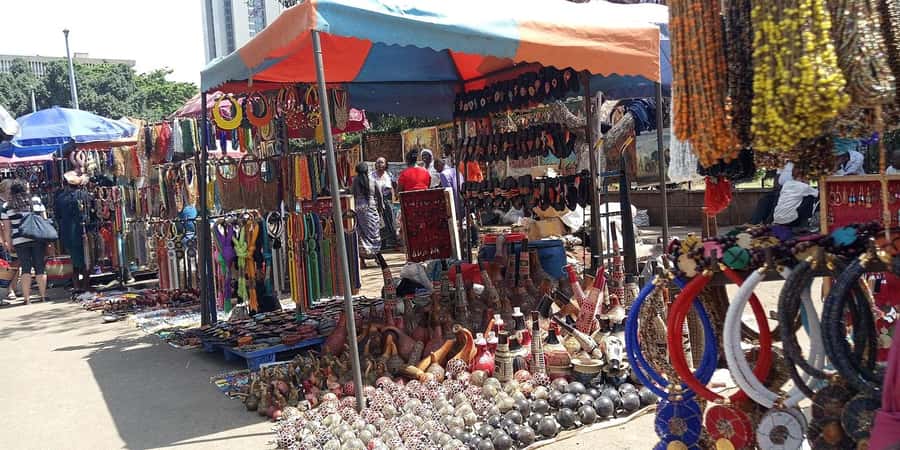
The route can include several types of stops:
- City-center gift and craft shops
- The Maasai Market
- Other craft production or selling centers
- A wholesale store
- A short walk and sightseeing in central Nairobi
This flexibility is helpful for couples and small groups with different shopping goals. One person may want paintings, another may want small beadwork gifts, and someone else may simply want to watch the market at work.
It also means the experience may feel less predictable than a fixed museum visit. You will not necessarily spend equal time at every stop. Speak up if you want to leave a shop, compare more vendors, or pause for a short city walk.
The two-hour duration is enough for an introduction, but not for an exhaustive shopping expedition. If you have a long gift list or want to visit several production centers, you may need to prioritize. The guide can help you use the time well, but cannot make the city-center walk unlimited.
What the guide adds for solo visitors and couples
A local guide is most useful when you are new to Nairobi, unsure how to negotiate, or concerned about walking through a crowded market alone. The guide can explain local customs, help with language, and keep the outing organized.
This can be especially reassuring for two people who want to shop independently but prefer local support. Eric, also identified as Erick in the booking details, is described as attentive, reliable, and willing to adjust the route to personal requests. He has also been praised for helping people feel secure and for explaining more about Nairobi and the country.
You should still keep your own belongings secure. Crowded markets can attract pickpockets, so use a closed bag and avoid displaying large amounts of cash. The guide can assist, but basic city awareness remains your responsibility.
Solo visitors may also find the social side easier with a guide. A short conversation with a vendor feels more natural when someone can translate or introduce you. The result is a better chance of learning something rather than simply moving from price to price.
The $10 price and what it really covers
At $10 per person, this is a low-cost way to get local help with a shopping experience that can be confusing on your own. The value is not in transportation or an expensive attraction. It is in the guide’s time, introductions, translation help, bargaining advice, and ability to adjust the route.
Your purchases are not included. Plan to pay separately for every item you take home. Since not all vendors accept credit cards, bring cash, preferably in manageable amounts.
The price makes the experience a good fit for anyone who already plans to shop. If you do not intend to buy anything, you can still enjoy the market and artisan conversations, but the main benefit is reduced. This is a shopping tour first, with sightseeing added around the edges.
The free cancellation option allows cancellation up to 24 hours before the activity for a full refund. You can also reserve now and pay later, which helps if your Nairobi schedule is still shifting.
Practical preparation for the walk
Wear comfortable shoes. You will be walking through city streets and market areas, and even a short outing becomes tiring if your footwear is poor.
Bring cash, a small secure bag, and enough room for purchases. A hat and sunscreen are useful on sunny days. A light jacket is sensible when the weather is cooler or changeable.
Smoking, alcohol in the vehicle, food in the vehicle, and littering are not allowed. The activity is mainly on foot, but these rules matter if any vehicle transfer becomes part of the arrangements.
Treat sellers and artisans with respect. Ask before photographing people or their work, listen when someone explains a design, and remember that bargaining is not a reason to dismiss the value of handmade labor.
Who should book this experience?
I would choose this for a first visit to Nairobi, a short stop between larger trips, or anyone who wants Kenyan gifts but dislikes shopping alone. It suits people who want conversation, local context, and practical help more than a polished retail setting.
It is also a good choice for couples, solo visitors, and small groups with flexible interests. The guide can help you focus on particular goods, compare prices, and find places that are easy to miss without local contacts.
I would hesitate if you want a quiet, fixed schedule or a market with clearly marked prices. The Maasai Market can be crowded, sellers may approach you repeatedly, and the exact location can change during the week. The short duration also limits how much you can see.
Should you book the Maasai Market walk?
Book it if you want more than a quick souvenir stop. For $10, you get a local companion who can help you bargain fairly, check quality, translate, meet makers, and shape the walk around your interests.
The best reason to go is the combination of practical help and human contact. You may leave with beadwork, a carving, a textile, or a painting, but the more lasting part may be knowing who made it and what the design means.
Confirm the meeting point, carry cash, protect your belongings, and expect a lively open-air market rather than a calm shop. If that sounds like your kind of Nairobi experience, this is a sensible and affordable way to begin.
FAQ
Where does the activity begin?
The meeting point is Hilton Arcade along Mama Ngina Street in central Nairobi. The route details also show Bata as a start and return marker, so confirm the exact meeting place with the provider before you go.
How long does the experience last?
The activity lasts two hours. It includes walking through local gift and craft shops, visiting the Maasai Market, and possibly adding artisan centers or a short city-center sightseeing walk.
What language does the guide speak?
The live guide speaks English.
Does the tour include shopping purchases?
No. The guided walk is included, but you pay separately for all crafts and souvenirs you buy.
Should I bring cash?
Yes. Not all vendors may accept credit cards, so cash is recommended for purchases.
Does the Maasai Market stay in one place?
No. The market moves on some weekdays and remains in the same location on weekends. Confirm the current location when arranging your visit.
Can the route be customized?
Yes. The itinerary is flexible. You can express interest in certain crafts, visit additional selling or production centers, take a short city walk, or ask for help with an errand in town.
Just added around Nairobi
- Nairobi: Horseback Riding Tour Through Maize Plantation★ 5.0 · 3 reviews
- Nairobi: Kibera Slum Compassionate Walking Tour★ 5.0 · 4 reviews
- Nairobi: Karura Forest Guided Walking Tour★ 5.0 · 4 reviews
- From Nairobi: Horseback Wildlife Safari with Transfer & Meal★ 4.6 · 7 reviews
- Nairobi: Hidden Gems and Local Secret Guided Walking Tour★ 4.9 · 20 reviews
- Nairobi: Hop on Hop off and Maasai market Collections Visit★ 3.5 · 10 reviews
- Nairobi: Karura Forest Horseback Riding Tour★ 4.8 · 11 reviews
- Nairobi: Guided Afternoon Tour to Bomas of Kenya.★ 3.1 · 4 reviews
Tours in Nairobi, compared.

Nairobi National Park Half-Day Tour; Free Wi-Fi connection
Read our review →
National Park & Optional Elephants & Giraffe Center
Read our review →
NAI NAMI: Nairobi Storytelling Tour with Street Children
Read our review →



Elephant Orphanage and Giraffe Center Tour with Options
Read our review →Browse the lists this tour appears in