Reviewed · TOURS IN NAIROBI
Nairobi: Karura Forest Horseback Riding Tour
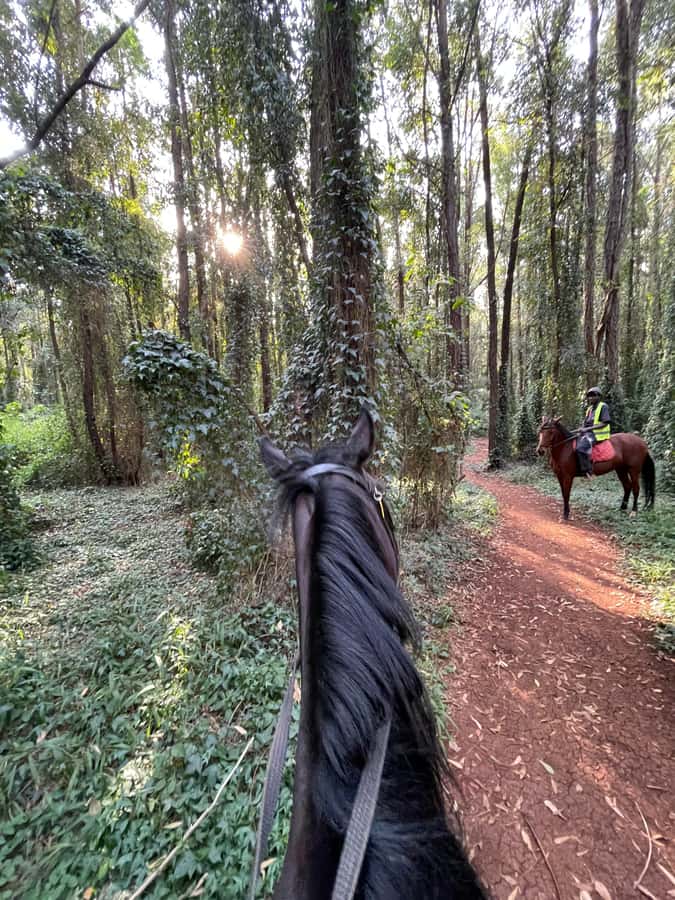
Karura Forest is usually explored on foot, but from horseback its narrow trails, quiet ponds, and forest turns take on a different feel. You ride for 90 minutes from Sigiria Gate, with a guide beside you and a chance to spot monkeys, bushbucks, duikers, and other small animals.
I like the patient instruction for first-time riders, and I like that experienced riders may canter or gallop on designated paths. The main thing to watch is the extra forest entry charge. One recent rider also reported being asked to cover entry for the guide and horse, so confirm the full cost before you set out.
Key points
- A 90-minute forest ride follows narrow, leafy paths around rivers, ponds, and quiet corners of Karura.
- Beginners receive close help, with guides able to hold the horse and teach riding during the outing.
- Experienced riders may canter or gallop where the route allows it.
- Wildlife sightings are possible, including monkeys, bushbucks, duikers, civets, bush babies, porcupines, squirrels, and hares.
- The meeting point matters: Karura has several gates, and this ride starts at Sigiria Gate.
- The $90 price is not the full outlay if you must also pay forest entry fees for yourself, your guide, or the horse.
A quiet way to see Karura Forest
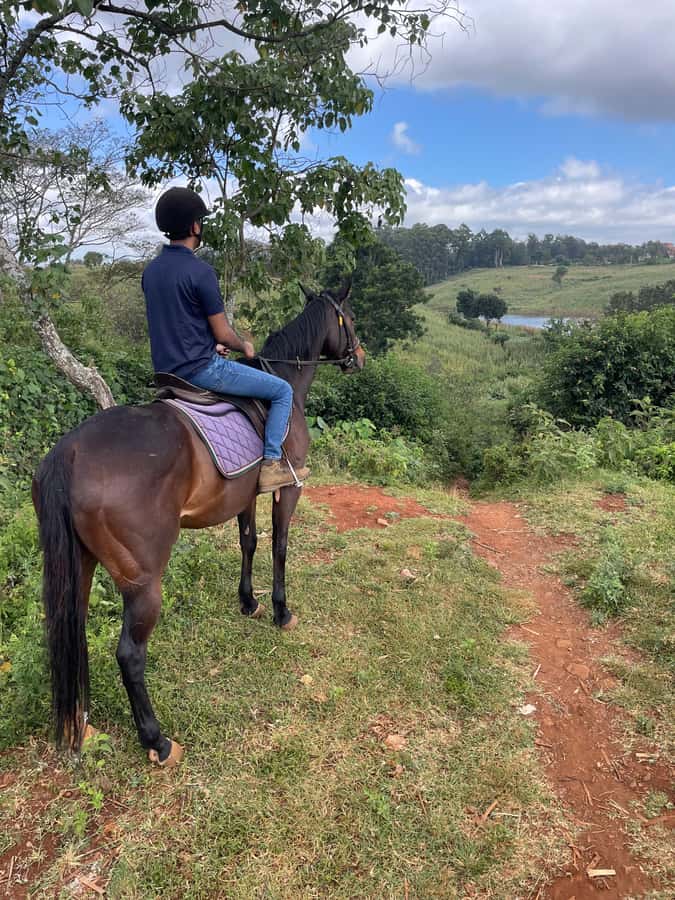
Karura Forest sits in central Nairobi, yet the ride quickly leaves the city feel behind. From the saddle, you move along forest paths rather than simply walking from one marked stop to another. That gives the outing a calm, unhurried rhythm.
The route passes rivers, ponds, and thick growth. The trail is described as narrow and full of turns, which makes it more interesting than a straight horse track. You may see Sykes monkeys, squirrels, hares, or other animals moving through the trees. Larger sightings can include bushbucks and duikers, while genet cats, civets, bush babies, and porcupines are also possible.
Wildlife is never guaranteed. This is a forest ride, not a safari drive with a set viewing circuit. I would book it for the combination of horses, trees, and fresh air, with animals treated as a welcome bonus.
The setting also suits people who want a break from Nairobi without giving up much of the day. The activity lasts 90 minutes, so you can fit it around other plans. At the same time, the ride is long enough to feel like a real outing rather than a short photo opportunity.
A few more things to do around Nairobi worth a look
- From Nairobi: Horseback Wildlife Safari with Transfer & Meal
★ 4.6 · 7 reviews - Nairobi: Horseback Riding Tour Through Maize Plantation
★ 5.0 · 3 reviews
Finding Sigiria Gate before the ride
The practical detail that matters most is the meeting point. Karura Forest has several gates, but these horses and guides wait at Sigiria Gate. Search for Sigiria, Karura Forest on Google Maps or use the supplied map link. Do not simply enter Karura Forest and expect to find the stable from another gate.
You meet the guide at the gate, get acquainted with your horse, and prepare for the ride. The available information does not give a fixed check-in time, group size, or transfer service, so plan your own arrival carefully and allow time to find the correct entrance.
Bring identification. It is specifically required, and you may also need it when paying the forest fee. Long pants are the one stated clothing requirement, but they are also the sensible choice for a ride along narrow forest paths. Long sleeves are worth considering too, since one rider found the forest growth close to the trail.
The tour is conducted in English. Guide names connected with the experience include David, Moffats, and Mwangi. David is described as both a strong rider and a riding teacher, while Mwangi was praised for staying patient in rainy conditions. You may not receive one of these guides, but the names give you a useful idea of the hands-on instruction available.
Meeting your horse and guide
The first minutes are important, especially if you have never ridden before. You get to know the horse before leaving the gate, then receive guidance on how to ride. For a beginner, this can make the difference between sitting stiffly and enjoying the forest.
The instruction is not limited to a quick safety talk. First-time riders have received individual attention, and a guide may walk alongside while holding the horse. That arrangement lets you concentrate on balance, steering, and comfort without feeling rushed.
I would tell the guide your riding experience before you mount. The activity is suitable for both beginners and experienced riders, but those two groups need different pacing. A first-time rider may want a steady walk and extra coaching. An experienced rider may be hoping for more freedom later in the route.
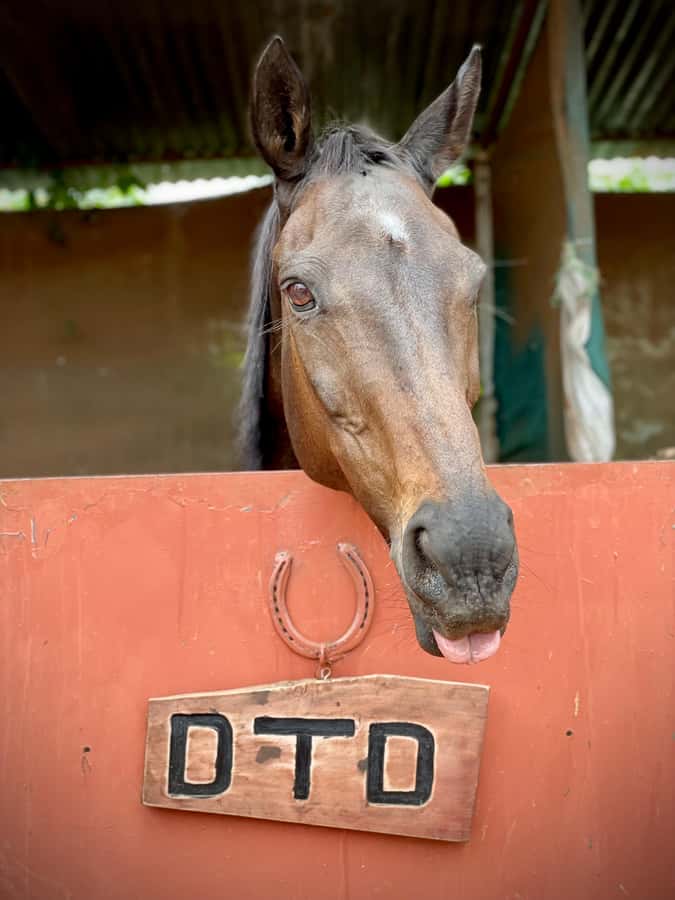
The horses have been described as well fed and well cared for, with equipment in good condition. That matters more than polished presentation. A sound horse, properly fitted equipment, and a calm guide are the foundation of a good riding experience.
One horse named Summer was singled out as a calm companion for a beginner. You cannot assume you will ride Summer, but the detail supports the general picture of horses suited to relaxed instruction. Ask questions if you are unsure about mounting, steering, or the pace.
Following the 90-minute forest route
The central part of the outing is a 1.5-hour horseback ride through Karura. The route includes forest paths, rivers, ponds, and areas where animals may appear. The scenery is close and personal: you notice trail bends, foliage, water, and the horse’s steady movement beneath you.
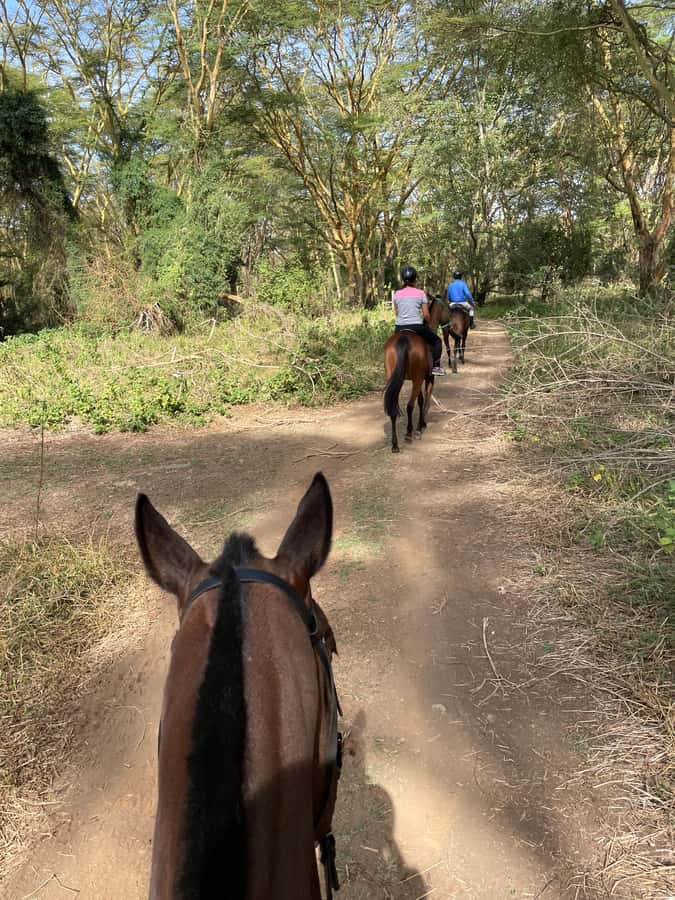
The narrow trail is part of the appeal. It gives the ride a more natural feel than a broad, fenced riding ring. You turn through lush growth and pass places where monkeys or small mammals may be active. It also means you should dress for brush and avoid carrying loose items that could catch on branches.
The ride is described as peaceful and calm, but it is not necessarily passive. You remain involved in handling the horse, listening to the guide, and watching the path. If rain arrives, conditions may change. The ride has gone ahead in rainy weather, but the final decision can depend on the situation on the day.
The route is also adaptable. You can choose a time that works for you, subject to availability, and the experience can be adjusted to your riding level. A beginner may have the guide hold the horse for much of the route. An experienced rider can ask about cantering or galloping on designated paths.
That last point deserves care. You should not expect to gallop anywhere you like in the forest. Faster riding is allowed only on suitable sections, and your guide decides what is safe. The promise is best understood as an option for capable riders, not a guarantee of a fast ride.
Same base, a completely different sort of day:
- Nairobi National Park Half-Day Tour; Free Wi-Fi connection
★ 5.0 · 878 reviews - Nairobi: National Park & Optional Elephants & Giraffe Center
★ 4.8 · 874 reviews - NAI NAMI: Nairobi Storytelling Tour with Street Children
★ 5.0 · 792 reviews - Nairobi National Park Half-Day Game Drive
★ 4.5 · 738 reviews
Wildlife along the trail
Karura offers the chance to see a surprising range of small forest animals. Possible sightings include bushbucks, duikers, genet cats, civets, bush babies, porcupines, Sykes monkeys, squirrels, and hares.
Monkeys may be among the more likely animals to notice, since one rider reported seeing plenty during the outing. Still, a forest is unpredictable. You might see an animal clearly, catch a quick movement in the trees, or see nothing beyond birds and ordinary forest life.
The horseback position can help you look over vegetation and move quietly, but the horse is not a wildlife vehicle. Keep your attention on the animal and the guide rather than trying to approach on your own. The tour provides an opportunity to approach animals, but that does not mean every creature will come close or that contact is appropriate.
I like this part of the experience because it rewards patience. You are not racing from one attraction to the next. You are moving at a pace that leaves room to notice a monkey in the branches, a hare near the trail, or signs of animals you do not see.
What the $90 price really covers
The listed price is $90 per person. It includes the horse ride, helmet, professional guide, scenic views, and the chance to approach animals. For someone who wants a guided forest ride with a properly equipped horse, that can be a fair price, especially when the instruction is as personal as described.
The price does not include the forest entry ticket. The stated forest fee ranges from 100 to 400 Kenyan shillings depending on your status in Kenya, with citizens listed at 100 shillings. One recent rider also reported extra charges for the guide and horse to enter the park. Because that detail conflicts with the simpler fee description, ask for a complete breakdown before booking or arriving.
This is the biggest value question. The $90 may look like a clear all-in figure, but your final cost could be higher. A short message asking about your own forest fee, the horse’s fee, and the guide’s fee can prevent confusion at the gate.
The experience becomes better value if you want more than a basic horse ride. You are paying for a forest setting, a live English-speaking guide, riding help for beginners, and the chance to see wildlife. If you only want a quick mounted photo, 90 minutes at this price may feel less attractive.
Reserve now and pay later is available, and cancellation is free up to 24 hours before the activity for a full refund. Those terms are useful if your Nairobi plans may change, but they do not remove the need to check the extra park charges.
How beginner-friendly is the ride?
The strongest feature for new riders is individual support. Three first-time riders in one party were each given attention from an instructor who explained riding during the course. Guides have also walked beside beginners to keep them safe and comfortable.
That makes this a better fit for a first ride than an outing that simply hands you a horse and points toward the trail. You should still tell the guide if you are nervous, have never mounted before, or want a slower pace. The route can be enjoyed at your own speed, within the needs of the group and the conditions.
Beginners should expect to walk rather than gallop. The goal is to feel secure, learn the basics, and enjoy Karura. You do not need advanced riding skills to book, but you do need to follow the guide’s instructions and accept that the horse sets part of the pace.
The experience also suits families or mixed groups with different levels, as long as everyone understands that the ride may be adjusted around the least experienced person. Experienced riders may get a chance to canter or gallop on marked sections, but they should not assume the entire group will move quickly.
How experienced riders should set expectations
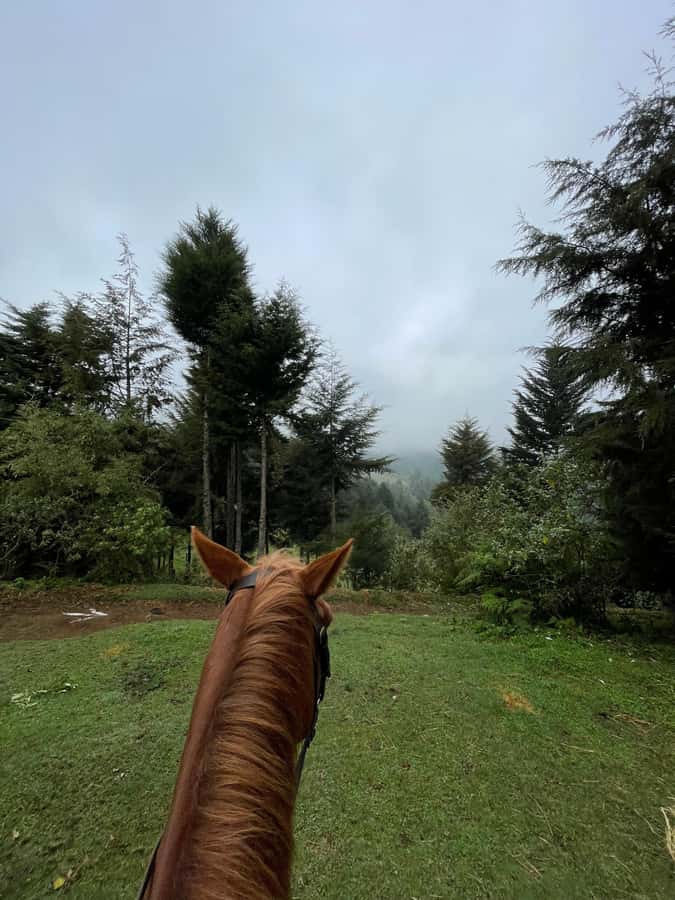
If you already ride, this is not presented as a technical lesson or a long-distance horse trek. It is a scenic forest ride lasting 90 minutes. That makes it a good choice if you want a change of setting and some room to ride at a livelier pace.
Cantering or galloping is possible on designated paths. Ask the guide early about which parts of the route allow it and how much time might be available. The forest trail has narrow sections and turns, so much of the outing may remain at a walk.
The strength for experienced riders is the setting. You get a natural route, changes in trail width, and the chance to ride among forest sounds instead of circling an arena. The limitation is that this is still a guided outing with safety restrictions, not an open-ended personal ride.
What to wear and bring
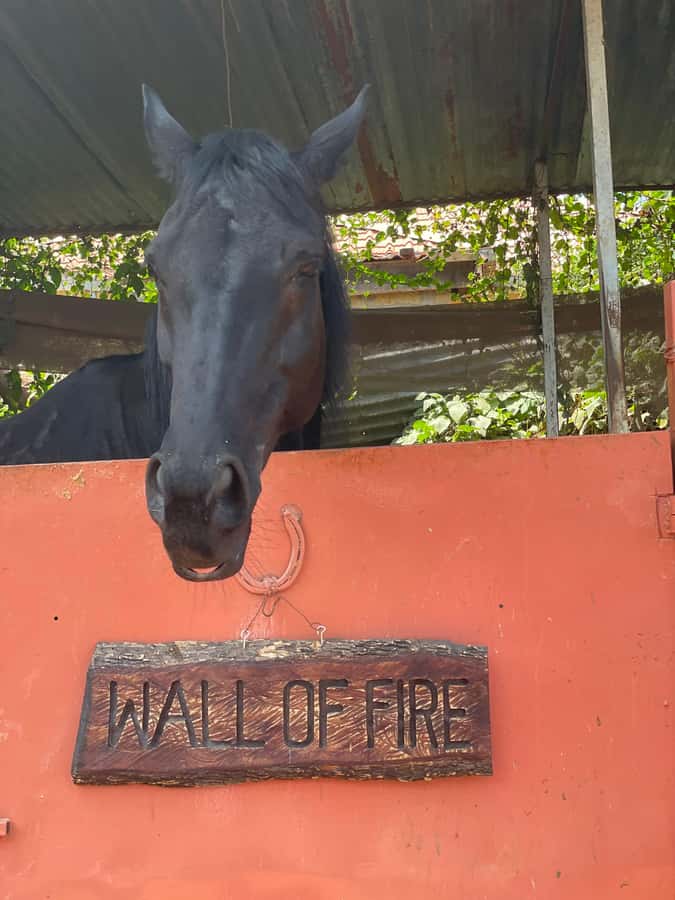
Wear long pants. They are specifically requested and make sense for a trail with close vegetation. Long sleeves are also a practical choice based on the dense growth along parts of the route.
Bring your ID, since it is required. You should also have a way to cover the forest entry fee, and possibly additional horse or guide charges if the gate applies them. The helmet is included.
The information does not list a required shoe type, camera policy, age limit, weight limit, or rain policy. I would avoid assuming that every personal preference can be accommodated. If any of those details matter to you, ask the provider before reserving.
Who should book this Karura ride?
I would recommend this ride to a first-time rider who wants patient help, a visitor seeking a quiet Nairobi outing, and an experienced rider who wants a forest setting with a chance to canter. It also suits anyone who prefers a 90-minute activity that leaves time for other plans.
It is less suitable if you want guaranteed wildlife sightings, a full-day horse trek, or a fast ride from start to finish. The animals are wild and the route must be shared with the needs of less experienced riders.
The experience also works best for someone willing to handle a small amount of practical uncertainty. Sigiria Gate must be found correctly, the forest fee is extra, and the exact treatment of horse and guide entry should be confirmed. Once those points are clear, the ride itself appears straightforward.
FAQ
Where does the horseback ride begin?
The ride begins at Sigiria Gate in Karura Forest. Karura has multiple gates, so search for Sigiria, Karura Forest on Google Maps and make sure you do not arrive at another entrance.
How long is the horseback riding experience?
The riding portion lasts 90 minutes, or 1.5 hours. You return to Sigiria Gate when the ride ends.
Is the tour suitable for beginners?
Yes. Guides can hold the horse for inexperienced riders, walk alongside them, and provide individual instruction during the ride.
Can experienced riders canter or gallop?
Experienced riders may canter or gallop on designated paths. Faster riding is not available across every part of the forest route.
What animals might I see?
Possible sightings include bushbucks, duikers, genet cats, civets, bush babies, porcupines, Sykes monkeys, squirrels, and hares. Wildlife sightings are not guaranteed.
Is the forest entry fee included?
No. The forest entry ticket is separate and is listed as 100 to 400 Kenyan shillings depending on your status in Kenya. Ask whether separate fees also apply to the guide and horse.
What should I bring?
Bring long pants and your ID. A helmet is provided. Long sleeves may also be useful because some forest growth is close to the trail.
Should you book this ride?
Book it if you want a calm, personal way to see Karura Forest and appreciate good beginner support. The well-cared-for horses, patient instruction from guides such as David, Moffats, and Mwangi, and the chance to ride past ponds and wildlife give the outing real character.
Before paying, confirm every entry charge and meet at Sigiria Gate. If you do that, the 90-minute ride offers a pleasant change from Nairobi’s busy streets, with enough guidance for a first-timer and enough forest freedom to interest an experienced rider.
Just added around Nairobi
- Nairobi: Horseback Riding Tour Through Maize Plantation★ 5.0 · 3 reviews
- Nairobi: Kibera Slum Compassionate Walking Tour★ 5.0 · 4 reviews
- Nairobi: Karura Forest Guided Walking Tour★ 5.0 · 4 reviews
- From Nairobi: Horseback Wildlife Safari with Transfer & Meal★ 4.6 · 7 reviews
- Nairobi: Hidden Gems and Local Secret Guided Walking Tour★ 4.9 · 20 reviews
- Nairobi: Hop on Hop off and Maasai market Collections Visit★ 3.5 · 10 reviews
- Nairobi: Guided Afternoon Tour to Bomas of Kenya.★ 3.1 · 4 reviews
- Nairobi: Half-Day Game Drive at Nairobi National Park★ 5.0 · 5 reviews
Tours in Nairobi, compared.
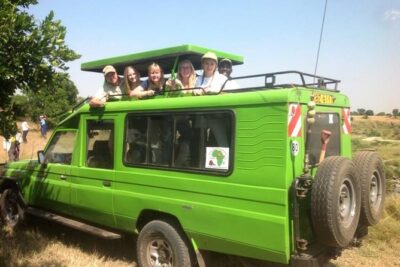
Nairobi National Park Half-Day Tour; Free Wi-Fi connection
Read our review →
National Park & Optional Elephants & Giraffe Center
Read our review →
NAI NAMI: Nairobi Storytelling Tour with Street Children
Read our review →