

Reviewed · CULTURAL VILLAGE VISITS
Nairobi: Kibera Street Art Tour with Local Artists
Kibera’s art tells stories that a quick drive past Nairobi cannot. On this 150-minute walking tour, local artists from Sun Valley Art Collective lead you through murals, studios, homes, galleries, and street-food stops, explaining the ideas behind the work and the community around it. Guides including Saviour and Anthony have helped visitors see Kibera with more care and less cliché.
I like two things most here: the artists do the explaining themselves, and your money supports a local creative group rather than only passing through a large tour company. I also like the mix of painting, recycled-metal sculpture, community projects, and food. The main drawback is simple: this is a walking tour through an informal settlement, with uneven ground, busy paths, and no wheelchair access.
Key points to know before you go

- Local artists lead the walk: Guides from Sun Valley Art Collective share their own experiences of growing up in Kibera.
- The murals carry a message: You learn about education, health care, sport, politics, and community action through the artwork.
- You meet more than one kind of maker: The route can include painters, metal artists, galleries, and collective studios.
- Street food is part of the experience: Samples are available on request, so tell the team before or during the walk.
- Art is sold at its source: You can buy paintings and objects directly from the artists, though purchases cost extra.
- Plan for a real walk: Wear closed-toe shoes, carry water, and use a taxi or Uber to reach Gateway Supermarket.
Why Kibera’s art makes a better introduction than a passing view

Kibera is often reduced to a headline or a photograph. This tour gives you a fuller picture by putting local artists in charge of the story. You do not simply walk past painted walls. You stop, listen, and learn why a mural exists, who worked on it, and what its message means to people living nearby.
Sun Valley Art Collective brings together about 15 artists who grew up in Kibera. Their work gives young people a place to express themselves, earn from their skills, and speak about local concerns. That makes the tour more than a sightseeing walk. It is also a look at one practical way art can support a community.
I especially value the guides’ position as both artists and residents. Saviour, Tony, Anthony, and other members of the collective have explained the work with personal detail, including the artists’ motivation, social concerns, and hopes for the future. Names may vary according to the day, but the key point remains the same: you are meeting people with a direct connection to the place.
You should still approach the visit with respect. People will be going to work, shopping, caring for children, and handling ordinary business around you. Ask before taking photographs, and follow your guide’s advice about when photography is suitable. Do not treat homes or passersby as scenery.
Other cultural visits around Nairobi:
- Nairobi: Explore Kibera Slum with Local Guides
★ 4.9 · 365 reviews - Nairobi: Day Tour to Amboseli National Park & Maasai Village
★ 4.5 · 310 reviews - Masai village Day Tour Experience
★ 5.0 · 284 reviews
Starting at Gateway Supermarket in Jamhuri Estate
The meeting point is outside Gateway Supermarket on Kibera Station Road, near Jamhuri Estate. The team can provide a map location, which is useful because a precise meeting point matters in a busy part of Nairobi.
There is no parking at the meeting point. I would use an Uber or taxi rather than trying to arrive by private car. The meeting location is described as safe, but you should still keep your phone and other belongings secure, as you would anywhere in a crowded urban area.
The walk begins with a short orientation before you enter Kibera. This is a good moment to tell the guide about any food restrictions, special requests, or concerns about the pace. The group is designed to be small, with one guide for every two guests, so you should have room to ask questions instead of being lost in a large crowd.
English and Swahili are available. If you need a particular arrangement, contact the provider in advance. The team says it is flexible, but the route remains unsuitable for wheelchair users and people with mobility impairments.
Walking through Kibera with the people who live there
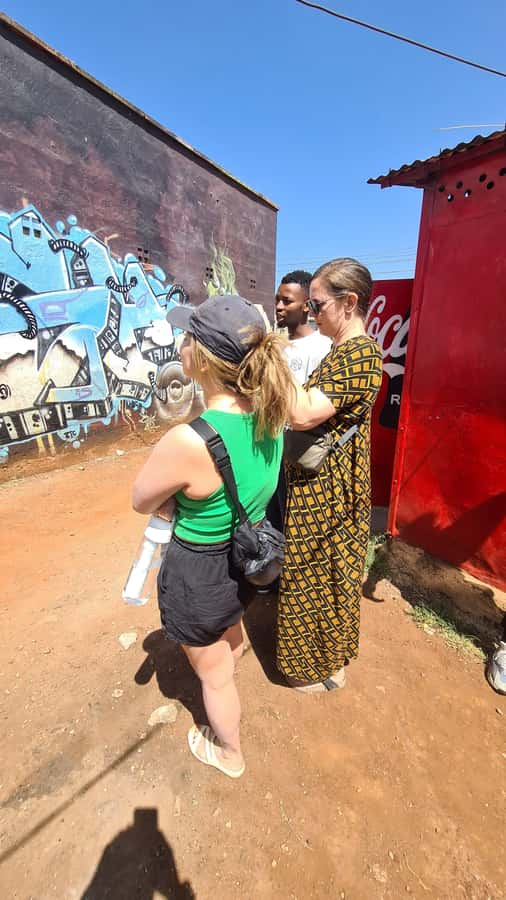
The main portion takes about two hours. You move through Kibera on foot, stopping at murals, artist homes, studios, collectives, and places linked to local creative work. The exact rhythm depends on the day and the conversations, so think of this as a guided community walk rather than a tightly timed museum visit.
The route can be physically demanding in small ways. You will need comfortable closed-toe shoes, and water is important. A hat helps in strong sun. Bring a camera if you want one, but use it carefully and only when your guide says it is appropriate.
The value here lies in the pauses. A painted wall can look attractive on its own, but the guide can explain the social or political idea behind it. You may hear how art connects with education, health care, sports groups, or programs for young people. Those details help you understand why the murals matter beyond their color and design.
The tour does not pretend that Kibera is only an art district. You see people living their daily lives, along with the practical conditions of an informal settlement. That honesty is important. The experience asks you to hold two ideas at once: Kibera faces serious challenges, and it is also home to talent, organization, humor, work, and ambition.
Murals with messages, not just photo stops
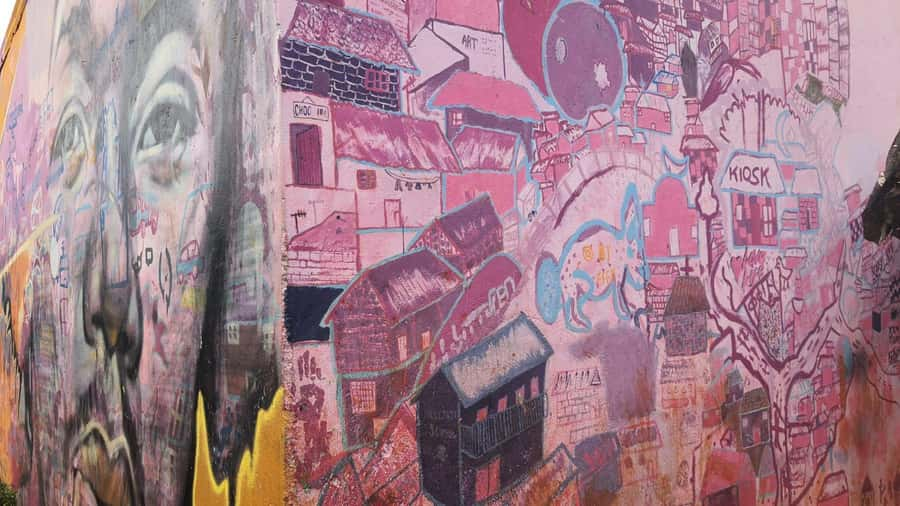
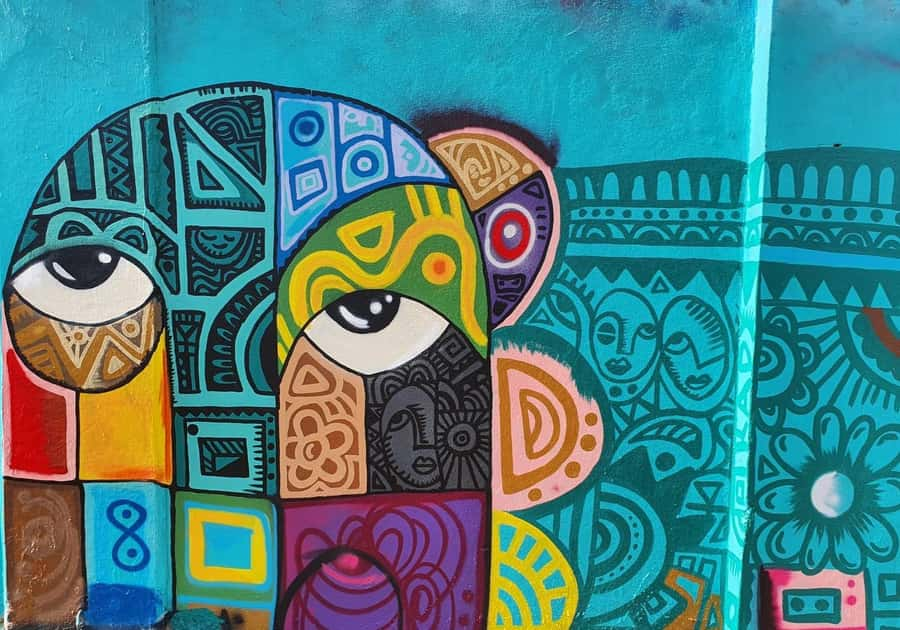
The murals are the visual heart of the walk. They are collaborative in many cases, which gives you a chance to ask how different artists work together and how a shared wall can carry a shared message.
The artists can discuss their inspiration and the social issues behind their work. Some pieces are educational, while others speak to community identity or public concerns. You may find that the most memorable part is not the biggest painting, but the explanation of why it was made and what it hopes to change.
This is also where the tour differs from a standard city art walk. You are not moving between formal galleries with labels beside every piece. The setting is the neighborhood itself, and your guide is the interpreter. That can feel more direct and personal, but it also means you should stay attentive to the route and the people around you.
Photography should be secondary. A camera is welcome, but the guide decides when it is respectful to take pictures. If you want portraits of artists or residents, ask first. A good visit depends on treating the area as a lived-in community, not an open-air set.
Same base, a completely different sort of day:
- Nairobi National Park Half-Day Tour; Free Wi-Fi connection
★ 5.0 · 878 reviews - Nairobi: National Park & Optional Elephants & Giraffe Center
★ 4.8 · 874 reviews - NAI NAMI: Nairobi Storytelling Tour with Street Children
★ 5.0 · 792 reviews - Nairobi National Park Half-Day Game Drive
★ 4.5 · 738 reviews
Meeting artists, welders, and makers at work

The route can introduce you to artists beyond Sun Valley. One memorable stop may involve a welder who turns recycled metal into animal figures. Another may take you to an exhibition with work by a different local artist.
This variety adds weight to the tour. You see that local art is not limited to murals. It can include painting, found materials, recycled glass, metalwork, and objects made for display or sale. If you are interested in craft, the chance to hear directly from several makers may be worth as much as the wall paintings.
The guide may also take you into a gallery displaying work by several artists, including blown glass made from recycled glass. The gallery gives you a calmer place to look at pieces up close, while the street route shows how art fits into everyday neighborhood life.
Do not expect a large commercial gallery with a wide stockroom or fixed shopping schedule. This is a local art network, and what you see can depend on which artists are available. That unpredictability is part of the appeal, but it also means you should not book this only because you want a guaranteed particular item.
Street food and the local side of the route
Street-food samples are included on request. Tell your guide if you want to try them, and mention any dietary needs before eating. The available food is not specified in advance, so approach this as a chance to sample something chosen locally rather than a fixed tasting menu.
I like this part because food creates a simple link with the neighborhood. You pause at vendors the artists themselves favor, rather than eating in a separate tourist setting. It also gives you a chance to ask questions about daily life in Kibera in a relaxed way.
Bring water and a small snack even if you plan to sample food. The walk lasts two to three hours, and the supplied information recommends carrying both. Do not litter. That rule is basic, but it matters on a walking route through a densely lived-in area.
The Sun Valley studio and the chance to buy art

A stop at the collective’s studio gives the artists space to explain their long connection with art and their efforts to use creative work for community improvement. You may see paintings and objects made from recycled metal, along with work for sale.
Buying something here can be a meaningful part of the visit. You deal directly with the maker, and your purchase supports the artists’ work without turning the tour into a simple donation appeal. Prices are not provided, so bring a payment method you are comfortable using and decide in advance what you want to spend.
A small artwork can also be easier to take home than a large souvenir. One visitor bought a painting by Saviour and used it as a daily reminder of the experience. You do not need to buy anything, though. The tour should remain worthwhile if you prefer to listen and look without shopping.
The gallery and studio stops also help spread your spending among several artists. If you are interested in glass, painting, metalwork, or small objects, ask who made the piece and how the money is handled. The guides can direct you to the appropriate artist.
Finishing near Olympic Stage
The route finishes near Olympic Stage, where you can call an Uber or taxi or take a matatu onward. This is useful because you do not need to return to the starting point after the walk.
Allow a little flexibility after the scheduled 150 minutes. The tour is described as lasting two to three hours, and conversations, food stops, and studio visits can affect the finish time. I would avoid booking a tight airport transfer or an important appointment immediately afterward.
The finish also makes the tour practical for combining with another Nairobi activity. You can continue from Olympic Stage, but arrange your next ride before the tour ends if possible. Your guide can help you understand the local transport options.
What the $45 price really covers
At $45 per person, this is not the cheapest way to spend two and a half hours in Nairobi. The price makes more sense when you consider the small guide ratio, local leadership, several artist contacts, and the direct support for Sun Valley Art Collective.
You are paying for access and interpretation, not simply transport and a set of photo stops. The guides explain the art, introduce you to makers, lead you through the neighborhood, and help you understand community projects that you might not find on your own.
Street-food samples are included on request, but artwork is not included. Set aside extra money if you hope to take home a painting, recycled-metal object, or glass piece. There is no need to buy, and the tour should not pressure you into it.
For someone seeking a polished cultural attraction, the value may feel less certain because the setting is informal and the route can change. For someone who wants a direct, local-led look at art and daily life, the cost is reasonable. The small group is a major advantage.
Who should book this Kibera art walk
I would recommend it to you if you want to understand Nairobi through local voices rather than from a vehicle window. It suits people interested in street art, social issues, community projects, African contemporary art, and small-scale creative businesses.
It is also a good fit if you enjoy asking questions and accepting a little uncertainty. The best moments come from conversation, and you should not expect every stop to operate like a formal attraction with a sign and fixed timetable.
You should think twice if you have difficulty walking on uneven ground, use a wheelchair, or prefer a quiet, highly controlled outing. This is not a conventional gallery visit. You are moving through a working neighborhood and need to stay aware of your surroundings.
Families with older children may find the art and community stories worthwhile, but the suitability of very young children is not specified. If you have special requirements, contact the provider before booking rather than assuming the route can be adjusted.
Practical details that make the day easier
Wear closed-toe shoes with a good grip. A hat, water, and a camera are useful, but your most important item is a respectful attitude.
The tour is offered in English and Swahili. It lasts 150 minutes on the schedule, though the overall walk can take two to three hours. Food samples are available on request, and art purchases are optional and separate.
You can cancel up to 24 hours before the start for a full refund, and you can reserve now and pay later. Those terms help if your Nairobi plans are still shifting, but you should still check the available start times before committing.
Should you book it?
Book this tour if you want local artists to explain Kibera in their own words, and if murals, community work, and direct contact with makers interest you. The combination of street art, artist studios, recycled materials, local food, and small-group guiding gives the walk real substance.
Skip it if you want a polished attraction, guaranteed shopping choices, or an easy route with no mobility demands. For the right visitor, the $45 cost buys a thoughtful introduction to Kibera and helps keep attention, and some income, with the artists who call it home.
FAQ
Where does the Kibera art tour start?
It starts outside Gateway Supermarket on Kibera Station Road near Jamhuri Estate. A map location can be provided.
How long does the tour last?
The scheduled duration is 150 minutes. The experience is also described as lasting two to three hours.
Which languages are available?
The live tour is available in English and Swahili.
Is street food included?
Street-food samples are available on request. Bring water and a snack as well.
Can I buy artwork during the tour?
Yes. You can buy paintings and objects directly from local artists, but artwork is not included in the tour price.
Is the tour suitable for wheelchair users?
No. The experience is not suitable for wheelchair users or people with mobility impairments.
Just added around Nairobi
- Visit kibera Slum the chocolate city★ 4.8 · 3 reviews
- 3 days maasai mara migration safari★ 4.5 · 7 reviews
- Maasai Mara Day Trip★ 5.0 · 15 reviews
- 4 Days Tour Landcruiser in Masai Mara and Lake Nakuru★ 5.0 · 10 reviews
- 4 Days Safari to Lake Nakuru N/P and Maasai Mara N/R★ 5.0 · 18 reviews
- Day Tour to Nairobi national park, Elephants, and Giraffe Center★ 3.5 · 8 reviews
- Wildebeest Migration in Masai Mara and Sightseeing 4 Days Tour★ 4.5 · 6 reviews
- Vegans special safari★ 4.5 · 4 reviews
Cultural Village Visits, compared.


Day Tour to Amboseli National Park & Maasai Village
Read our review →



Kibera Slum Tour with Local Social Entrepreneurs
Read our review →

Giraffe Centre, Elephant Orphanage, and Bomas of Kenya Day Tour from Nairobi
Read our review →Browse the lists this tour appears in