
Reviewed · GIRAFFE CENTRE & ELEPHANT ORPHANAGE
From Nairobi: David Sheldrick Elephant Orphanage Tour
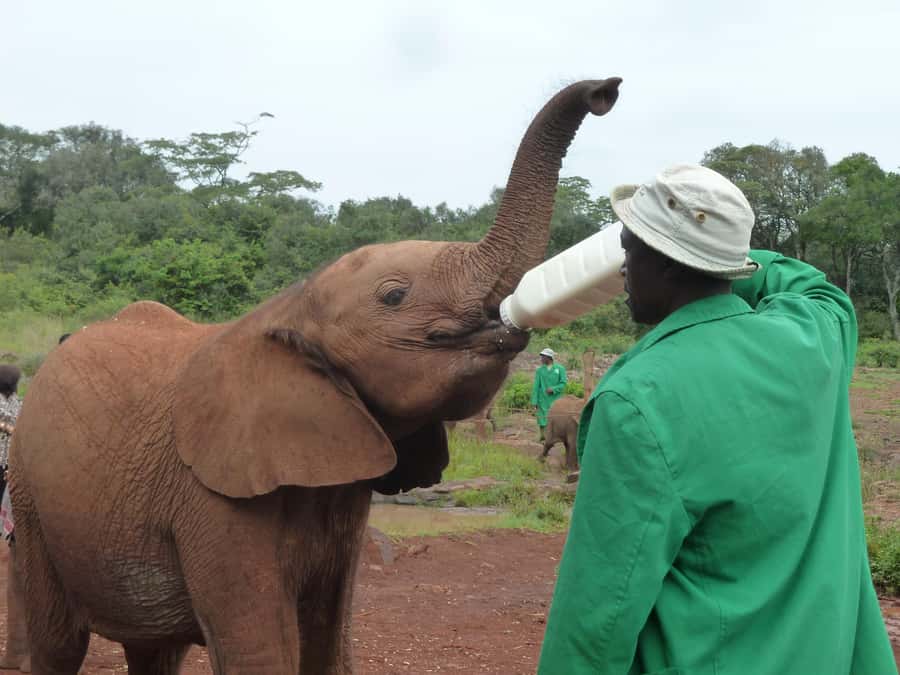
The highlight comes fast: a line of baby elephants trots out of the bush, each heading for a keeper and a giant bottle of milk. You watch them slurp, gargle, splash in water, and lean against the people caring for them. The 11 a.m. feeding is tightly timed, so arriving late means missing part of the best hour.
I like the personal stories behind each elephant, including whether it was rescued after poaching, a fall into a well, or conflict with people. I also like the hotel pickup and small group of up to eight, which takes the strain out of Nairobi traffic. The catch is the price and the time spent on the road: the listed rate is $69, and a mandatory park or conservation charge is extra.
Key points to know before you go
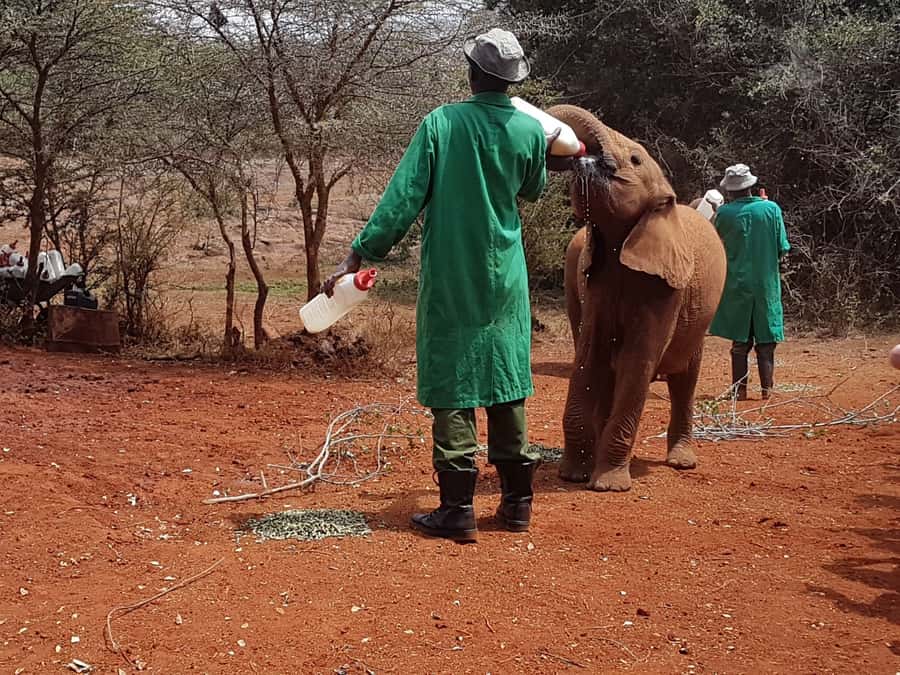
- The milk feeding is the main event: You watch the youngest elephants drink for about 10 to 15 minutes, followed by older calves.
- The visit runs from 11 a.m. to noon: Pickup begins at 9:30 a.m., with roughly two hours set aside for the drive.
- Each elephant has a story: Keepers explain how the animals arrived, how old they were, and how their care is progressing.
- Hotel pickup keeps the morning simple: Transport is provided within Nairobi, and the group is limited to eight people.
- Budget for an extra mandatory charge: The tour price does not cover the required Nairobi National Park access or conservation payment.
- Shopping stops may happen: Ask your driver at the start whether craft or shopping stops are planned, especially if you want the shortest possible day.
Why the 11 a.m. feeding matters
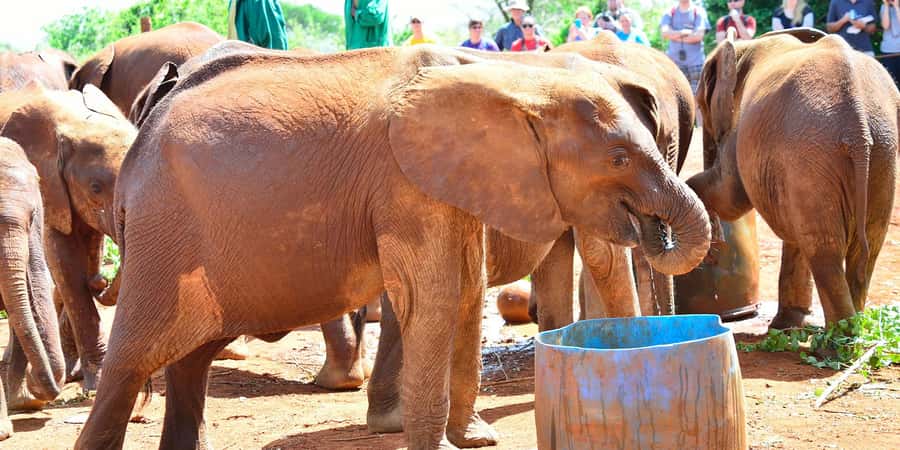
David Sheldrick Wildlife Trust is not a conventional zoo visit. The young elephants are brought from the bush to the open viewing area for their feeding, then led back again. A simple rope fence separates you from the action, so you get a clear view without glass or a high barrier.
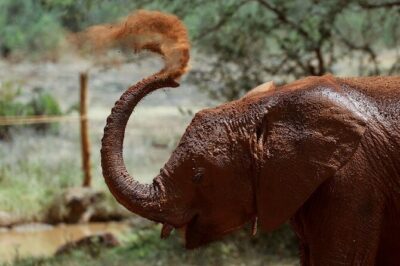
The first group is made up of the youngest elephants. They come out behind their keepers and take milk from oversized bottles. For around 10 to 15 minutes, the scene is all trunks, bottles, splashing, and impatient little nudges. Some calves finish quickly. Others hold the bottle with the tip of the trunk and close their eyes as they drink.
Once the youngest animals head back into the bush, the two to three-year-olds have their turn. Some can hold and drink from their own bottles. Others still need a keeper to feed them. This second group is less tiny, but it gives you a useful look at the next stage of rehabilitation.
The staff presentation runs alongside the feeding. You hear the name and background of each elephant, when it arrived, and what condition it was in. If the rescue story is known, you may learn whether poaching, a well, or conflict with people caused the orphaning.
That information changes the way you see the playful behavior. A calf leaning into a keeper is not just a cute photo opportunity. It shows the close care needed when an elephant has lost its mother and cannot yet survive alone.
More animal sanctuaries around Nairobi:
- Nairobi: National Park & Optional Elephants & Giraffe Center
★ 4.8 · 874 reviews - Elephant Orphanage and Giraffe Center Tour with Options
★ 4.5 · 457 reviews - Nairobi National Park, Elephant Orphanage and Giraffe Centre
★ 4.6 · 365 reviews
The viewing area and the elephant care
The visit takes place outdoors, in an open space surrounded by a rope fence. You are not walking through the elephants’ enclosure, and you do not roam freely among them. The setup gives the keepers room to control the animals while allowing you to watch at close range.
The animals can move toward the fence, so you may see a trunk reach out for attention or a calf press close to a keeper. One recent account described being able to give an elephant a brief pet when it came near. Treat that as a possible moment, not something you should expect or request.
The keepers are central to the experience. They feed the elephants, guide them back to the bush, and provide the comfort the calves would normally receive from their mothers. The presentation also explains the animals’ progress, not just their arrival stories.
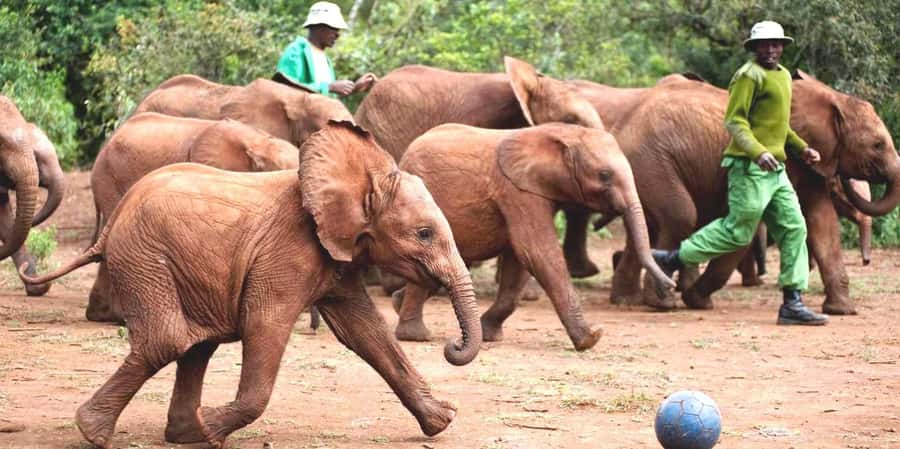
I find the water play especially useful for understanding the young elephants’ personalities. After the milk, they may splash, nudge the keepers, or play around the water. The behavior is lively, but the visit remains controlled and purpose-driven.
The viewing hour goes quickly. You are not spending half a day at the orphanage. You get the feeding, the explanation, the chance to watch the calves play, and then the animals return to the bush.
Getting from Nairobi to the trust
Pickup begins at 9:30 a.m. from a hotel or home within Nairobi. The drive is listed as about two hours, although actual timing depends on Nairobi traffic. The goal is to reach the trust for the 11 a.m. opening and feeding session.
This is where the driver matters. Stephen received especially strong praise for being prompt, polite, patient, and able to make the appointment despite traffic. Another account described him as helpful with park entry and good at getting the group to a prime viewing position when the gates opened.
Martin was also named as a driver, though the experience with him was more mixed because of repeated shopping stops. The practical lesson is simple: tell your driver before leaving that you want the orphanage to be the priority. If you do not want craft or souvenir stops, say so plainly.
Several people found the extra stops unnecessary and said they took time away from the main visit. They may be intended as shopping opportunities, but they are not part of the core elephant experience described here. If you have a flight, a dinner booking, or another Nairobi activity, allow plenty of extra time.
The return drive brings you back to Nairobi. Hotel drop-off is included within the city, which is helpful after a morning that can take much longer than the one-hour visit itself.
What the $69 price really covers
The listed price is $69 per person. It includes pickup and drop-off within Nairobi and admission to the elephant orphanage.
That sounds straightforward, but the extra access charge is the most important cost detail. The information provided says you must pay an additional $85 per person for Nairobi National Park access to reach the orphanage. One recent booking account instead described a required $45 cash conservation donation. Because those amounts do not match, confirm the current charge and the accepted payment method before you book.
In practical terms, do not treat $69 as the full cost. Ask exactly what the mandatory park or conservation payment is, whether it is included in your confirmation, and whether you need cash. A surprise charge can change the value of the tour considerably.
Lunch is not included, though it is available for purchase. An optional Giraffe Centre visit costs $25 per person. That add-on may suit you if you want to combine two Nairobi wildlife stops, but it also makes an already traffic-heavy day longer.
You may pay less by arranging the orphanage visit yourself if you know Nairobi and can manage the required tickets and transport. The value of this tour is convenience: a driver collects you, handles the route, helps with entry, and returns you to your hotel. For a first visit to Nairobi, or for anyone who prefers not to negotiate city traffic, that service has real worth.
Same base, a completely different sort of day:
- Nairobi National Park Half-Day Tour; Free Wi-Fi connection
★ 5.0 · 878 reviews - NAI NAMI: Nairobi Storytelling Tour with Street Children
★ 5.0 · 792 reviews - Nairobi National Park Half-Day Game Drive
★ 4.5 · 738 reviews - Nairobi: Historic and Modern Highlights Walking Tour
★ 4.8 · 703 reviews
The small-group format and guide support
The group is limited to eight people, with an English-speaking live guide. That is a useful size for an outdoor viewing area. You are less likely to feel lost in a large crowd, and it should be easier to hear the presentation and ask a question.
The strongest guide feedback centered on Stephen. His role was not limited to driving. He helped with the park entry process, reached the gates on time, and positioned the group well for the feeding. That kind of practical support matters more here than a long lecture in the vehicle.
The guide’s work is also useful before and after the orphanage. You can ask about timing, shopping stops, the additional payment, or the return trip before the day gets underway. I would use that first conversation to set expectations.
The activity is listed as wheelchair accessible. Since the feeding takes place in an open outdoor area, you should still ask the operator about the exact vehicle and access arrangements if you have specific mobility needs.
What can take you by surprise
The first surprise is the ratio of driving to viewing. The orphanage session lasts one hour, but the transport section is listed as two hours. Nairobi traffic can stretch the morning further, so do not think of this as a quick one-hour outing.
The second is how tightly scheduled the feeding is. One person arrived late and missed part of the presentation. The elephants come out at a set time, and the younger animals are fed before the older group. There is no promise that the activity will wait for a delayed vehicle.
The third is the shopping stops. Craft-center visits were not expected by some people and used a substantial part of the day. If your interest is only the elephants, make that clear before departure and again if the driver suggests a stop.
The fourth is the cost of the required conservation or park payment. The orphanage itself is not the only charge connected with entry. Get the exact figure in writing if possible, and carry the requested payment method.
These are not reasons to dismiss the tour. They are reasons to plan it as a half-day Nairobi outing rather than a one-hour appointment.
Who will get the most from this visit
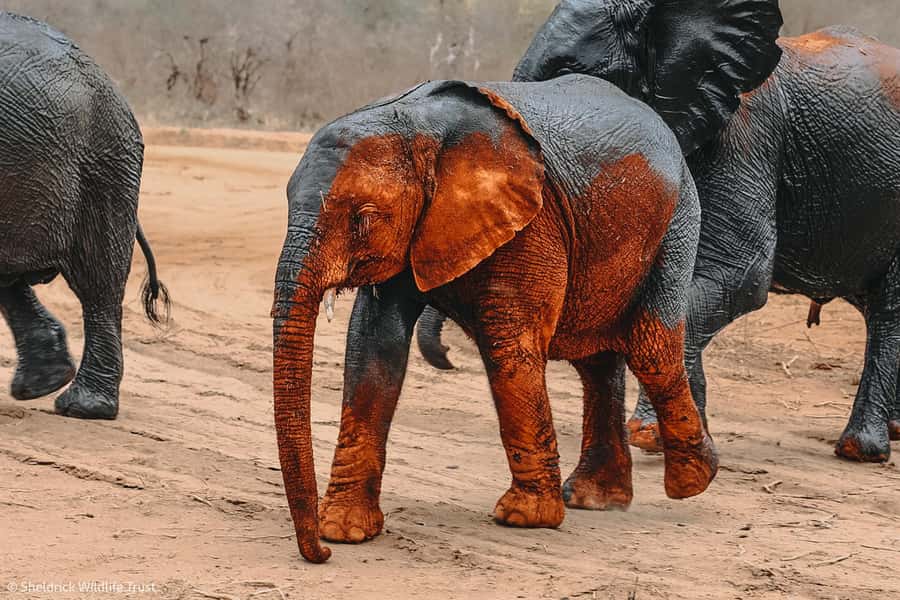
This tour suits families, first-time visitors to Kenya, and anyone who wants a close look at elephant care without arranging a full safari. The feeding is easy to understand, visually engaging, and short enough to hold a child’s attention.
It is also a strong choice if you care about conservation. The staff explain the difficult reasons elephants become orphans and show the daily care needed to prepare them for a return to the bush. You leave with more than photographs of bottles and trunks.
The visit is less suitable if you want a full wildlife drive. You are visiting an orphanage, not spending hours searching for wild animals across a park. You also may not like the tour if you have a strict schedule or strongly dislike shopping detours.
Photographers should bring a camera, but remember that the feeding area is shared. The best position may depend on when you arrive and how the group is placed. The animals move, the keepers move, and the most appealing moment may last only a few seconds.
Booking advice for a smoother morning
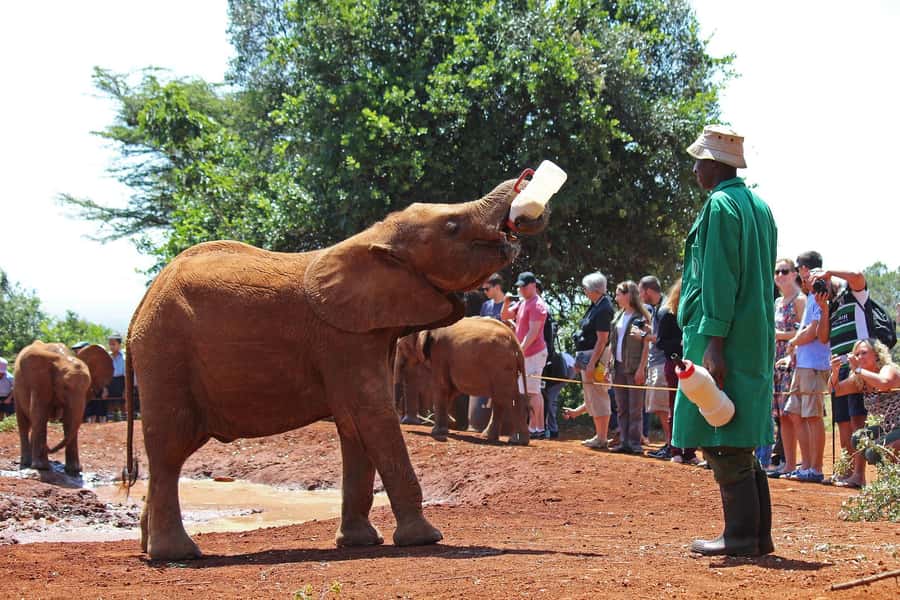
Book the 11 a.m. feeding and make sure your pickup time is clearly confirmed. The listed pickup is 9:30 a.m. from a Nairobi hotel or home, but traffic makes an early start sensible.
Before the vehicle leaves, ask three direct questions:
- What is the exact mandatory park or conservation fee?
- Is that charge paid in cash?
- Will there be any craft or shopping stops?
Bring money for lunch and any optional visit you choose. The Giraffe Centre costs $25 per person, and lunch is separate. If you want only the elephant orphanage, say that clearly so the driver understands your plan.
The tour offers free cancellation up to 24 hours in advance and allows you to reserve now and pay later. Those terms help if your Nairobi schedule is still shifting, but they do not remove the need to confirm the extra entry charge.
Should you book the David Sheldrick elephant visit?
Book it if you want a focused, emotional introduction to elephant rescue and prefer having Nairobi transport handled for you. The feeding is special because you see the calves close up while learning the hard facts behind their rescue. The keepers’ explanations, the water play, and the older elephants holding their own bottles give the hour real variety.
Think twice if you are paying $69 mainly for a one-hour activity and do not want extra park fees, traffic, or possible shopping stops. In that case, compare the cost of arranging entry and transport yourself.
For most first-time visitors with room in their Nairobi schedule, I think the orphanage itself is worth seeing. Just confirm the additional charge, protect the 11 a.m. start, and make the elephant visit the clear priority.
FAQ
How long does the elephant orphanage visit last?
The guided visit at the David Sheldrick Wildlife Trust runs from 11 a.m. to noon. The full outing is longer because transport from Nairobi is listed as about two hours.
What time does pickup begin?
Pickup begins at 9:30 a.m. from a hotel or home within Nairobi.
What will I see during the feeding?
You will watch the youngest elephants drink milk from large bottles, play with water, and interact with their keepers. Afterward, the two to three-year-old elephants have their turn, with some drinking independently and others receiving help.
Is the tour price the full cost?
No. The $69 price includes Nairobi pickup and drop-off and the orphanage admission, but a mandatory Nairobi National Park access or conservation charge is extra. The supplied information gives different figures, so confirm the current amount before booking.
Is lunch included?
No. Lunch is not included, but it is available for purchase.
Can I add a visit to the Giraffe Centre?
Yes. The optional Giraffe Centre visit costs $25 per person.
Is the tour suitable for wheelchair users?
The activity is listed as wheelchair accessible. Contact the operator if you need to confirm vehicle and outdoor access details for your particular needs.
What happens if I need to cancel?
You can cancel up to 24 hours in advance for a full refund. The tour also offers a reserve-now-and-pay-later option.
Just added around Nairobi
- Nairobi: Horseback Riding Tour Through Maize Plantation★ 5.0 · 3 reviews
- Nairobi: Kibera Slum Compassionate Walking Tour★ 5.0 · 4 reviews
- Nairobi: Karura Forest Guided Walking Tour★ 5.0 · 4 reviews
- From Nairobi: Horseback Wildlife Safari with Transfer & Meal★ 4.6 · 7 reviews
- Nairobi: Hidden Gems and Local Secret Guided Walking Tour★ 4.9 · 20 reviews
- Nairobi: Hop on Hop off and Maasai market Collections Visit★ 3.5 · 10 reviews
- Nairobi: Karura Forest Horseback Riding Tour★ 4.8 · 11 reviews
- Nairobi: Guided Afternoon Tour to Bomas of Kenya.★ 3.1 · 4 reviews
Giraffe Centre & Elephant Orphanage, compared.
National Park & Optional Elephants & Giraffe Center
Read our review →
Elephant Orphanage and Giraffe Center Tour with Options
Read our review →
Nairobi National Park, Elephant Orphanage and Giraffe Centre
Read our review →
Tour: Giraffe Center and Nairobi National Park
Read our review →

Day tour to Giraffe Center and Karen Blixen Museum
Read our review →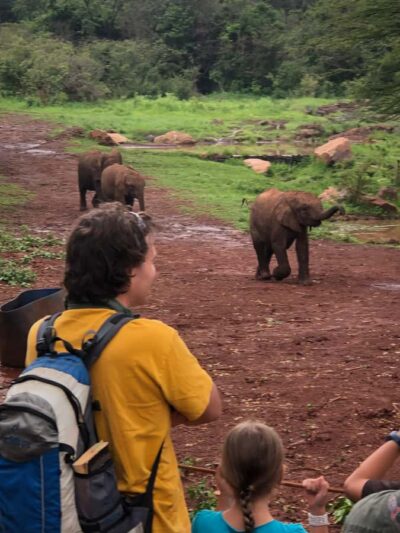
Browse the lists this tour appears in