
Reviewed · CULTURAL VILLAGE VISITS
Nairobi: Chocolate City Kibera Slum Walking Tour
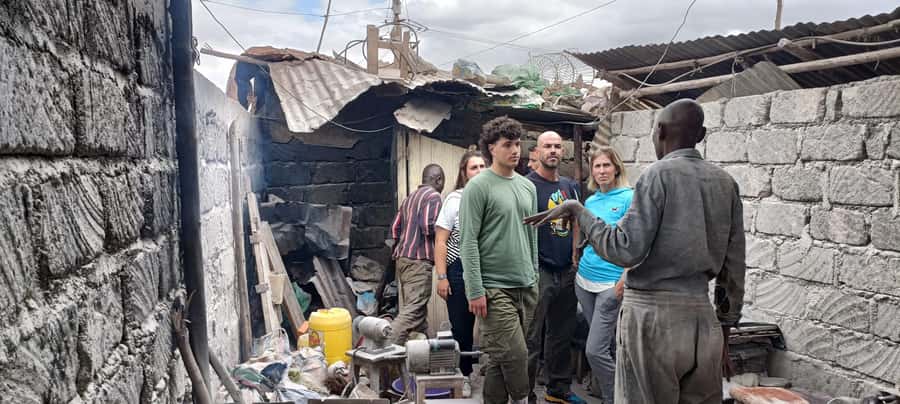
Kibera is not a sightseeing backdrop. It is a living neighborhood, and this resident-led walking tour gives you a guided way to meet its people, see local projects, and understand daily life. The route includes Agape Hope Children Centre, a beadwork project, a home visit, and Toi Market.
I like the direct local connection, especially the chance to support children’s programs and community work through your ticket. I also like the careful guiding. Collins and Allan are specifically praised for answering questions, helping with transport afterward, and keeping the walk comfortable.
The main drawback is that the visit can be confronting. You will see difficult living conditions, and the advertised timing is a little unclear: the activity says two hours, while the route details describe about two and a half. Also, language choices may not guarantee a non-English guide.
Key points to know
- Local guides lead the way: Guides such as Collins and Allan come from or work closely with Kibera and explain what you are seeing.
- Agape Hope Children Centre is a central stop: Your visit connects the tour with education, care, and local support efforts.
- The route includes a beadwork project and factory: You can see how craft work links culture with income.
- Toi Market adds a busy commercial side: Expect color, noise, shopping, and a closer look at ordinary commerce.
- Safety is built into the experience: The guide handles route-finding and stays with you through the neighborhood.
- The $15 price offers strong value: You get a guide, water, several visits, and a direct connection to local initiatives.
Why visit Kibera with a guide?

Kibera is one of Nairobi’s best-known informal settlements, and it is easy to approach it badly. Arriving alone with a camera can reduce a complicated neighborhood to a quick look at poverty. A local guide gives the place context and helps you meet people through a planned route rather than wandering without purpose.
This is not a polished attraction. The streets, homes, shops, and workspaces are part of an active neighborhood. You may find the experience emotionally heavy, especially after a safari or a stay in Nairobi’s more comfortable districts. That contrast is part of the point, but you should be ready to listen rather than treat the visit as a spectacle.
The tour’s stated aims are understanding, connection, and support for local initiatives. Those aims matter because the visit includes places doing practical work, not just photo stops. The Agape Hope Children Centre and beadwork activities give the tour a social and economic focus.
I would choose this experience if you want a guided introduction to Kibera and are willing to approach it with humility. If you only want easy sightseeing, shopping, or attractive city views, this is not the right outing.
Other cultural visits around Nairobi:
- Nairobi: Explore Kibera Slum with Local Guides
★ 4.9 · 365 reviews - Nairobi: Day Tour to Amboseli National Park & Maasai Village
★ 4.5 · 310 reviews - Masai village Day Tour Experience
★ 5.0 · 284 reviews
Starting at Ayany Equity Bank or Prestige Plaza

The walk has two listed starting options: Agape Hope for Kibera and Prestige Plaza Shopping Mall. Another description identifies Ayany Equity Bank in Kibera as the point where the route begins, so check the exact meeting place attached to your booking.
That detail matters. Kibera is large, and a wrong starting point can waste time or create unnecessary stress. The meeting point may vary according to the option you select, so keep your confirmation handy and allow enough time to find the guide.
At the beginning, expect a safety briefing and an introduction to the route. Your guide leads the way through the neighborhood, handles directions, and explains what you are seeing. This is especially useful if you are unfamiliar with Nairobi or prefer not to navigate the area alone.
The activity is listed as two hours, but the route description gives two and a half hours for the Kibera portion. Plan for roughly two to two and a half hours, then confirm the day’s timing. The route is on foot, so wear comfortable, closed-toe shoes. High heels and bare feet are specifically unsuitable.
Walking through Chocolate City
The tour refers to Kibera as Chocolate City, a name used for the neighborhood in the experience description. Your guide takes you through its streets and points out the setting where residents live, work, shop, and gather.
The value here is explanation. A guide can answer questions as they come up, instead of leaving you to make quick assumptions from what you see. Collins, one of the named guides, is praised for regularly asking if there were questions and for explaining both the photo stops and the neighborhood.
You will have opportunities to take photographs, but this is a place for care and restraint. The tour includes a photo stop, yet the area is also people’s home. Let the guide set the tone and follow local instructions. A respectful visit pays attention to people, not just buildings or street scenes.
Safety is a major part of the sales pitch, and the strongest practical evidence is the repeated emphasis on guides staying with visitors throughout the walk. One guide also waited until a taxi arrived at the end. That kind of help is useful in an unfamiliar part of Nairobi.
Still, no guided city walk removes every uncertainty. Stay with your guide, follow the safety briefing, and keep your belongings secure. The tour provider describes a planned route and professional guidance, not a guarantee that every moment will feel easy.
Agape Hope Children Centre and the human side of the visit

The Agape Hope Children Centre is one of the most meaningful stops. It gives you a chance to connect the tour with a local effort focused on children and community support.
The description links the center with education, healthcare, and economic empowerment. Those are broad goals, but the important point for you is that the visit is not limited to looking at living conditions. It introduces a place trying to improve them.
You should expect a respectful visit rather than a staged show. The tour’s stated approach emphasizes sensitivity and connection. If you want more time with children or more interaction at the center, raise that with your guide. One visitor felt there could have been more contact with children and noted that asking the guide might have helped.
That is a useful lesson. The route has a set shape, but your questions can influence how much you learn. Ask about the center’s work, how the tour supports it, and what kinds of help are most useful. Do not assume that buying souvenirs or making personal donations is required.
The tour includes bottled water, which is a small but welcome practical touch. Nairobi walks can be warm, and Kibera’s streets can be demanding underfoot. Carry only what you need and dress for walking.
More walking routes in Nairobi:
- Nairobi: Historic and Modern Highlights Walking Tour
★ 4.8 · 703 reviews - Nairobi Downtown Walking Tour
★ 4.7 · 208 reviews - Nairobi City Walking Tour with Traditional Kenyan Lunch
★ 5.0 · 106 reviews - Nairobi Walking Tour: Downtown & City Tour
★ 4.8 · 32 reviews
Beadwork, craft, and direct community support

The experience includes participation in a community-based beadwork project and a visit to a beadwork factory. These stops add an economic angle that many slum tours lack.
Beadwork can show you how skill and local production create opportunities. You may see the work process, meet people connected to it, and learn how craft fits into everyday income. The factory visit also gives the route a clear connection to enterprise rather than focusing only on hardship.
Shopping is not compulsory. A Japanese visitor specifically appreciated that purchases were not forced during the stops. That is important because a good community visit should allow you to learn and decide for yourself.
If you do want to buy beadwork, treat it as a direct way to support makers, but ask the guide how purchases work and what payment methods are accepted. The provided details do not promise a specific product list or price range, so do not arrive expecting a particular souvenir.
This part of the route may be especially useful if you want your money to reach local initiatives. The $15 ticket is modest for a private service that includes a guide and several community visits, but the exact amount that reaches each project is not stated. If that question matters to you, ask before or during the tour.
Toi Market and the everyday economy
Toi Market brings a commercial side to the walk. It is described as a place of strong colors, sounds, smells, trade, and daily activity. Here, you see Kibera not only as a residential area but also as a place where people buy, sell, and earn a living.
Markets can be crowded and intense. Keep close to your guide and pay attention to your belongings. Your guide helps you move through the area and explains the setting, but you should not expect the relaxed pace of a museum visit.
Toi Market also helps balance the experience. A tour focused only on hardship can leave you with a narrow picture of Kibera. The market shows work, commerce, and ordinary routines alongside the problems. That fuller view is one reason I find the route more useful than a simple drive past the settlement.
The itinerary also mentions a home visit. No details are provided about the household or how long you stay, so expect the format to depend on the day and the host. Approach this part with particular respect. You are entering a private space, not visiting a public exhibit.
What the $15 price really covers
At $15 per person, this is inexpensive for a two-hour guided walking experience in Nairobi. The price includes a professional English-speaking guide, bottled water, the Kibera walk, the Agape Hope Children Centre, a beadwork project, a beadwork factory, and a home visit.
The value is strongest if you want interpretation and community contact. You are paying for a local route, a guide who knows how to move through it, and access to places you would not sensibly arrange alone.
The price does not include a stated hotel transfer, meals, shopping, or personal donations. Drop-off is listed at either Prestige Plaza Shopping Mall or Agape Hope for Kibera, so plan your onward transport from one of those locations.
The provider offers free cancellation up to 24 hours before the activity and a reserve-now, pay-later option. Those policies are useful if your Nairobi schedule may shift. Starting times depend on availability, so check the day you want rather than assuming the tour runs at every hour.
Language, mobility, and who should book

English is the language you should rely on. The activity lists English, French, German, Japanese, Italian, and Spanish, but Japanese visitors specifically reported that choosing Japanese resulted in an English tour. If you need a language other than English, confirm it directly before paying.
The tour is best for people who can walk on uneven streets for the full route. Wheelchair users and people with mobility impairments are listed as unsuitable. The information also says it is not suitable for pregnant women, people with epilepsy, people with motion sickness, and babies under one year.
The age restrictions are not presented consistently. Several separate notices exclude children under two, under three, and under four years. If you are bringing a young child, confirm the exact age rule before booking.
This is a good fit for adults and older children who can listen, walk, and handle a serious subject. It suits visitors who want to support local work and ask thoughtful questions. It is less suitable for anyone looking for a light photo outing or a carefully controlled attraction.
Practical tips for a respectful visit
Wear closed-toe walking shoes with a firm, comfortable sole. Leave high heels at your accommodation, and do not bring weapons, sharp objects, or explosive substances. The provider also lists nudity and bare feet among prohibited items.
Keep the group together and follow the guide’s instructions. Ask questions as you walk, especially if you want more detail about the children’s center, beadwork, housing, or the market.
Use photography thoughtfully. The route includes a photo stop, but a neighborhood is not a free-for-all for pictures. Let your guide explain what is appropriate, and remember that people live and work here.
If you need a taxi afterward, tell the guide early. Collins and Allan are both praised for helping with the return, and one guide waited until a taxi arrived. That is a helpful service, but you should still arrange your own transport and confirm the final drop-off point.
Should you book the Chocolate City tour?
Book it if you want a direct, guided look at Kibera that connects daily life with education, craft work, markets, and local enterprise. The low price, named local guides, bottled water, and careful route support make it a strong value for a short Nairobi activity.
Do not book it expecting a comfortable or purely entertaining walk. The experience can be confronting, language arrangements may not match the options shown at booking, and the timing needs clarification. Go with an open mind, practical shoes, and respect for the people whose neighborhood you are entering.
For the right visitor, this is more than a quick stop on a city itinerary. It is a chance to listen, ask better questions, and leave with a more grounded understanding of Nairobi.
FAQ
How long does the Kibera walking tour take?
The activity is advertised as two hours. The route details describe about two and a half hours for the Kibera portion, so confirm the exact duration when booking.
How much does the tour cost?
The listed price is $15 per person.
Where does the tour start?
The available starting options are Agape Hope for Kibera and Prestige Plaza Shopping Mall. Another route description identifies Ayany Equity Bank in Kibera as a starting point, so check the meeting point for your selected option.
Where does the tour finish?
The listed drop-off options are Prestige Plaza Shopping Mall and Agape Hope for Kibera.
What places are included in the route?
The tour includes Kibera, Agape Hope Children Centre, a community-based beadwork project, a beadwork factory, a home visit, and Toi Market.
Is bottled water included?
Yes. Bottled water is included.
What language is the tour conducted in?
An English-speaking guide is included. English, French, German, Japanese, Italian, and Spanish are listed as language options, but Japanese booking information may still result in an English tour.
Can I cancel for a full refund?
Yes. You can cancel up to 24 hours in advance for a full refund.
Can I reserve now and pay later?
Yes. The activity offers a reserve-now, pay-later option.
Is the tour suitable for wheelchair users?
No. The information lists wheelchair users and people with mobility impairments as unsuitable for this activity.
More Dessert Tours in Nairobi
- A Visit To KIBERA The Chocolate City.
★ 4.9 · 12 reviews
Just added around Nairobi
- Nairobi: Horseback Riding Tour Through Maize Plantation★ 5.0 · 3 reviews
- Nairobi: Kibera Slum Compassionate Walking Tour★ 5.0 · 4 reviews
- Nairobi: Karura Forest Guided Walking Tour★ 5.0 · 4 reviews
- From Nairobi: Horseback Wildlife Safari with Transfer & Meal★ 4.6 · 7 reviews
- Nairobi: Hidden Gems and Local Secret Guided Walking Tour★ 4.9 · 20 reviews
- Nairobi: Hop on Hop off and Maasai market Collections Visit★ 3.5 · 10 reviews
- Nairobi: Karura Forest Horseback Riding Tour★ 4.8 · 11 reviews
- Nairobi: Guided Afternoon Tour to Bomas of Kenya.★ 3.1 · 4 reviews
Cultural Village Visits, compared.


Day Tour to Amboseli National Park & Maasai Village
Read our review →



Kibera Slum Tour with Local Social Entrepreneurs
Read our review →

Giraffe Centre, Elephant Orphanage, and Bomas of Kenya Day Tour from Nairobi
Read our review →Browse the lists this tour appears in