
Reviewed · WORKSHOPS
Agro-Tourism Tea Workshop in Nandi Hills
Tea is not just something you drink in Kenya. In Nandi Hills, you can follow it from the first careful pluck to the finished cup. This private day trip takes you into the fields, shows how modern weighing has changed the harvest, and brings you into one of Nandi County’s 19 tea factories. The final tasting gives the day a neat, useful finish.
I like the hands-on farm-to-cup route, and I like that the day includes real working places rather than only a scenic stop. The quiet hills, the meeting with tea pluckers, lunch at the cottage, and the factory visit give you several ways to understand the region.
The main drawback is the length. At about 10 hours, with an early start window between 5:00 and 9:00 AM, this is a full day. The price of $137.46 per person is easier to justify for private transport, lunch, farm access, factory entry, and a full tea workshop than for a quick plantation photo stop.
Key points to know before booking
- Tea from leaf to cup: Follow harvesting, weighing, transport, processing, and tasting in one day.
- A working tea region: Nandi County has 19 tea factories, and this experience includes a visit to one of them.
- A private outing: Only your group participates, with private transportation included.
- A morning in the fields: Meet tea pluckers and watch the skill needed for a repetitive but vital job.
- Lunch is included: Return to the cottage for a midday meal before the factory visit.
- Best for curious food and culture fans: The experience suits anyone who wants context behind Kenyan tea, not just a scenic view.
Why Nandi Hills makes tea worth a full day
Nandi Hills offers a different kind of Kenyan outing. The focus here is not wildlife or a famous monument. It is work, agriculture, local skill, and the route a familiar drink takes before it reaches your cup.
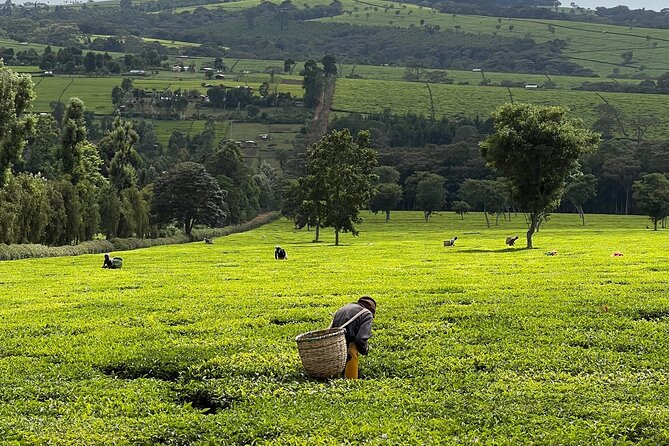
The setting matters. You begin among tea plants in the highlands, where the day’s first task is harvesting. The area is described as a unique region, and you get time to see it at a calm pace rather than rushing through a short stop. The natural beauty and quiet setting are a major part of the appeal, but the working details give the scenery a purpose.
I especially like that the program puts people and process together. You do not simply look at rows of tea. You see the tea pluckers doing a job that calls for speed, consistency, and stamina. Then you follow the crop onward, from weighing to transport and factory production.
That connection is useful. A cup of Kenyan tea can feel like an anonymous supermarket product. Here, you see the labor behind it and the decisions made before the leaves become a finished product. It is a small lesson in how food systems work, delivered in a very pleasant setting.
A few more things to do around Kenya worth a look
- Traditional Kenyan Cooking Class & Local Market Tour
★ 5.0 · 129 reviews - Authentic Kenyan Cooking Class & Market Tour in Nairobi
★ 5.0 · 12 reviews - Private Traditional Kenyan Cooking Class with Lunch in Nairobi
★ 5.0 · 10 reviews
Starting at The Swiss Side ItenFriends Bar
The meeting point is The Swiss Side ItenFriends Bar in Iten, Kenya. The activity ends back at the same place, which keeps the day simple for anyone staying in or around Iten.
The listed operating window runs from 5:00 AM to 9:00 AM every day, from October 4, 2023 through June 18, 2026. This appears to be the possible start window, not the total length of the tour. Since the day lasts about 10 hours, confirm your exact pickup time when booking.
An early start makes sense for a farm visit. It gives you time to see the harvest before the later stages of the day, but it also means you should plan for a long morning. Bring enough personal items for a full outing, since personal expenses are not included.
Private transportation is included. That matters here because the day combines a meeting point in Iten, a farm visit, a cottage lunch, and a factory visit. You will not need to arrange separate transport between each part of the program.
Watching the tea harvest in the highlands
The morning begins with an explanation of how harvesting is done. This introduction gives you a useful frame before you meet the tea pluckers. Instead of seeing only the finished rows of plants, you learn what the work involves and why the method matters.
The tea pluckers are one of the strongest parts of the experience. Their task is repetitive, but it is not simple. The work requires care and endurance, and the workshop gives you a direct look at the skill involved. You can expect this part to feel more like a visit to a working farm than a staged demonstration.
The setting also makes the morning pleasant. You spend time in the open air among the tea plants, with Nandi Hills providing the broader backdrop. The natural surroundings are a large part of the experience, but they do not replace the human story. You see the people who make the first stage of production possible.
This is a good place to slow down. Watch how the work is done, listen to the explanation, and notice how much of the process depends on repeated manual effort. If you are interested in food production, farming, or daily life in rural Kenya, this section may be more memorable than the factory machinery later in the day.
Seeing modern weighing replace guesswork
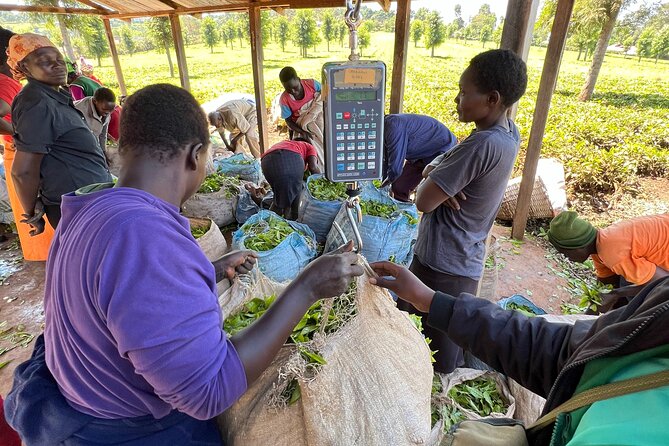
After the harvest, you witness the weighing of the tea. This part has been modernized, giving you a clear example of how technology is changing agricultural work.
Weighing may sound less exciting than plucking or tasting, but it is an important link in the chain. The crop needs to be measured before it moves onward, and a modern system can make that stage more organized and precise. You get to see that tea production is not only about plants and hand labor. It also involves records, measurement, transport, and factory systems.
This detail adds welcome depth. Many farm visits stop at the field. Here, you follow the product one step farther and see how the harvest is handled after it leaves the plucker’s hands.
The workshop does not present rural life as frozen in time. Instead, you see old and new methods operating in the same system: manual harvesting, modern weighing, transport, and industrial processing. That balance is one of the most useful things about the day.
Same base, a completely different sort of day:
- Nairobi National Park Half-Day Tour; Free Wi-Fi connection
★ 5.0 · 878 reviews - Nairobi: National Park & Optional Elephants & Giraffe Center
★ 4.8 · 874 reviews - NAI NAMI: Nairobi Storytelling Tour with Street Children
★ 5.0 · 792 reviews - Nairobi National Park Half-Day Game Drive
★ 4.5 · 738 reviews
Lunch at the cottage before the factory
After the morning activities, you return to the cottage for lunch. The meal is included, which helps the $137.46 price feel more reasonable for a full-day private outing.
Lunch also gives the schedule a needed pause. A day that begins early and includes time outside, transport, and several demonstrations can feel long without a proper break. Returning to the cottage separates the farm portion from the factory portion and gives you time to rest before the afternoon visit.
The supplied details do not specify the menu, so do not book this expecting a particular dish. You can expect lunch to be part of the planned day, but personal expenses remain separate. If you have dietary needs, ask about them before departure rather than assuming the meal can be changed.
I like this stop because it keeps the experience from becoming a string of quick explanations. The cottage functions as a base, a place for food, and a quiet transition between the outdoor harvest and the more technical factory tour.
Inside one of Nandi County’s 19 tea factories
After lunch, you visit one of the 19 tea factories in Nandi County. This is where the tea leaves become a finished product.
The factory visit fills in the part of the story that the farm cannot show you. You have already seen harvesting and weighing. Now you can follow the leaves through production and understand how a raw crop is transformed into something ready for use.
The exact factory is not named in the available details, so the experience may vary slightly depending on the site in operation. The key point is that you enter a functioning tea production setting rather than stopping at a general information display.
For me, this is the practical heart of the workshop. Tea is often treated as a simple beverage, but the factory makes the stages visible. The leaves must be handled, processed, and prepared before they can be tasted. You can connect the work in the fields with the machinery and production methods inside.
A factory visit may appeal less to someone who wants only scenery, and more to someone who enjoys seeing how things are made. It is also useful for families and groups with different interests, since the day offers both outdoor views and a clear production story.
Ending with Kenyan tea tasting
The day ends with a tea tasting. This is the right final stop because it lets you connect everything you have seen with the drink itself.
By this point, you have followed the tea through several stages: harvesting, weighing, transport, factory processing, and preparation for tasting. The cup is no longer an abstract product. You have seen the plants, the workers, the measurement system, and the factory that shaped it.
The tasting is also a simple pleasure. If you already enjoy chai or Kenyan tea, this may be your favorite part. One past participant described the tea experience as the best part of a broader Kenya trip, especially because it combined a culinary interest with a visit to the plantations and factory.
Do not expect the tasting to be a stand-alone tea class unless that is confirmed directly. The supplied details promise a tea tasting, but do not specify the number of teas, the tasting format, or whether food pairings are included. Think of it as the closing sample in a full production tour.
How the price works at $137.46
At $137.46 per person, this is not a budget farm stop. The value depends on using the full day.
The price includes private transportation, all fees and taxes, the farm visit, lunch, and the tea factory visit. You are paying for a complete route with several components, not just access to a field. If you would otherwise need to arrange transport from Iten, find a farm, organize a factory visit, and plan lunch, the package becomes easier to justify.
The private format is another factor. Only your group participates, so the pace and questions can be more personal than on a large shared bus tour. The available details do not name individual guides, but the experience is operated by The Safari Side.
The price may feel high if you want only a short scenic look at tea plants. It makes more sense if you value the full chain from harvest to tasting and want transport handled for you. It is also a stronger choice for a small private group than for someone traveling alone on a very tight budget.
Who will enjoy this tea workshop most
I would choose this experience if you enjoy food production, local work, rural settings, and practical cultural visits. It is especially well suited to people who want to understand how a familiar product is made.
It also fits nicely into a stay in Iten, particularly if you are already planning other activities in the area. One couple combined a tea workshop with a safari, bike rides, hikes, and visits around Kenya, while using Iten as a base for a running camp. You do not need to duplicate that schedule, but the tea day can work well as a change of pace from sport, wildlife, or hiking.
The experience is less suitable if you dislike early starts, long days, or industrial visits. The factory section may not appeal to someone who wants a purely scenic outing. Weather can also affect the day, since the activity requires good conditions.
The setting is described as serene, and the hospitality of local people is an important part of the appeal. Still, you should come ready for a working agricultural visit. The tea pluckers are doing their jobs, not performing a show for visitors. That makes the experience more authentic, but it also means the day is shaped by real farm and factory activity.
Practical details for a smoother day
Book with enough notice when possible. Confirmation is normally provided at booking, but reservations made within four hours of departure are confirmed as soon as possible, subject to availability.
The activity requires a minimum number of participants. If that number is not reached, you can be offered another date or experience, or receive a full refund. Poor weather can also lead to a new date or full refund.
You can cancel for a full refund up to 24 hours before the local start time. Cancellations or changes made less than 24 hours before the start are not accepted for a refund.
The ticket is mobile, and the tour is near public transportation. Even so, the included private transport is the more important detail because the day has several stops. Bring your phone with the booking information, allow a full day, and confirm the start time at The Swiss Side ItenFriends Bar.
Should you book the Nandi Hills tea workshop?
Book it if you want more than a pretty farm view. The best part is the complete story: tea plucked by hand, weighed with a modern system, moved onward, processed in a factory, and finally tasted. The peaceful Nandi Hills setting and the chance to meet tea pluckers add a human side that a standard factory stop would miss.
Think twice if you want a short or inexpensive outing. Ten hours is a serious commitment, and the $137.46 price is justified mainly by the private transport, lunch, farm access, factory visit, and full-day structure.
For food lovers, curious families, small private groups, and people staying in Iten, this is a strong choice. You leave with a better understanding of Kenyan tea and a much clearer sense of the work behind each cup.
FAQ
Where does the tea workshop start and finish?
It starts at The Swiss Side ItenFriends Bar in Iten, Kenya, and ends back at the same meeting point.
How long does the activity last?
The experience lasts approximately 10 hours.
What is included in the price?
The price includes private transportation, all fees and taxes, a farm visit, lunch, and a visit to a tea factory.
Is this a private activity?
Yes. Only your group participates.
What will I see during the workshop?
You will learn about tea harvesting, meet tea pluckers, see the weighing of the tea, visit a tea farm and one factory in Nandi County, follow the production process, and finish with a tea tasting.
Can I cancel for a full refund?
Yes. You can cancel up to 24 hours before the local start time for a full refund. Cancellations or changes made less than 24 hours before the start are not accepted for a refund.
Just added around Kenya
- Watamu: Learn Kenyan Cusine with Jonathan★ 4.1 · 8 reviews
- Visit kibera Slum the chocolate city★ 4.8 · 3 reviews
- Watamu: Sunset Mangrove Canoe Tour with Coconut Drink★ 3.6 · 8 reviews
- Lake Nakuru NP Half-Day Safari★ 4.0 · 4 reviews
- WATAMU: MALINDI: SARDEGNA ISLAND & MALINDI MARINE PARK★ 4.5 · 9 reviews
- Tsavo East National Park: 2-Day Tour from Mombasa★ 3.9 · 5 reviews
- Bike Rental at Home of Champions – Iten Kenya★ 5.0 · 7 reviews
- Kilimanjaro Wanderlust Day Hike★ 5.0 · 8 reviews
Workshops, compared.
Traditional Kenyan Cooking Class & Local Market Tour
Read our review →
Authentic Kenyan Cooking Class & Market Tour in Nairobi
Read our review →
Private Traditional Kenyan Cooking Class with Lunch in Nairobi
Read our review →
Beginner Swahili Woodcarving Classes with Woman Woodcarver
Read our review →
Private Kenyan Cooking Class in Nairobi with a Local
Read our review →Browse the lists this tour appears in