
Reviewed · TOURS IN NAIROBI
Nairobi cultural souvenir shopping tour with a local
Nairobi’s souvenir scene can be tricky. Open markets may offer good prices, but quality, fair dealing, and the true origin of an item are not always clear. This private shopping tour gives you a local guide, door-to-door transport, and five carefully chosen stops where you can browse with less guesswork.
I especially like the women-run bead workshop at Kobe Tough Beads and Leather, and the chance to compare very different kinds of Kenyan work in one day: pottery, carvings, paintings, jewelry, bronze, and gemstones. The main consideration is time. Six hours of shopping is a lot, and the tour suits you best if you want to buy meaningful souvenirs rather than simply look at Nairobi’s sights.
Key points at a glance
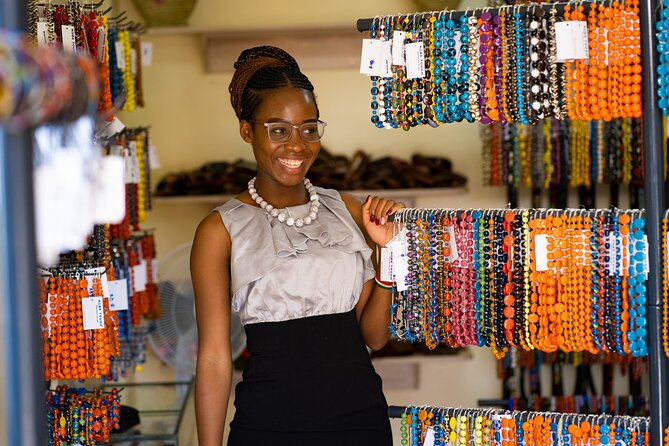
- Kobe Tough Beads and Leather: See beads made from raw material to finished product, with work supporting single mothers.
- Utamaduni Craft Centre: Browse 18 craft shops in a converted Kikuyu house, then pause in the garden restaurant.
- Kenyan art and bronze: Golden Eagle Art Gallery and Matbronze offer very different looks at local creativity.
- East African gemstones: Aqeeq Galleria sells Tanzanite, garnet, amethyst, ruby, red garnet, and aquamarine.
- Private, door-to-door format: Your guide handles transport, translation, carrying help, and shopping advice.
- Good for serious souvenir buyers: The $60 price has the most value for you if you plan to purchase several items or need help judging quality.
Why this Nairobi shopping tour is useful
Souvenir shopping is easy when you are buying a postcard. It becomes harder when you want a carved figure, handmade jewelry, a framed painting, or a stone that you hope is genuine. Prices can vary sharply, and you may not know if an item was made locally, copied from a common design, or simply marked up for an unfamiliar buyer.
This tour gives you a private vehicle and a local guide for roughly six hours. That matters in Nairobi, where moving between shopping areas can take time and carrying several purchases on public transport would be awkward. Your guide can translate, help carry heavier pieces, and offer advice when you are comparing goods.
The experience is also more than a shopping run. At several stops, you can see the work itself. That gives your purchases a clearer connection to the people and processes behind them. You are not only picking up an object. You can learn how beads are formed, how bronze pieces are produced, and how Kenyan artists present their work.
The tour costs $60 per person. Since transport, hotel or residence pickup and drop-off, a professional guide, and private travel are included, the price is reasonable if you value convenience and plan to shop. It is less attractive if you only want a quick look at local goods or prefer bargaining in open-air markets.
The advertised average booking time is 62 days ahead. That suggests you should reserve early if your Nairobi dates are fixed, especially since this is a private activity rather than a shared departure. Confirmation comes when you book, and free cancellation is available until 24 hours before the start time.
A few more things to do around Nairobi worth a look
- Traditional Kenyan Cooking Class & Local Market Tour
★ 5.0 · 129 reviews - Nairobi souvenir Shopping and Historical Half day Tour
★ 5.0 · 61 reviews - Memorable Daily KIBERA Slums/Toi Market Tour with Locals (2 hours)
★ 5.0 · 29 reviews
Kobe Tough Beads and Leather: see the work before you buy
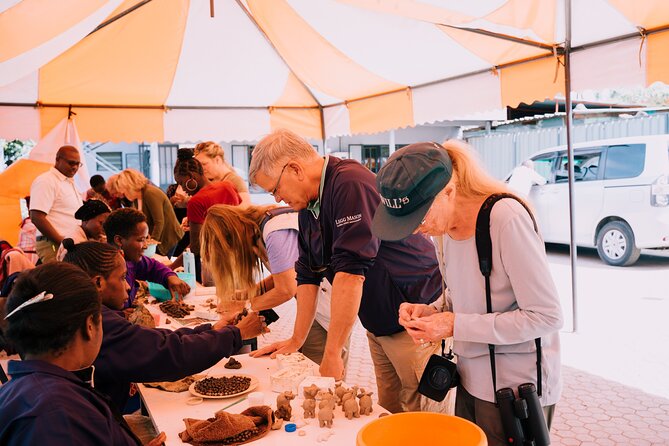
The first stop lasts about an hour and begins with the making process. You can see the beads from the early stages through the finished pieces, rather than meeting them only on a shelf. This is the strongest stop for understanding how a souvenir becomes a finished Kenyan product.
The workshop has a meaningful social purpose. It was started by women who previously worked at the Kazuri Beads factory after that business closed during the pandemic. Kobe Tough Beads and Leather now employs single mothers from a poor neighborhood, giving them a way to earn money for their families.
That background adds weight to a purchase without requiring you to treat every item as a donation. You can look at the quality, choose something you genuinely want, and know that the workshop supports women working in their own community. The tour description identifies the center as a women empowerment project, and that is a useful distinction from anonymous mass-produced souvenirs.
Expect this stop to focus on beads, leather, pottery, and the production process. The name sometimes appears as Kobe Beads Factory or Kobe Tough Beads and Leather, so do not be concerned if your confirmation uses one version.
You receive free admission here, as you do at the other scheduled stops. Your guide can help explain the stages and translate questions. If you are buying fragile pottery or several pieces of jewelry, ask early about carrying and packing arrangements.
Utamaduni Craft Centre: many styles under one roof
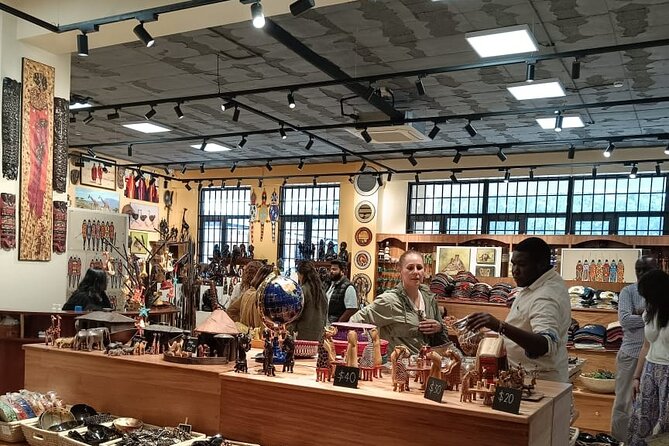
Next comes Utamaduni Craft Centre, a large craft shop in Nairobi’s Karen and Langata area. The building is a converted Kikuyu house containing 18 separate shops. That layout gives you a broad selection without sending you to a string of unrelated stalls.
You might find African crafts, antiques, art, carvings, jewelry, and other decorative pieces. The range is helpful if people in your family want very different souvenirs. One person can look for a small piece of jewelry while another checks larger carvings or home decoration.
Staff can help with packing and shipping if needed. That is particularly useful if you are buying something too large or delicate to fit into your luggage. You should still ask about shipping costs and delivery arrangements before committing, since those charges are not part of the $60 tour price.
There is also a garden restaurant where you can stop for refreshments. Lunch is not included, but food is available for purchase. The break can make this a sensible midpoint in a six-hour outing, especially if you are traveling with someone who does not want to shop continuously.
Utamaduni is a good place to compare prices and styles after the first workshop. I would resist buying everything here immediately. Walk through the full collection first, note the items that catch your eye, and then decide what deserves space in your suitcase.
Golden Eagle Art Gallery: paintings, carvings, and community-made work
The Golden Eagle Art Gallery offers a different kind of shopping experience. Instead of focusing mainly on one production method, it presents Kenyan community-based art across several forms.
You can browse paintings, drawings, jewelry, African clothing, crafts, carvings, antiquities, malachite, soapstone, and other pieces. This is the stop for you if you want a wall piece or a more distinctive work of art rather than a small token.
The gallery’s stated aim is to promote authentic creative work and encourage local artists. That does not mean every item will suit every budget or taste. Art is personal, and larger pieces can be harder to transport. Still, having a guide nearby can help you ask about the material, size, and practical packing needs before buying.
Give yourself time here. A quick pass may be enough for a small purchase, but you could easily spend an hour comparing color, subject, and medium. The stop is scheduled for about one hour, so let your guide know if you need extra time at one gallery and are willing to shorten another.
Same base, a completely different sort of day:
- Nairobi National Park Half-Day Tour; Free Wi-Fi connection
★ 5.0 · 878 reviews - Nairobi: National Park & Optional Elephants & Giraffe Center
★ 4.8 · 874 reviews - NAI NAMI: Nairobi Storytelling Tour with Street Children
★ 5.0 · 792 reviews - Nairobi National Park Half-Day Game Drive
★ 4.5 · 738 reviews
Aqeeq Galleria: a careful look at East African stones
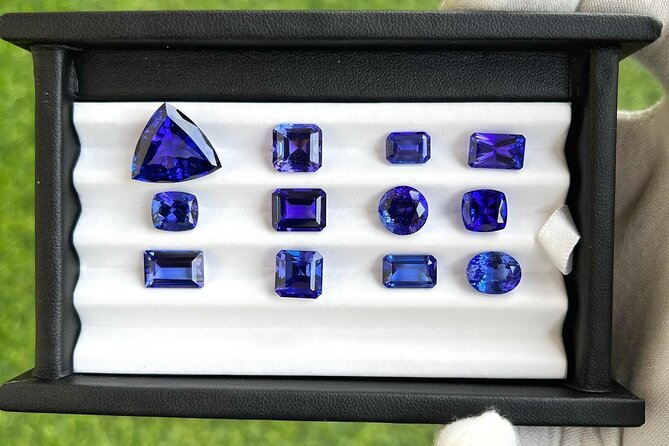
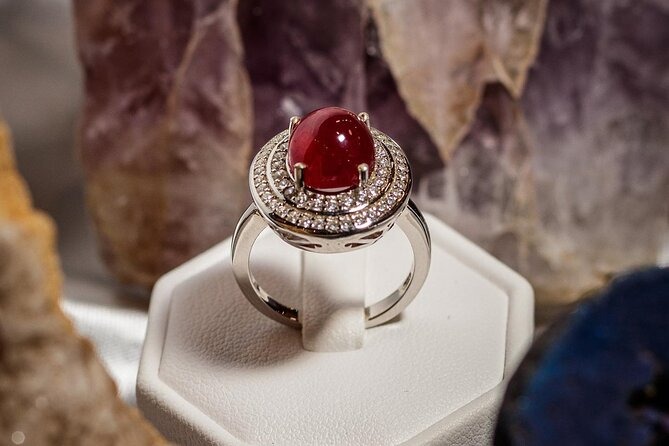
Aqeeq Galleria is the most specialized stop. It deals in precious and semi-precious gemstones and jewelry, with locations in Nairobi and Mombasa.
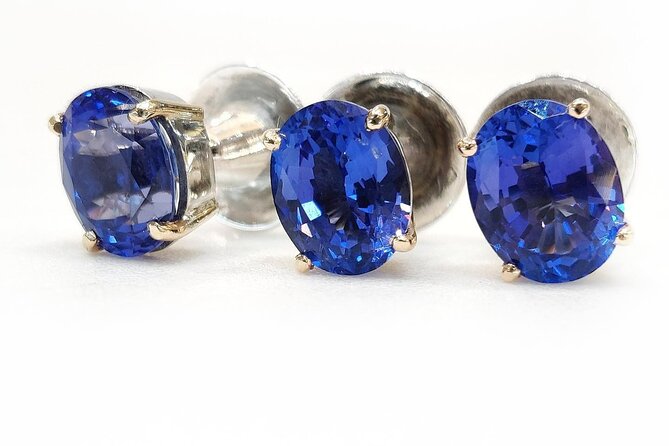
The stones described for sale include Tanzanite, garnet, amethyst, rubies, red garnets, and aquamarine. The tour specifically presents these as stones mined in Kenya and East Africa. If you are interested in buying a stone, this is the point where a local guide is especially useful for translation and general shopping support.
You should take your time. Ask what stone you are being shown, where it was sourced, whether it is natural or treated, and what documentation accompanies it. Only buy what you understand. The tour gives you access to a specialist store, but the cost of a gemstone is not included, and no fixed stone prices are provided.
This stop may be the biggest reason to choose the tour over a basic craft-shopping outing. A gemstone is small, valuable, and easy to carry, but it also requires more care than a carved ornament. Keep your receipt and any paperwork, and make sure you understand the store’s terms before leaving.
The scheduled visit lasts about an hour. If you are not interested in stones, you can still look at jewelry, but this may feel like the least useful stop for you.
Matbronze Wildlife Art: large bronze work and silver jewelry
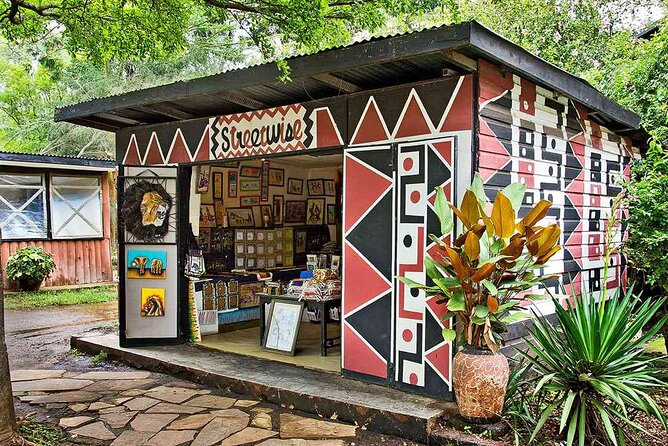
Matbronze closes the main sequence with artwork inspired by African wildlife. The selection runs from small jewelry pieces to very large bronze sculptures. Some of the larger works are described as enormous, so this is a visual stop even if you do not plan to buy.
The bronze work is handmade by founder and artist Denis Mathews. His daughter, Esenya, has developed a silver range called SAFARIA, including handmade pure silver jewelry and bronze work with silver details.
This gives you two price and size directions to explore. A small jewelry piece may be manageable in your luggage, while a large sculpture is more likely to be a serious purchase requiring careful shipping. Ask about packing and delivery before buying anything substantial.
There is also a restaurant beside the gallery and foundry. Since lunch is available for purchase rather than included, this can be another practical place to eat if the timing works for your group.
Matbronze is a good final stop because you have already seen beads, general crafts, paintings, jewelry, and gemstones. By then, you will have a clearer sense of what kind of Kenyan souvenir you actually want.
What the private format adds
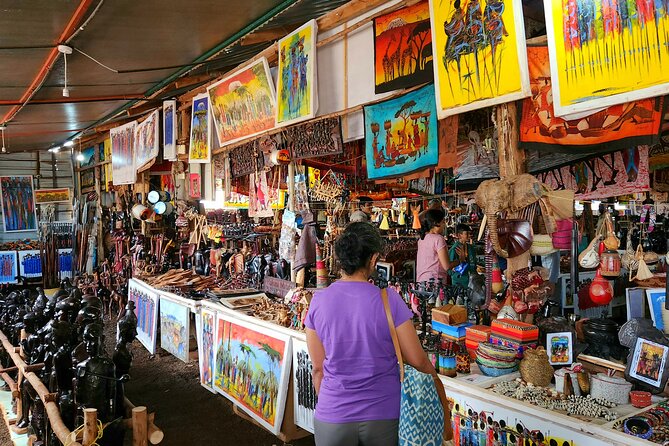
The private arrangement is one of the tour’s strongest features. Only your group participates, so you are not tied to the shopping habits of strangers. You can spend more time at a favorite stop, ask questions freely, or move on when you have found what you need.
Hotel or residence pickup and drop-off remove a major nuisance. You do not have to arrange separate taxis with purchases in hand, and you can leave larger items in the vehicle as the day continues. Your guide can also help carry heavy shopping bags.
Translation is another practical benefit. Even when store staff speak English, a guide can help clarify questions about materials, origin, shipping, and price. One guide named Kelvin has been associated with the experience, and the service is presented as professional and attentive.
There is a tradeoff. Private transport gives you comfort and control, but it does not turn the day into a sightseeing tour. The focus is shopping, art, and craft production. If your priority is the Nairobi National Museum, Karen Blixen’s former home, or wildlife, you should choose a different activity or arrange those separately.
The tour includes Maasai market collections in Karen. Since the provided schedule centers on the five named stops, confirm with the operator how that collection fits into your day if it is a particular priority.
Who should book, and who should skip it
I would recommend this experience to you if you want locally made goods but do not feel comfortable judging quality or negotiating alone. It is also a good match if you are buying for several people and want different choices in one outing.
The tour works well for art buyers, jewelry shoppers, and anyone interested in the story behind a handmade object. The combination of a women-supported bead workshop, a large craft center, an art gallery, a gemstone store, and a bronze gallery gives you a useful range.
Families and small groups may appreciate the private format. Most people can participate, and the group discount option may make the cost more appealing for a larger party. The price is per person, so calculate the total before booking.
I would skip it if you dislike shopping, want an open market atmosphere, or have only a few spare hours. The tour lasts about six hours, and each stop is planned for around one hour. You may also find the day tiring if you are trying to fit several other Nairobi attractions into the same schedule.
Is the $60 price good value?
For a private half-day with transport and a guide, $60 per person is fair, especially if you are sharing the vehicle with a small group. The value comes less from admission fees, since the stops are free to enter, and more from saved time, local assistance, transport, and help with purchases.
You are also paying for selection. The tour filters the shopping day toward established craft, art, jewelry, and gemstone businesses rather than leaving you to sort through every possible stall. That can reduce the risk of wasting time or buying something of poor quality.
Still, the price does not cover lunch, refreshments, tips, or anything you purchase. Large pieces, shipping, and gemstones can add considerably to your final spending. Set a souvenir budget before you leave, and treat the guide’s advice as help rather than pressure to buy.
Final call: book it for focused, easier shopping
Book this tour if you want Kenyan souvenirs with a clearer connection to local makers and prefer private transport over working out the shopping route yourself. Kobe Tough Beads and Leather gives the day its strongest human story, while Aqeeq Galleria and Matbronze add options beyond ordinary craft-market goods.
The main warning is simple: this is a shopping day, not a general Nairobi sightseeing tour. If you want time for five distinct stops, help carrying purchases, and advice from a guide such as Kelvin, the $60 cost is sensible. If you only want a quick market visit, spend your money elsewhere and keep your day open for other sights.
FAQ
How long does the Nairobi cultural souvenir shopping tour last?
The tour lasts approximately six hours, with about one hour scheduled at each of the five main stops.
What is the price of the tour?
The listed price is $60 per person.
Is the tour private?
Yes. Only your group participates in this private activity.
Is hotel pickup included?
Yes. Pickup and drop-off at your hotel or residence are included.
What shopping locations are included?
The main stops are Kobe Tough Beads and Leather, Utamaduni Craft Centre, Golden Eagle Art Gallery, Aqeeq Galleria, and Matbronze Wildlife Art.
Can I buy gemstones during the tour?
Yes. Aqeeq Galleria sells precious and semi-precious gemstones and jewelry, including Tanzanite, garnet, amethyst, rubies, red garnets, and aquamarine.
Is lunch included?
No. Lunch is not included, but food and refreshments are available for purchase at restaurants connected with the shopping stops.
Are tips included in the price?
No. Tips and gratuities are not included.
Can I cancel for a full refund?
Yes. You can cancel at least 24 hours before the experience begins for a full refund. Cancellations and changes made within 24 hours are not refunded or accepted.
Just added around Nairobi
- Visit kibera Slum the chocolate city★ 4.8 · 3 reviews
- 3 days maasai mara migration safari★ 4.5 · 7 reviews
- Maasai Mara Day Trip★ 5.0 · 15 reviews
- 4 Days Tour Landcruiser in Masai Mara and Lake Nakuru★ 5.0 · 10 reviews
- 4 Days Safari to Lake Nakuru N/P and Maasai Mara N/R★ 5.0 · 18 reviews
- Day Tour to Nairobi national park, Elephants, and Giraffe Center★ 3.5 · 8 reviews
- Wildebeest Migration in Masai Mara and Sightseeing 4 Days Tour★ 4.5 · 6 reviews
- Vegans special safari★ 4.5 · 4 reviews
Tours in Nairobi, compared.

Nairobi National Park Half-Day Tour; Free Wi-Fi connection
Read our review →
National Park & Optional Elephants & Giraffe Center
Read our review →
NAI NAMI: Nairobi Storytelling Tour with Street Children
Read our review →



Elephant Orphanage and Giraffe Center Tour with Options
Read our review →Browse the lists this tour appears in