
Reviewed · TOURS IN NAIROBI
Explore local Market matatu ride & Make Kenyan Cuisines with a home cook
The best part of this Nairobi experience is the switch from matatu ride to market stall. You do not simply watch Kenyan food being prepared. You help buy the ingredients, ride local transport, then take them into Josephine’s home for a five-course meal. I like that the food lesson is private and that Josephine gives your group her full attention. I also like the mix of Kenyan and Indian cooking, with staples such as ugali and spice-based curries.
The main consideration is comfort. A matatu is practical public transport, not a sightseeing vehicle, and a market visit can feel lively and informal. Hotel pickup is not included, so you need to reach the meeting point in Westlands and arrange your own way back from David Osieli Road.
Key points to know
- A real matatu connection: Ride local public transport to and from the market instead of relying on a private sightseeing van.
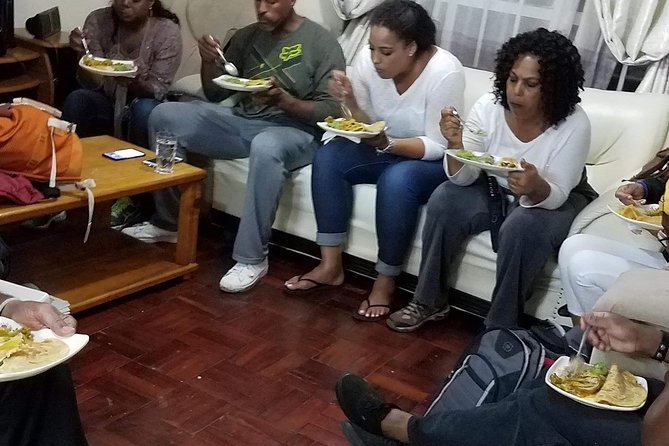
- Josephine hosts at home: The cooking lesson takes place in an authentic Kenyan home, giving the meal a personal setting.
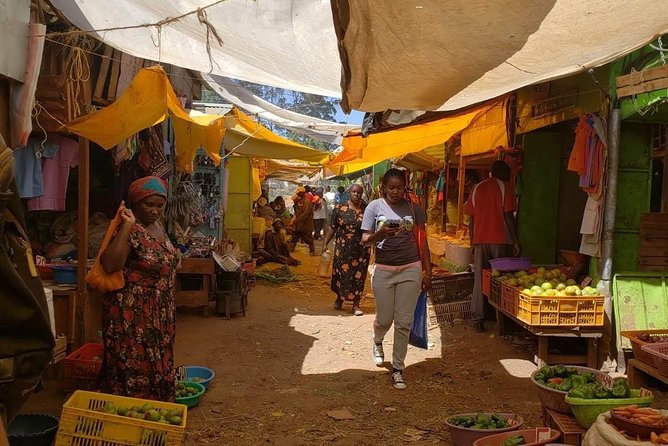
- You shop before you cook: Fresh fruit and vegetables are bought at a local market with help from vendors.
- Five courses are included: The meal blends Kenyan and Indian influences and includes items such as ugali and curries.
- Private attention: Only your own party takes part, which suits families, couples, and small groups.
- Plan around the meeting points: Hotel pickup and drop-off are not included, and the experience ends on David Osieli Road.
From Westlands to the market by matatu
This four-hour experience begins at the mall in Westlands, with booking information listing P.O. Box 66283 in Nairobi as the starting point. Confirm the exact meeting instructions before setting out, since hotel pickup is not part of the package.
The first useful feature is the matatu ride. These minibuses are part of everyday transport in Kenya, so the journey gives you a small but direct look at how people move around Nairobi. It also puts you in contact with local vendors once you reach the market. I would not book this if you want a tightly controlled sightseeing route with every minute scripted. I would book it if you want transport to be part of the cultural experience.
The matatu takes you to a local market where you help source the ingredients for the meal. That order matters. You see fresh produce before it reaches the kitchen, and you get a sense of the shopping decisions behind a home-cooked Kenyan meal.
The market stop is not described as a formal guided tour with a long list of named stalls. Instead, expect a practical food-shopping visit. You can interact with vendors, see the produce being selected, and help gather what will later appear on your plate. This makes the stop especially useful if you want food to connect with daily life rather than remain a restaurant-only experience.
Keep your expectations sensible. The market is part of the working day for local sellers, not a staged display built only for visitors. That means it may feel less polished and more spontaneous than a dedicated food hall. For many people, that is exactly the point.
A few more things to do around Nairobi worth a look
- Traditional Kenyan Cooking Class & Local Market Tour
★ 5.0 · 129 reviews - Memorable Daily KIBERA Slums/Toi Market Tour with Locals (2 hours)
★ 5.0 · 29 reviews - Half-Day Nairobi National Park and Maasai Market with Pick up
★ 5.0 · 16 reviews
Shopping for the meal at a Nairobi market
The ingredients are provided, but you still take part in choosing and buying them. This is a good balance for a short cooking class. You do not need to worry about finding unfamiliar produce on your own, yet you get to see where the meal begins.
The available information does not promise a fixed menu for every departure. The meal is described as Kenyan and Indian influenced, with curries and ugali among the examples. Because ingredients are selected at the market, the final dishes may reflect what is fresh and available that day.
I like this flexible approach. Kenyan home cooking is easier to understand when you see the ingredients first, then learn how they are combined. You may find yourself paying more attention to spices, vegetables, fruit, and cornmeal because you have just seen them in their market setting.
If you have food allergies or intolerances, tell Josephine before the experience. This is especially important for a meal that can include several dishes and spice blends. The host specifically asks for this information in advance, so do not wait until the cooking begins.
Learning Kenyan and Indian cooking in Josephine’s home
After the market, you go to Josephine’s home for the cooking lesson. The listed end point is David Osieli Road in Nairobi. Transportation to and from the market is included, but hotel transfers are not, so arrange your route to the start and from the finish.
The home setting is the heart of the experience. You are not in a classroom with rows of workstations or a restaurant kitchen designed for large groups. You cook in a private home and learn how food is prepared for family and friends.
Josephine is described as a passionate cook with hundreds of tested family recipes. Her teaching style is step by step, with attention to spices and cooking techniques. That is useful for beginners because you can ask questions as you work rather than trying to keep up with a large class.
The private format also changes the pace. Only your party participates, so the lesson can focus on your interests and ability. If you are already comfortable in the kitchen, you can pay closer attention to seasoning and method. If you are new to Kenyan food, you can ask for explanations without feeling that you are holding up a room full of people.
One particularly helpful detail is Josephine’s experience with children. Feedback about the experience describes her as patient and good with kids. Families should still consider the four-hour length, market movement, and hands-on cooking, but this is a more family-friendly choice than a formal class that expects everyone to work independently.
What the five-course meal may teach you
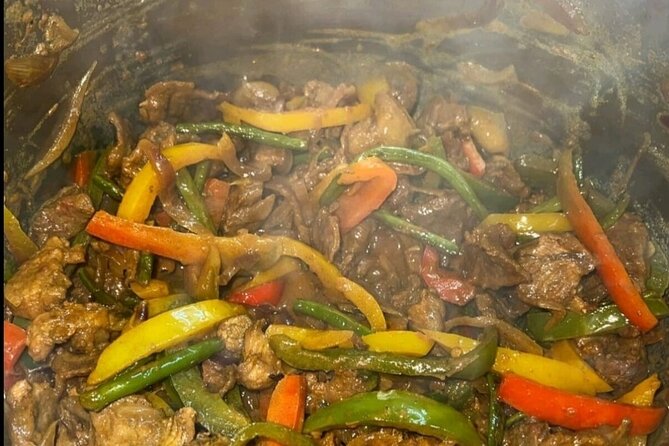
The meal includes five courses with Kenyan and Indian influences. Ugali is one of the named examples. This cornmeal staple is an important part of many Kenyan meals, and making it yourself gives you a better sense of its texture and role than ordering it as a side dish.
Curries are also included among the possible dishes. The Indian influence fits naturally with the broader food culture of Nairobi, where spice-based cooking forms part of the city’s culinary mix. Josephine’s lesson focuses on the secrets and techniques of cooking with spices, so this is not only a matter of following a recipe card.
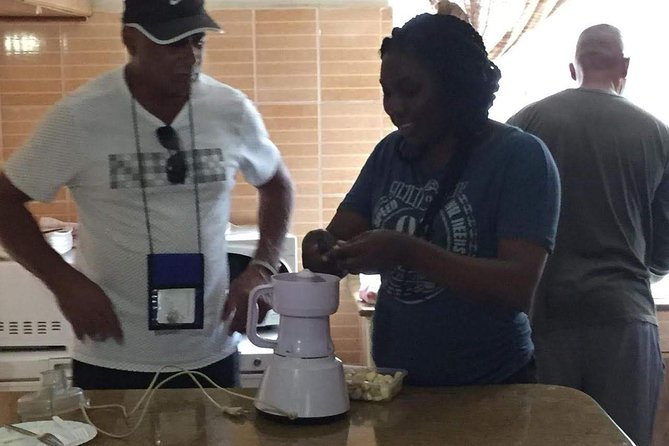
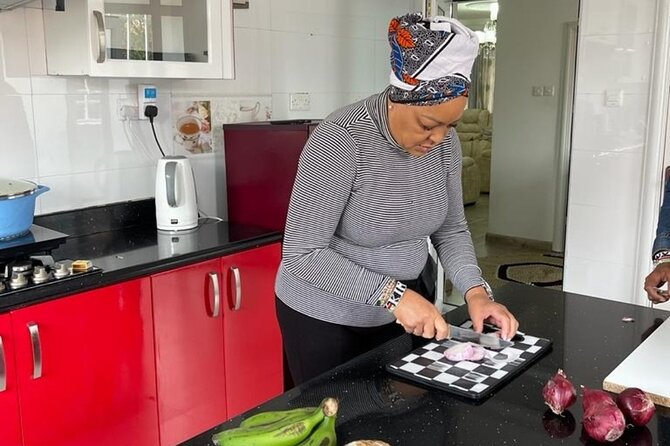
You should be ready to work with your hands. The host specifically describes a hands-on lesson, and you are encouraged to get involved as she demonstrates each stage. The reward is immediate: after cooking, you sit down and eat what your group has made.
The package includes lunch, fruit, water, coffee, and tea. That makes the experience more than a short demonstration followed by a token tasting. It is a full meal, and the private home gives you time to enjoy it in a quiet setting.
The food is the main payoff, but the conversation around it matters just as much. Josephine shares insights into Kenyan culture while teaching. That connection between food, family recipes, and everyday hospitality is what gives the class its character.
Same base, a completely different sort of day:
- Nairobi National Park Half-Day Tour; Free Wi-Fi connection
★ 5.0 · 878 reviews - Nairobi: National Park & Optional Elephants & Giraffe Center
★ 4.8 · 874 reviews - NAI NAMI: Nairobi Storytelling Tour with Street Children
★ 5.0 · 792 reviews - Nairobi National Park Half-Day Game Drive
★ 4.5 · 738 reviews
Why the private format matters
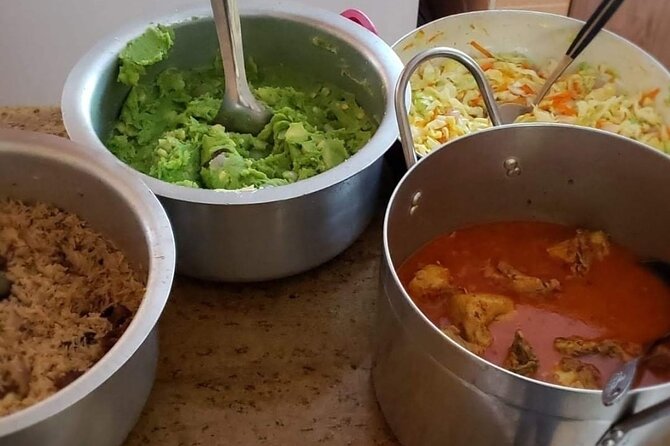
At $60 per person, the price is reasonable if you value the full package rather than only the cooking lesson. You are paying for roughly four hours, market transportation, the matatu experience, ingredients, cooking equipment, personal instruction, and a five-course meal with drinks.
A cheaper group class might give you a similar recipe demonstration, but it may not include a market visit or local public transport. A restaurant meal could cost less, yet it would not show you how the food is prepared or give you Josephine’s personal context.
The private format is the strongest value point. Your party does not share the lesson with a large group, so the cost buys attention as well as food. For two people, a family, or a small group of friends, that can make the experience feel more useful than a standard cooking workshop.
Still, $60 is not the right choice for everyone. If you mainly want to eat Kenyan food and have little interest in preparing it, a restaurant may suit you better. If you want a polished culinary studio with a fixed menu and private vehicle transport, this experience may feel too informal.
The package does cover several practical costs, including equipment and ingredients. You do not need to bring cooking supplies. Water, fruit, lunch, bottled water, coffee, and tea are also included, although the listing repeats water in two places.
Who will enjoy this experience most
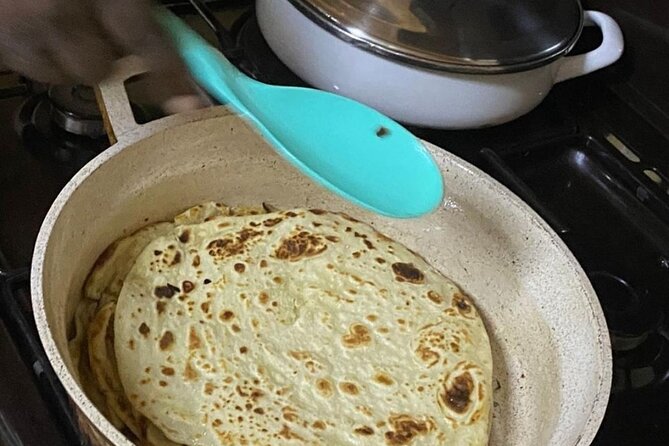
I would recommend this for people who want direct contact with daily life in Nairobi. You get public transport, a local market, a private home, family recipes, and a shared meal in one compact outing.
It is a good fit for:
- Couples seeking a personal food activity
- Families who want a cooking lesson with a patient host
- Small groups who prefer private instruction
- First-time visitors who want a cultural activity beyond major sights
- Food lovers interested in Kenyan and Indian flavors
- Beginners who want guided, hands-on help
You should think twice if you dislike public transport, want a highly formal class, or need a guaranteed menu with no substitutions. The exact food selection is not fully specified, and the market and matatu portions are part of the experience rather than obstacles to rush past.
Most travelers can participate, and the activity is near public transportation. The available information does not give detailed accessibility specifications, so ask before booking if you have mobility needs or require a particular type of transport.
Timing, meeting points, and practical planning
Allow about four hours from the start in Nairobi. The experience begins in Westlands, continues to the market, then moves to Josephine’s home and ends on David Osieli Road.
Because there is no hotel pickup or drop-off, build extra time into your day for reaching Westlands and leaving the final location. The listed start and end details should be checked carefully when you receive confirmation. Mobile tickets are accepted, and confirmation is provided at booking.
Wear clothes that can handle cooking and market activity. The host says you will get your hands dirty, so this is not the place for an outfit that must remain spotless. Bring only what you need for the outing, since cooking equipment and ingredients are supplied.
Tell Josephine about food intolerance before arrival. The more detail you provide, the easier it will be to discuss the meal before shopping and cooking begin.
Cancellation is free if you cancel at least 24 hours before the local start time. Inside that window, the amount paid is not refunded, and changes are not accepted. This rule matters if your Nairobi schedule is still uncertain.
Is this Nairobi cooking tour worth booking?
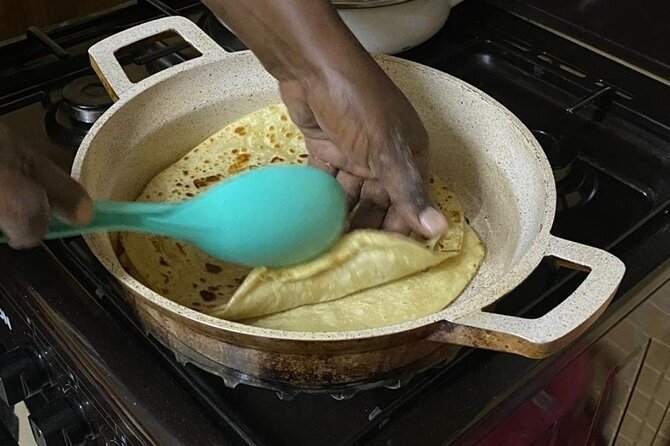
I would book this experience if you want a personal introduction to Kenyan food that includes more than sitting at a table. The matatu ride and market visit give the outing a local rhythm, while Josephine’s home provides the private setting and patient instruction.
The strongest reasons to choose it are the one-to-one cooking guidance, the five-course meal, and the chance to connect ingredients with everyday Kenyan hospitality. Families should especially consider it, since Josephine has experience working with children and the private format keeps the group together.
I would skip it if you want hotel-to-hotel convenience, a fixed menu, or a polished professional kitchen. For everyone else, $60 buys a generous four-hour experience with transport to the market, ingredients, equipment, drinks, and a meal you help create.
FAQ
How long does the experience last?
The experience lasts approximately four hours.
Where does the activity begin?
It begins at the mall in Westlands, Nairobi. The booking information also lists P.O. Box 66283, Nairobi, as the start location, so confirm the exact meeting instructions after booking.
Where does the activity end?
The listed end point is David Osieli Road, Nairobi.
Is hotel pickup and drop-off included?
No. Hotel pickup and drop-off are not included.
Is transportation included during the experience?
Yes. Transportation to and from the market is included, including a matatu ride.
Is the cooking class private?
Yes. Only your own group participates in the activity.
What food will be prepared?
You will prepare a five-course Kenyan and Indian meal. Examples include curries and ugali, a cornmeal dish. The exact menu is not specified.
Do I need to bring cooking equipment or ingredients?
No. Cooking equipment and ingredients are included.
What should I do if I have a food intolerance?
Tell Josephine about any food intolerance before the experience.
What is the cancellation policy?
You can cancel at least 24 hours before the local start time for a full refund. Cancellations or changes made within 24 hours are not accepted and are not refunded.
More Shopping Tours in Nairobi
- Nairobi souvenir Shopping and Historical Half day Tour
★ 5.0 · 61 reviews - Nairobi Cultural Shopping Experience
★ 5.0 · 21 reviews - Nairobi Guided Cultural Shopping Experience Day Tour
★ 4.0 · 12 reviews - Nairobi cultural souvenir shopping tour with a local
★ 5.0 · 12 reviews
Just added around Nairobi
- Visit kibera Slum the chocolate city★ 4.8 · 3 reviews
- 3 days maasai mara migration safari★ 4.5 · 7 reviews
- Maasai Mara Day Trip★ 5.0 · 15 reviews
- 4 Days Tour Landcruiser in Masai Mara and Lake Nakuru★ 5.0 · 10 reviews
- 4 Days Safari to Lake Nakuru N/P and Maasai Mara N/R★ 5.0 · 18 reviews
- Day Tour to Nairobi national park, Elephants, and Giraffe Center★ 3.5 · 8 reviews
- Wildebeest Migration in Masai Mara and Sightseeing 4 Days Tour★ 4.5 · 6 reviews
- Vegans special safari★ 4.5 · 4 reviews
Tours in Nairobi, compared.

Nairobi National Park Half-Day Tour; Free Wi-Fi connection
Read our review →
National Park & Optional Elephants & Giraffe Center
Read our review →
NAI NAMI: Nairobi Storytelling Tour with Street Children
Read our review →




Elephant Orphanage and Giraffe Center Tour with Options
Read our review →Browse the lists this tour appears in