
Reviewed · HISTORICAL TOURS
Nairobi History and Modern Culture 3 Hours Tour
Nairobi becomes easier to read from the street, and this tour gives you that quick lesson. You move from Jeevanjee Gardens and City Market to Jamia Mosque, old hotels, independence monuments, matatus, and the rooftop of KICC. Dennis and Simon are praised for lively, clear guiding, while Shaz has led the walk for some groups.
I like two things here: the route connects past and present, and the guide can help you with Swahili slang, food suggestions, and tourist-trap advice. The airport pickup and flexible plan also make this useful during a long layover. The main caution is simple: this is a walking tour through central Nairobi, with stairs at KICC and occasional unwanted solicitation along the way.
Key points to know before you book

- KICC supplies the big finish: The helipad offers broad views of Parliament, Uhuru Park, the railway, Holy Family Basilica, and central Nairobi.
- The route is more than monuments: City Market, matatus, banks, restaurants, and street activity show how the capital works today.
- Guides matter: Dennis, Simon Njuguna, and Shaz are named in the feedback, with Dennis and Simon receiving especially warm praise for history and cultural explanations.
- It works well for a layover: Airport pickup and drop-off can turn spare hours into a useful first look at Nairobi.
- The advertised small-group format is a plus: The tour is described as capped at 12 people, though the booking information also gives a maximum of 100, so confirm the expected group size.
- Budget for KICC: The entrance fee is not included, while water, fruit salad, shoe cleaning, and a professional street photo are included.
Why this short Nairobi tour works as a first orientation

Nairobi is not a city you understand from a coach window alone. Its central district mixes colonial-era street names, independence landmarks, mosques, office towers, markets, hotels, and matatu traffic within a fairly compact area.
That is the useful idea behind this experience. Instead of spending three hours on one major attraction, you get a guided introduction to how the city was formed and how it functions now. The route is not heavy on grand interiors or long museum visits. It is built around short stops, street observation, and explanation.
The tour lasts roughly two to three hours, depending on the pace and the customized plan. Some of the time is on foot, and the air-conditioned vehicle is used for pickup, drop-off, and transfers. That combination matters in Nairobi, where walking gives you a closer view but traffic and heat can make a fully pedestrian route tiring.
I would choose this tour early in a Nairobi stay. The guide can point out restaurants, hangouts, exchange bureaus, and common tourist traps, giving you a better sense of the city before you set off on your own.
A few more things to do around Nairobi worth a look
- Nairobi: Historic and Modern Highlights Walking Tour
★ 4.8 · 703 reviews - Nairobi Historical Walking City Tour
★ 5.0 · 258 reviews - Full Day Nairobi Cultural and Historical Tour
★ 5.0 · 153 reviews
Jeevanjee Gardens and the old street names
The first stop, Jeevanjee Gardens, is brief, but it sets up the city’s story. You learn how the garden began, what activities take place there now, and how the surrounding streets carried colonial names.
Do not expect a long park visit. The stop is listed at about 10 minutes, so its value comes from the guide’s explanation rather than from a large collection of sights. It gives you an early reminder that Nairobi’s names and public spaces reflect several periods of its past.
The tour begins at CJ’s on Koinange Street and ends back at the meeting point. Jeevanjee Gardens is also where the route returns at the end, making it a practical landmark for getting your bearings in the central area.
City Market brings the tour down to street level
City Market is one of the more useful stops because it shifts the focus from official monuments to everyday commerce. The route passes through the market’s four divisions, with time to learn how the market developed and browse curio shops.
You have about 20 minutes here. That is enough for a quick look and perhaps a souvenir, but not enough for a slow shopping session. If you want to buy something, ask your guide about prices and bargaining before you start. The tour also includes a professional street photo, so City Market may be one of the places where the guide captures your experience.
The market stop is practical for another reason. It gives you a chance to compare the polished image of central Nairobi with the working city around it. Keep your attention on the guide and your belongings, as you would in any busy public market.
Jamia Mosque and McMillan Memorial Library
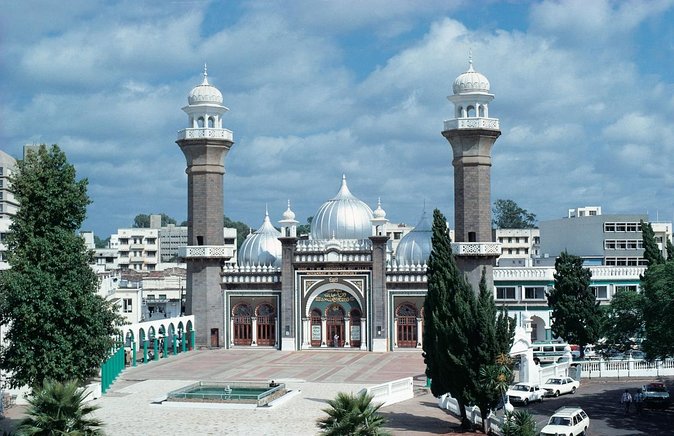
Jamia Mosque follows City Market, with roughly 10 minutes to see the building and observe its activities. The stop is short and does not appear to be a formal interior tour, so dress and behavior should remain respectful. The guide’s role is mainly to explain the mosque’s place in central Nairobi.
Next comes McMillan Memorial Library, another brief stop with a very different character. Here you look at the building’s unusual structure, learn its story, and hear about its inclusion in Kenya’s constitution.
These two locations work well together. Jamia Mosque reflects the city’s religious and social life, while the library points to Nairobi’s civic and institutional past. Neither stop takes long, but both add texture to a route that could otherwise become a simple procession of statues and office buildings.
Same base, a completely different sort of day:
- Nairobi National Park Half-Day Tour; Free Wi-Fi connection
★ 5.0 · 878 reviews - Nairobi: National Park & Optional Elephants & Giraffe Center
★ 4.8 · 874 reviews - NAI NAMI: Nairobi Storytelling Tour with Street Children
★ 5.0 · 792 reviews - Nairobi National Park Half-Day Game Drive
★ 4.5 · 738 reviews
Kenyatta Avenue shows Nairobi’s public face

Kenyatta Avenue is one of the city’s main entrances, and the tour uses it to point out the Askari Monument and the African war veterans memorial obelisk. You also see banks, foreign-exchange bureaus, and restaurants along the street.
This is a good place to ask practical questions. You can find out where money exchange is available, what parts of the central district are useful for eating, and how the city’s main streets connect. The guide also offers suggestions for Nairobi eateries and hangouts, which can be more useful than another general history lecture.
The stop is scheduled for about 10 minutes. That means you will be looking and listening while moving, not settling in for a long discussion at each monument. I like that pace for a first visit, but history fans who want dates, documents, and extended site visits may find it light.
Sarova Stanley and the Kimathi Street connection

Sarova Stanley is presented as Nairobi’s oldest hotel. The tour pauses to explain its place in the city and to show the shops along nearby Kimathi Street.
This is one of those stops where a guide adds more value than a sign. A historic hotel can look like just another grand building unless someone explains how it fits into Nairobi’s growth and public life. The nearby shops also keep the stop connected to the city as it is now.
The visit lasts about 10 minutes and appears to be an exterior look rather than a hotel experience. You should not expect a room tour, meal, or extended time inside. It is best understood as a quick architectural and historical marker along the walking route.
Dedan Kimathi, Moi Avenue, and the city’s independence story

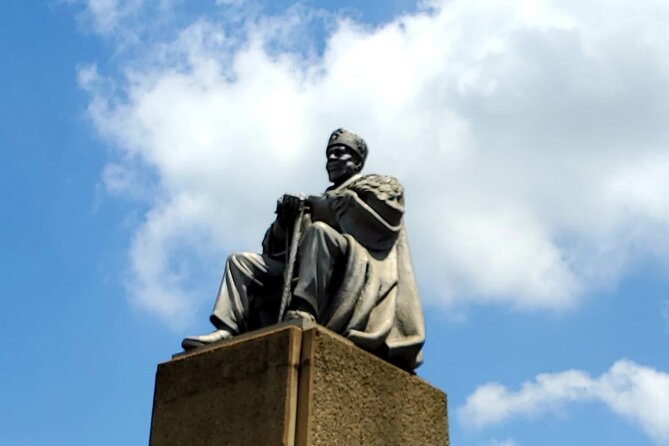
At the Dedan Kimathi Statue, the guide explains Kimathi’s role in the Mau Mau movement and Kenya’s struggle for independence. You also see the Hilton Nairobi from this part of the route.
The stop takes only five minutes, but its subject is important. Nairobi’s modern identity is tied closely to the fight for independence, and Dedan Kimathi is one of the figures who helps put that period into focus. If the topic interests you, use the short stop as a prompt to ask questions while walking to the next location.
Moi Avenue shifts the mood again. Here you see matatu culture and the constant movement of the central district. Matatus are a major part of Nairobi’s public transport system and street character, and this brief stop helps you notice details you might otherwise miss from a vehicle.
The route does not promise a matatu ride, so think of this as observation rather than participation. Five minutes is enough to see the activity, but not enough to explore the transport system in depth.
KICC delivers the tour’s best view

The Kenyatta International Convention Centre is the visual high point. You stop at the Jomo Kenyatta statue, then go up to the helipad for an aerial view of central Nairobi.
From above, you can see the historic British railway, Parliament buildings, Uhuru Park, Holy Family Basilica Catholic Church, and other city landmarks. This is where the earlier street-level explanations begin to fit together. You can identify the major roads, public buildings, and open spaces that you have just passed.
Allow about 30 minutes here, including the stairs. One person specifically found the walking and KICC stairs tiring later in the day, so I would book a morning departure if you have already spent hours sightseeing. Comfortable shoes are a sensible choice.
KICC admission is not included in the $30 price. That extra cost is important when comparing the tour with a free walking route. The rooftop view is a major reason to choose this experience, but you should confirm the current entrance charge before booking because it is separate from the tour price.
The KICC stop also gives the tour a satisfying shape. You begin with gardens, markets, and street corners, then finish by looking back over the entire center. The view is not simply a photo stop. It helps you understand Nairobi’s layout.
Galton-Fenzi Memorial closes the loop
The final stop is the Galton-Fenzi Memorial, where the guide explains directions and distances to major cities around the world. From there, you walk toward Jeevanjee Gardens and finish near the original meeting point.
This closing stop is small but useful. After several hours of city history and street detail, a marker focused on distance and direction gives you one last reminder that Nairobi is both a local capital and an international crossroads.
The tour ends back at the meeting point. Pickup and drop-off are offered, and the air-conditioned vehicle is especially useful if you are arriving from or returning to the airport. One group used the tour during a flight transfer, with communication through WhatsApp and airport pickup and drop-off arranged around the schedule.
For a layover, build in extra time. Nairobi traffic can affect any airport transfer, and this experience is best for a long stop rather than a tight connection. The provider can customize itineraries, but any schedule change made within 24 hours is not accepted, and cancellations inside that window receive no refund.
The guide can make or break the experience
The route is solid, but the guide is the real variable. Dennis, Simon Njuguna, and Shaz are among the guides named in the tour feedback. Dennis receives repeated praise for explaining history, culture, current events, and safety in an engaging way. Simon is described as fun and clear, with strong explanations of Nairobi and Kenyan culture.
That matters because most stops are short. A good guide must make each location understandable without turning the walk into a lecture. The strongest reports describe guides who explain not only what a building is, but also how to move around Nairobi, where to eat, and which tourist traps to avoid.
You also receive a basic vocabulary lesson in Swahili slang. This is a nice touch, especially if you want a few local expressions rather than only formal textbook phrases. The guide can also suggest eateries and hangouts, making the tour useful after it ends.
The experience is not perfect for everyone. One dissatisfied participant described repeated solicitation by beggars during the walk and found a particular stop unpleasant. The operator apologized and explained that the guide gives a briefing on ignoring unwanted approaches and saying no firmly. You should take that advice seriously and understand that a street tour cannot control every interaction in a public city center.
What the $30 price really covers
At $30 per person, the tour is priced as an affordable introduction rather than a full private city experience. The value comes from the guide, transport support, city orientation, and KICC viewpoint.
Included extras are bottled water, fruit salad, shoe cleaning, a professional street photo, pickup and drop-off, and the guided route. Those small additions will not decide the booking on their own, but they make the price easier to justify, particularly if you are arriving after a flight or have limited time.
The main cost outside the advertised price is KICC admission. You should also remember that shopping, food, coffee, and any optional purchases at City Market are your responsibility. One group had time for coffee and another added lunch at a fish market, but those are not guaranteed parts of the standard route.
The tour is described as a small-group experience capped at 12 people, which would be a comfortable size for city walking and questions. However, the additional booking information gives a maximum of 100 participants. That conflict is worth clearing up before payment if group size matters to you.
Who should book this Nairobi city tour?
I would recommend it to first-time visitors who want a quick orientation before exploring Nairobi independently. It is also a good fit for people who enjoy street scenes, public buildings, short historical explanations, and practical local advice more than long museum visits.
It suits a long airport layover, provided you have enough spare time for traffic and the full tour. Families and older participants should consider the walking pace and KICC stairs, though the vehicle transfers reduce some of the strain. Near-public-transport access and the pickup option make meeting the group fairly straightforward.
You may want another experience if your main goal is wildlife, Nairobi National Park, museums, or a slow food tour. This route stays focused on central Nairobi and covers many places in short bursts. It gives you breadth, not extended time at one attraction.
Should you book it?
Book this tour if you want to understand central Nairobi quickly, meet a guide who can explain both history and present-day life, and finish with a city view from KICC. The strongest reasons are the practical advice, the mix of street culture and landmarks, and the chance to use it during a layover.
Choose a morning departure if possible, wear shoes suited to walking and stairs, and confirm the group size and KICC fee before you go. If you dislike busy streets or unwanted approaches, know that the public setting is part of the experience. For most first visits, the $30 price is a fair way to get your bearings before exploring the capital on your own.
FAQ
How long does the Nairobi History and Modern Culture Tour last?
The experience lasts approximately two to three hours. The route includes walking and vehicle transfers, and the pace may vary if the itinerary is customized.
What is included in the tour price?
Pickup and drop-off, bottled water, fruit salad, shoe cleaning, and a professional street photo are included. Guided visits to the listed stops are also part of the experience.
Is KICC admission included?
No. The entrance fee for Kenyatta International Convention Centre is not included and must be paid separately.
Can I take this tour during a layover?
Yes. The itinerary can be customized, and pickup and drop-off are offered. You should allow ample time for the tour and airport transfers because the experience lasts up to three hours.
Where does the tour start and finish?
The tour starts at CJ’s on Koinange Street in Nairobi. It ends back at the meeting point.
What is the cancellation policy?
You can cancel at least 24 hours before the start time for a full refund. Cancellations or changes made less than 24 hours before the experience are not accepted and are not refunded.
Just added around Nairobi
- Nairobi: Horseback Riding Tour Through Maize Plantation★ 5.0 · 3 reviews
- Nairobi: Kibera Slum Compassionate Walking Tour★ 5.0 · 4 reviews
- Nairobi: Karura Forest Guided Walking Tour★ 5.0 · 4 reviews
- From Nairobi: Horseback Wildlife Safari with Transfer & Meal★ 4.6 · 7 reviews
- Nairobi: Hidden Gems and Local Secret Guided Walking Tour★ 4.9 · 20 reviews
- Nairobi: Hop on Hop off and Maasai market Collections Visit★ 3.5 · 10 reviews
- Nairobi: Karura Forest Horseback Riding Tour★ 4.8 · 11 reviews
- Nairobi: Guided Afternoon Tour to Bomas of Kenya.★ 3.1 · 4 reviews
Historical Tours, compared.


Nairobi Cultural and Historical City Tour with a Local
Read our review →
Nairobi souvenir Shopping and Historical Half day Tour
Read our review →
Half-Day Cultural Tour to Bomas of Kenya in Nairobi
Read our review →
Nairobi City: Walking tour with Lifestyle and History.
Read our review →
Browse the lists this tour appears in