
Reviewed · CULTURAL VILLAGE VISITS
Memorable Daily KIBERA Slums/Toi Market Tour with Locals (2 hours)
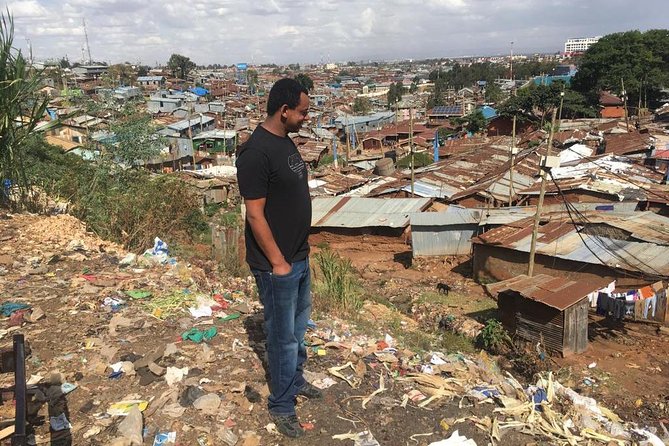
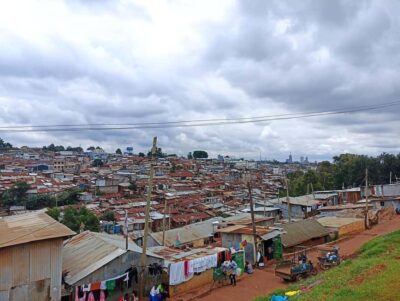
Kibera is not a sightseeing backdrop. It is home, workplace, school, and neighborhood for a huge community in Nairobi. This local-led walking tour gives you a direct look at daily life, with guides such as Bramwell and Frederick explaining the area through personal ties and lived experience.
I like the small-scale human focus, especially the chance to learn about housing, education, health projects, and the informal economy. I also like that your money helps employ local young people and supports rural girls’ education through the operator’s charity work.
The main consideration is comfort. Paths can be muddy or wet, and this is not a polished city attraction. You need sturdy shoes, respectful clothing, and the good sense to keep your camera away when you are passing through someone’s home.
Key things to know before walking into Kibera

- A local guide leads the way: Bramwell and Frederick are among the guides praised for their personal connections in Kibera.
- Olympic Primary School anchors the visit: The tour begins and ends there, and the school is presented as an important route out of poverty for local families.
- You learn about real community work: The walk includes discussion of projects involving housing, schools, health, and local development.
- The experience costs $25: For roughly two to three hours, that is a fair price if you value a personal guide and local employment over a polished attraction.
- Dress for muddy ground: Sturdy shoes are essential, and you should expect uneven paths and basic conditions.
- This is a people-first tour: Ask before taking photographs, listen carefully, and treat Kibera as a neighborhood rather than a spectacle.
Kibera with a guide who knows the neighborhood
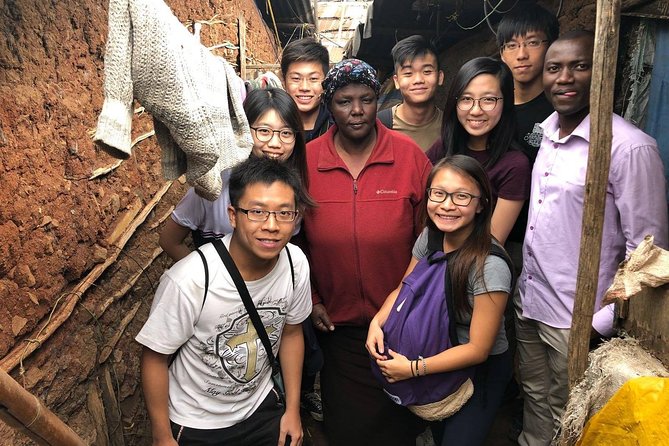
The strongest reason to book this tour is the guide. A walk through Kibera without local context could easily become a quick look at hardship, followed by a few uncomfortable photographs. With Bramwell or Frederick, the experience has a better chance of becoming a conversation about people, work, family, education, and survival.
Bramwell is described as having grown up in Kibera. He later moved out of the most crowded part but remained nearby and continued playing for the Kibera football team. That sort of connection matters. It means he can explain the area as someone who knows its streets and people, not simply as an outsider repeating facts.
Frederick is also praised for being friendly and attentive. He has been described as someone who takes time to answer questions and helps you feel safe while walking. Guide assignments can change, so you should not assume a particular person is guaranteed, but Bramwell and Frederick are names worth noting when you communicate with the operator.
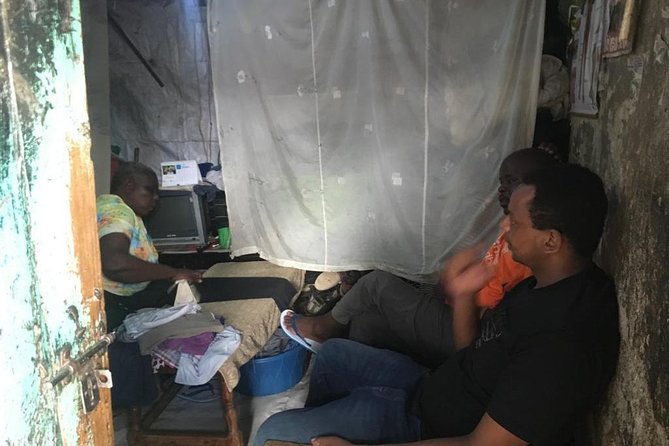
The personal side of the tour can be especially meaningful. A guide may introduce you to people he knows, and the route can include the opportunity to see a local home when the resident agrees. That is a privilege, not a standard attraction. You should enter only with permission, avoid intrusive questions, and remember that a modest home is not a display case.
Other cultural visits around Nairobi:
- Nairobi: Explore Kibera Slum with Local Guides
★ 4.9 · 365 reviews - Nairobi: Day Tour to Amboseli National Park & Maasai Village
★ 4.5 · 310 reviews - Masai village Day Tour Experience
★ 5.0 · 284 reviews
What the two-hour walk actually shows you
The tour centers on Kibera, described by the operator as one of Africa’s largest informal settlements. The settlement covers about 2.5 square kilometers and is home to people from across East Africa. Population figures for informal settlements are difficult to verify and can vary widely, so it is best to treat the stated figure of about one million residents as an estimate rather than a precise count.
The useful part is not the headline number. It is seeing how many forms of daily life fit into a tightly packed urban area. Your guide discusses housing, work, schooling, health, and the local economy. You begin to understand that Kibera is not defined by one condition. It is a functioning community dealing with serious shortages and limited services.
Expect a walking route rather than a series of formal exhibits. You might pass small businesses, homes, community projects, and local gathering places. The guide explains what buildings and activities mean to residents, and you can ask about the way people earn money and support their families.
This is where the tour can correct an easy misconception. Informal settlement does not mean inactive or disorganized. People trade, work, attend school, raise children, create businesses, and support one another. At the same time, the walk does not hide the hard parts. Housing is basic, sanitation can be difficult, and some paths may be wet or muddy.
Meeting residents with respect
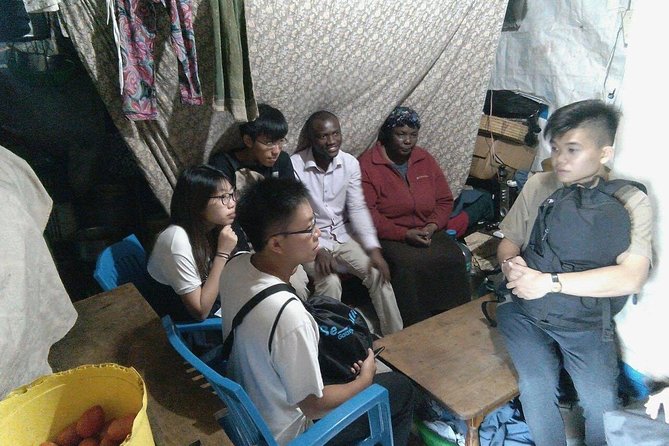
A tour of a low-income neighborhood raises an important question: is this respectful travel or poverty sightseeing? The answer depends partly on the operator, but it also depends on you.
DALA Tours, Safaris & Volunteers Kenya presents the visit as a locally led experience that employs young people. Kenya has a youth unemployment rate of more than 50 percent according to the company’s own description, so paying for a local guide can provide a direct economic benefit. Part of the company’s proceeds also supports MAKLWETA, a charity founded to help rural girls stay in school.
That does not make every moment automatically appropriate. Keep your camera away unless you have clear permission. Do not photograph children casually. If someone invites you into a home, accept only if the guide and resident make the situation comfortable, and do not treat the invitation as a chance to inspect private life.
The best attitude is curiosity without pity. You can ask what a community project does, how a school operates, or how local businesses work. You can also listen without trying to solve every problem in one afternoon. The guides’ personal relationships help, but your manners still matter.
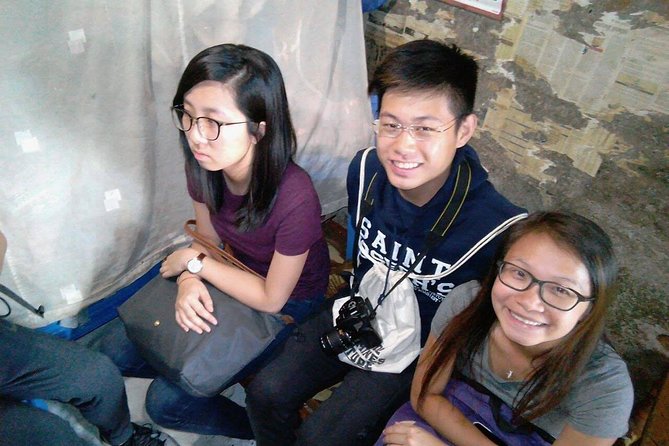
Several people who joined the walk found the atmosphere friendly and personal, with the guide becoming more like a local companion by the end. That warmth is one of the tour’s strongest qualities, but you should not expect every encounter to be arranged or repeated. Kibera remains a living neighborhood, not a staged performance.
Olympic Primary School and the education story
The tour ends with a visit to Olympic Primary School, also listed as the meeting point at MQQH+3FJ in Nairobi. The school is described as Kenya’s largest public primary school and as an institution that once had a reputation for strong academic performance.
That detail gives the tour a useful ending. Instead of leaving you with only images of crowded housing, the school shows how education can change a family’s options. The operator describes it as a place that has helped lift families out of poverty.
You should confirm the exact school access and timing when booking, since school operations can affect what you see. The information provided says the tour ends there, but it does not promise a classroom visit, a meeting with teachers, or access to all parts of the campus.
The education discussion also links to the operator’s charity work. DALA says it supports rural girls’ education through MAKLWETA, while some guide responses also refer to helping children attend school and to possible volunteer teaching with partner schools. Treat that as part of the company’s wider work, not as a guaranteed feature of this two-hour walk.
A few more things to do around Nairobi worth a look
- Traditional Kenyan Cooking Class & Local Market Tour
★ 5.0 · 129 reviews - Authentic Kenyan Cooking Class & Market Tour in Nairobi
★ 5.0 · 12 reviews - Nairobi: Hop on Hop off and Maasai market Collections Visit
★ 3.5 · 10 reviews - Market Tour and Traditional Kenyan Cooking Class in Nairobi
★ 4.8 · 6 reviews
Understanding Kibera’s informal economy

One of the most useful subjects on the route is the informal economy. In a neighborhood where formal employment is limited, small-scale trade and services help families pay for food, rent, transport, and school costs.
Your guide explains how people make a living and how local businesses fit into the community. The tour does not give a detailed list of every trade, so you should think of this as an introduction rather than a business study. Still, it is a valuable way to see Kibera as a place of work as well as a place facing poverty.
The discussion of NGO projects adds another layer. You learn about efforts connected to housing, health, and education, including projects that have had mixed results. The operator’s material acknowledges that some projects succeed while others struggle because of corruption. That frankness is useful. Development work is not a magic fix, and good intentions do not always lead to good outcomes.
Ask your guide which projects are active now and how residents view them. Conditions and organizations change, and a local guide can give you a more current sense of what is working than a general description prepared years ago.
Timing, meeting point, and group size
The advertised visit takes about two hours, though the overall experience may run from two to three hours. That makes it easy to fit into a Nairobi day, but you should allow extra time if you stop for food, have a long conversation, or encounter delays.
The meeting point is Olympic Primary School, at MQQH+3FJ, Nairobi. The tour ends at the same location. Round-trip transfers from a designated meeting point are included, but the supplied details do not name a hotel pickup service or provide a full door-to-door transfer schedule. Confirm the exact meeting instructions before setting out.
The maximum group size is listed as 50 people. That is a fairly large possible group for narrow neighborhood paths. Your actual group may be smaller, but you should ask if group size matters to you. A smaller group usually makes it easier to hear the guide, ask questions, and avoid crowding residents.
A mobile ticket is provided, and confirmation arrives at booking. Most people can participate, and service animals are allowed. Public transportation is nearby. These details make the tour fairly easy to fit into a Nairobi itinerary, but they do not mean the walk is physically effortless. Uneven, muddy paths and crowded spaces require sensible footwear and attention.
Is $25 a fair price?

At $25 per person, this is not the cheapest possible way to walk through Kibera, but it offers more than simply finding the neighborhood on a map. You are paying for a local guide, organization, community connections, and the chance to support youth employment and education projects.
The value is highest if you want explanation and human contact. The price is less compelling if you expect a polished attraction, a long list of formal stops, or a fully structured lecture. This is a basic walking experience with a social purpose, not a luxury tour.
Lunch and drinks are not included. The operator can take you to a local restaurant at your request, but any food is optional and should be treated as an extra cost. Since the tour is short, you do not need to plan a meal unless you want to extend the outing.
Tips are also not included. If your guide gives you a thoughtful, safe, and informative experience, a tip is a practical way to show appreciation, though the listed price does not require one.
What to wear and bring
Wear sturdy shoes that can get wet or muddy. Open sandals and delicate trainers are poor choices for this route. Comfortable clothes are sensible, and modest dress shows respect in a residential community.
Bring a charged phone for the mobile ticket and meeting details. Keep valuables secure and carry only what you need. The supplied information does not list a baggage service, so do not arrive with luggage that you expect someone else to store.
Most important, bring patience. You may need to walk at the group’s pace, wait while the guide speaks with someone, or adjust to local conditions. A little flexibility will improve the experience.
Photography deserves special care. One of the clearest practical lessons from the feedback is to put the camera away and focus on people. Ask permission before photographing homes, businesses, adults, or children. A respectful conversation is worth more than a hurried picture.
The main strengths and the real limitations
The highest-praised part of the experience is the guides. Bramwell and Frederick are repeatedly singled out for friendliness, local connections, and the ability to answer questions. Their role changes the tour from a detached look at poverty into a personal explanation of a complicated community.
The second strength is authenticity. You may see places connected to the guide’s own life, meet people he knows, and hear about projects that have both succeeded and failed. That makes the walk less predictable, but also more grounded.
The limitations are straightforward. The route is not comfortable in the usual sightseeing sense. Conditions can be muddy, the group may contain as many as 50 people, and the experience deals directly with hardship. Some people may find the subject matter emotionally heavy.
There was also one serious service problem connected to a past cancellation during a COVID-19 lockdown. The operator explained that there had been a communication failure and said the customer received a full refund. That appears to be an unusual case rather than the normal pattern, but you should still confirm the meeting time and operating status, especially if Nairobi conditions or public restrictions change.
Free cancellation is available up to 24 hours before the start time for a full refund. Inside 24 hours, the payment is not refunded, and changes are not accepted. The cut-off uses Nairobi local time.
Who should book this Kibera tour?
I recommend it to you if you want to understand Nairobi beyond its museums, hotels, and wildlife connections. It suits people who ask questions, listen well, and accept that the most important moments may be quiet ones rather than dramatic sights.
It is also a good fit if you care where your tour money goes. The local youth employment and education aims give the $25 fee a practical purpose, though you should see the tour as one contribution, not a complete solution to Kibera’s challenges.
You may want to skip it if you dislike walking on rough ground, feel uncomfortable in crowded residential areas, or mainly want photographs. It is not designed as a quick photo stop. It asks you to pay attention to people’s dignity and to accept a less controlled experience.
If you book, request clarity about the guide, group size, meeting point, and current route. Then arrive at Olympic Primary School ready for a serious, human conversation. For many people, that is exactly why this short Nairobi tour is worth the time.
FAQ
How long does the Kibera tour last?
The walking portion is described as about two hours, while the total experience may take two to three hours.
How much does the tour cost?
The listed price is $25 per person.
Where does the tour begin and end?
The meeting point and end point are both Olympic Primary School, MQQH+3FJ, Nairobi, Kenya.
Is transportation included?
Round-trip transfers from a designated meeting point are provided. The supplied details do not specify a hotel pickup schedule.
Who guides the tour?
A local youth guide leads the experience. Guides praised in the supplied information include Bramwell and Frederick, though a specific guide is not guaranteed.
What will I see during the walk?
You learn about daily life, housing, the informal economy, and community projects involving education, health, and housing. The tour also ends with a visit to Olympic Primary School.
Are food and drinks included?
No. Lunch and drinks are optional extras, and the operator can visit a local restaurant at your request.
Can I cancel for a refund?
Yes. You can cancel at least 24 hours before the start time for a full refund. Cancellations or changes made less than 24 hours before the start time are not refunded.
More Shopping Tours in Nairobi
- Nairobi souvenir Shopping and Historical Half day Tour
★ 5.0 · 61 reviews - Nairobi: Explore Maasai Market for Unique Souvenirs
★ 5.0 · 5 reviews - Local Market Tour and Traditional Meal Cooking Class
★ 5.0 · 4 reviews - Mombasa City Tour,Fortjesus,Oldtown,Tusks and Spice Market.
★ 4.8 · 19 reviews
Just added around Nairobi
- Nairobi: Horseback Riding Tour Through Maize Plantation★ 5.0 · 3 reviews
- Nairobi: Kibera Slum Compassionate Walking Tour★ 5.0 · 4 reviews
- Nairobi: Karura Forest Guided Walking Tour★ 5.0 · 4 reviews
- From Nairobi: Horseback Wildlife Safari with Transfer & Meal★ 4.6 · 7 reviews
- Nairobi: Hidden Gems and Local Secret Guided Walking Tour★ 4.9 · 20 reviews
- Nairobi: Hop on Hop off and Maasai market Collections Visit★ 3.5 · 10 reviews
- Nairobi: Karura Forest Horseback Riding Tour★ 4.8 · 11 reviews
- Nairobi: E-Bike/Cycling Wildlife Safari with Transfer & meal★ 5.0 · 5 reviews
Cultural Village Visits, compared.

Day Tour to Amboseli National Park & Maasai Village
Read our review →


Kibera Slum Tour with Local Social Entrepreneurs
Read our review →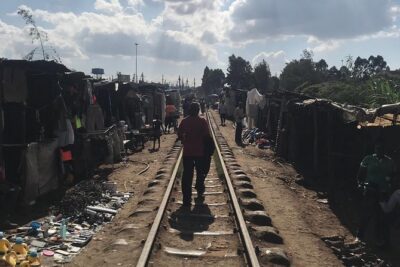

Giraffe Centre, Elephant Orphanage, and Bomas of Kenya Day Tour from Nairobi
Read our review →Browse the lists this tour appears in