
Reviewed · TOURS IN NAIROBI
Market Tour and Traditional Kenyan Cooking Class in Nairobi
The best part of this Nairobi experience is the move from market stall to home kitchen. You choose fresh ingredients, then see how they become ugali, chapati, pilau, and curry in a real Kenyan home rather than a polished cooking school.
I like the private format, which gives you direct guidance, and I like the market visit because it adds everyday context to the meal. You also get to help prepare the food, though the small kitchen means the host will handle much of the cooking.
Key points to know before booking
- Market first, meal later: Shop for ingredients at a local market before heading to the host’s home.
- Private four-hour session: Your party receives a more personal lesson than a large class.
- Kenyan and Indian influences: The menu may include ugali, chapati, pilau, and curries.
- Small home kitchen: You can help with preparation, but the host does most of the cooking because space is limited.
- Central meeting point: Meet at the K Mall Komarock parking lot before going to the market.
- Useful inclusions: Food, fruit, soda, water, and transport to and from the market are covered. Uber fees are not.
From K Mall Komarock to the market
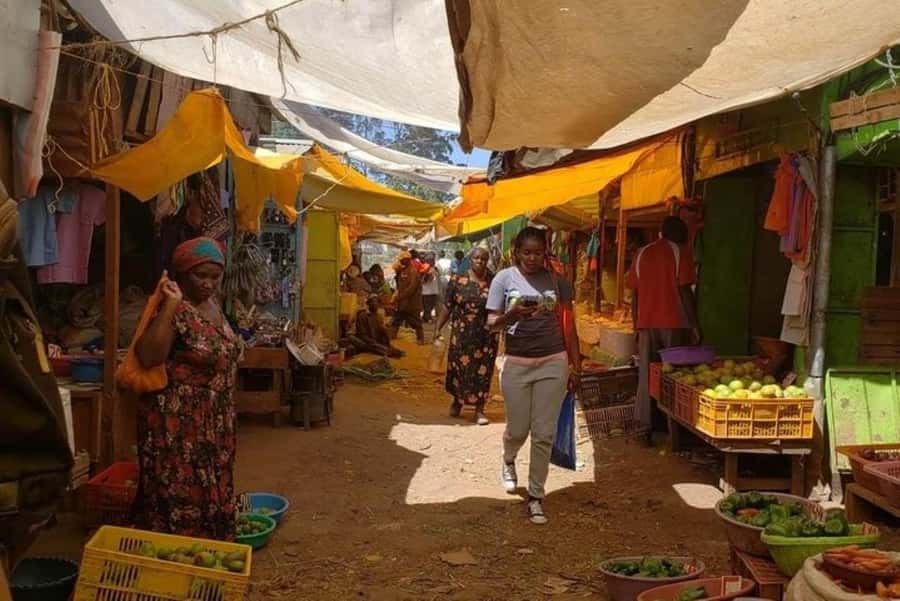
Your meeting point is the K Mall Komarock parking lot. From there, you head to a local market with your host and begin choosing the food for the class.
That opening matters. Instead of receiving a fixed basket of ingredients, you see where the meal starts. The market visit gives you a look at ordinary food shopping in Nairobi and helps explain the produce, grains, spices, and other supplies used later.
The description calls the supplies fresh and organic, but it does not give a specific market name or promise a particular ingredient list. I would treat the menu as flexible rather than fixed. Your host may shape the meal around what is available and suitable that day.
You should also expect a working market rather than a staged food attraction. The point is to buy ingredients and get a feel for market life. If you want a tour built around detailed vendor commentary or a long history of Nairobi foodways, this may feel light. The main focus is the meal that follows.
Transport to and from the market is included. That keeps the four-hour plan simple, though any Uber fees connected with getting yourself to or from the meeting point are not included. Check your route to K Mall Komarock before the day so you know what part of the journey you need to arrange yourself.
A few more things to do around Nairobi worth a look
- Traditional Kenyan Cooking Class & Local Market Tour
★ 5.0 · 129 reviews - Authentic Kenyan Cooking Class & Market Tour in Nairobi
★ 5.0 · 12 reviews - Local Market Tour and Traditional Meal Cooking Class
★ 5.0 · 4 reviews
Cooking in a real Nairobi home
After the market, you go to the host’s home and begin preparing the meal from scratch. This is the heart of the experience. You are not only watching a chef finish a dish; you are shown how Kenyan home cooking comes together and where you can lend a hand.
The host provides one-to-one guidance for your private group. That makes it easier to ask about an unfamiliar ingredient, watch a technique more closely, or get help with a task such as shaping chapati. The class is offered in English and Swahili, so you can choose the language that works best for your group.
The kitchen is small, and that shapes the experience. The host does most of the cooking because there is not enough room for everyone to work at once. You still help prepare the food, but this is not a full hands-on workshop where each person cooks an entire dish independently.
I see that as a useful distinction when comparing options. If you want a tidy cooking studio, individual workstations, and a recipe card for every course, choose a formal cooking school instead. If you want to see how a meal is handled in a modest home kitchen, the limited space is part of the point.
The setting also creates room for conversation. One account describes preparations taking place together on the sofa while the host and visitors talked about their lives. That detail suggests a social home visit as much as a technical lesson. You should book it for the exchange as well as the food.
What you may cook: ugali, chapati, pilau, and curry
The food combines Kenyan home cooking with Indian influences. The examples given are ugali, chapati, pilau, and curries, though the exact combination is not guaranteed.
Ugali is a cornmeal staple and one of the most useful dishes to learn if you want a better sense of everyday Kenyan food. Its ingredients are simple, but the preparation and texture matter. Watching the host make it in a home setting gives you a clearer idea of how it fits into a shared meal than simply ordering it at a restaurant.
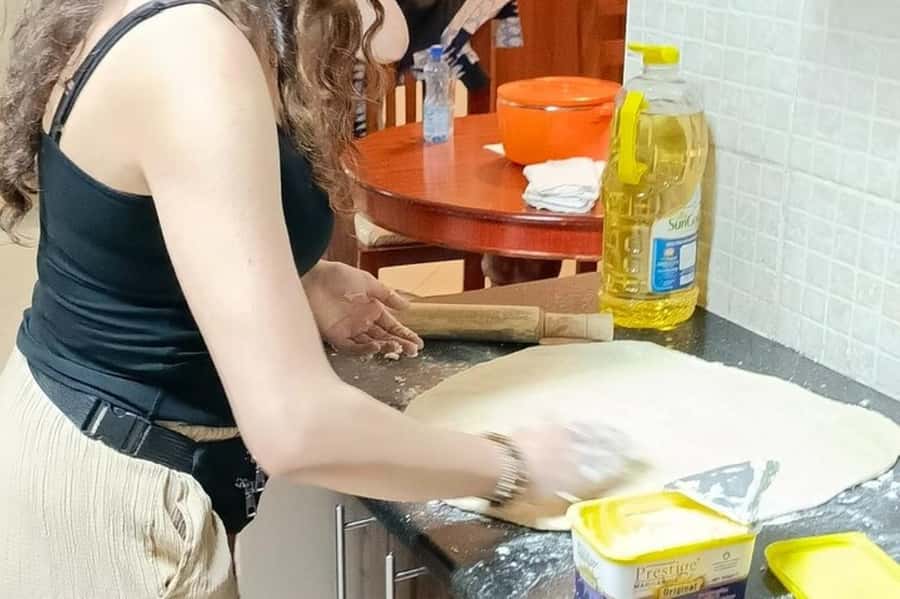
Chapati brings a different kind of lesson. This soft flatbread is prepared by hand, and the class gives you a chance to help make it. The feedback specifically highlights learning how to prepare chapati, so this is likely to be one of the more memorable practical tasks.
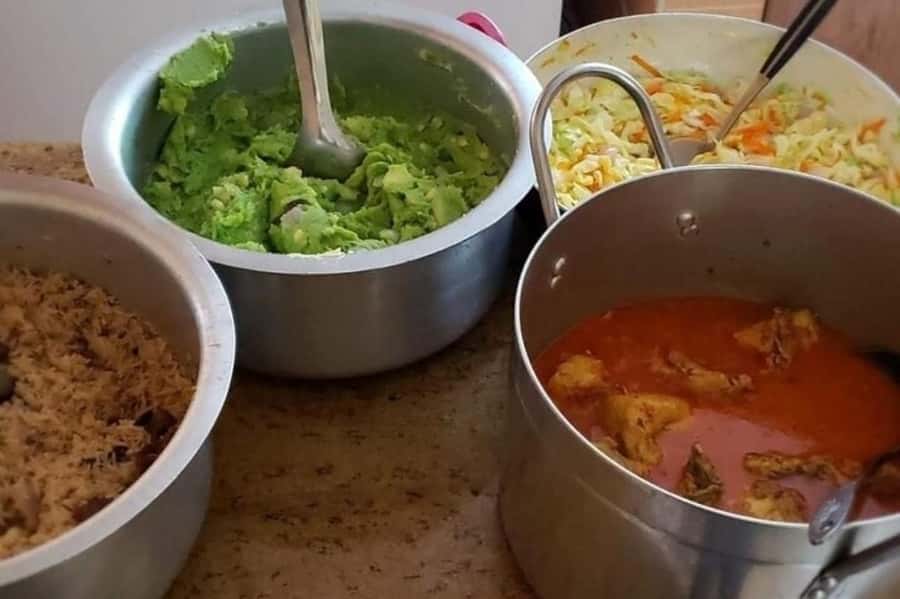
Pilau adds spice and a connection to the Indian influence named in the experience details. Curries may also be part of the meal. Since no fixed menu is published, do not book this expecting one exact recipe or a guaranteed set of dishes. Think of the listed foods as examples of the style of meal you are likely to encounter.
The food is included, along with fruit, soda, and water. That makes the final meal more than a quick tasting. You shop for the ingredients, watch them being prepared, assist where space allows, and then eat what you helped make.
Why the market and kitchen work well together
A cooking lesson alone can teach you a recipe. A market visit alone can show you ingredients. Put together, the two parts give you a better sense of how food moves from purchase to plate.
I like this sequence because you can connect what you see at the market with what appears on the table. A grain, vegetable, spice, or other ingredient has a clear role in the meal rather than being an unexplained item in a demonstration kitchen.
The arrangement also offers a more personal look at daily life in Nairobi. The experience is based at a host’s home, not in a restaurant or hotel classroom. That does not make it a complete picture of Kenyan food culture, but it does give you a close look at one household’s cooking style.
There are limits. Four hours is enough for a market visit and one meal, not for a broad survey of Kenyan regional cuisine. You should also avoid treating one host’s recipes as the single correct version of Kenyan food. Home cooking changes from household to household, and the Indian influence here is one part of the story.
Same base, a completely different sort of day:
- Nairobi National Park Half-Day Tour; Free Wi-Fi connection
★ 5.0 · 878 reviews - Nairobi: National Park & Optional Elephants & Giraffe Center
★ 4.8 · 874 reviews - NAI NAMI: Nairobi Storytelling Tour with Street Children
★ 5.0 · 792 reviews - Nairobi National Park Half-Day Game Drive
★ 4.5 · 738 reviews
A private group makes the class more personal
This is a private experience for your party. That is one of its strongest practical features.
In a large class, you often spend part of the lesson waiting for space at a counter or trying to hear instructions across the room. Here, your host can adjust the pace for your group and answer questions as they come up. The personal format is especially useful if your group wants to talk about ingredients, ask for help with chapati, or spend more time discussing Kenyan customs.
The tradeoff is price. At $55 per person, this is not the cheapest way to eat in Nairobi. But the fee covers four hours, the market visit, the cooking session, the meal, fruit, soda, water, and transport to and from the market. For a private activity, that package can offer fair value, particularly if you place a high value on personal contact rather than simply getting lunch.
The value is weaker if you mainly want a meal. You could spend less on food elsewhere, and the host’s small kitchen means you will not be cooking every part of the menu yourself. The price makes more sense when you want the market, instruction, conversation, and meal as one experience.
What the host brings to the experience
The provider is listed as Evaline Mbugua. Several comments refer to the host as Mary Evelyn, so I would confirm the host’s name when you book if that detail matters to you.
The strongest praise centers on the host’s warmth and teaching. One person specifically appreciated learning about Kenyan culture, while another highlighted the authentic market visit and the chance to prepare typical food at home. The host is also described as kind and willing to share her cooking skills.
That tells you what this activity does best: personal contact. You are not simply following a guide through a market with a camera in hand. You are going into a home, helping with food, and talking during the preparation.
The language options are English and Swahili. English is useful for clear cooking instructions, while Swahili may help you connect more naturally if you speak it. The activity is not presented as a formal cultural lecture, so most of your cultural learning will come through the market, the food, and your conversation with the host.
Who will enjoy this most
I would choose this for someone who wants a small-scale, human experience in Nairobi. It suits couples, families, and friends who enjoy food but also want time with a local host.
It is a particularly good fit if you want to:
- Learn how common Kenyan dishes are prepared at home
- Visit a local market as part of a planned activity
- Share a meal in a private setting
- Ask questions without a large group around you
- Try making chapati and helping with other preparation
- See Kenyan and Indian cooking influences together
Families should note the small kitchen. It may be hard for every person to work at the same time, especially in a larger private party. Children may still enjoy the market and meal, but the cooking portion will involve watching as well as helping.
Food-focused visitors should also keep expectations in check. This is a cultural home meal with instruction, not a professional chef’s master class. You get a more personal setting in exchange for fewer workstations and a less formal structure.
Timing, meeting point, and practical planning
The total duration is four hours. Starting times vary, so check availability when you choose your date.
Plan to meet at the K Mall Komarock parking lot. Transport to and from the market is included, but Uber fees are not. That wording makes it important to separate the included market transfer from your own transport to the meeting point.
The booking terms allow free cancellation up to 24 hours in advance for a full refund. You can also reserve and pay later, which is handy if your Nairobi schedule is still changing.
There is no need to bring food or drinks for the activity, since food, fruit, soda, and water are included. The supplied details do not state a dress code, dietary accommodation, accessibility information, or a fixed menu. If any of those points affect your decision, ask before booking rather than assuming.
Is this four-hour cooking experience worth booking?
Book it if you want a direct look at Nairobi home cooking and value conversation as much as technique. The market-to-kitchen format, private group, and chance to help with chapati make it more personal than a standard demonstration.
Skip it if you need a large, fully equipped kitchen, a guaranteed menu, or a class where every participant cooks independently. The small home kitchen means the host handles much of the work.
At $55 per person, I consider it a reasonable choice for a private four-hour cultural activity that includes the market, meal, drinks, and market transport. The best reason to book is not simply to eat ugali or chapati. It is to see how a local meal is bought, prepared, discussed, and shared in a Nairobi home.
FAQ
Where does the experience meet?
You meet at the K Mall Komarock parking lot before proceeding to the local market.
How long does the activity last?
The experience lasts four hours. Starting times depend on availability.
Is the cooking class private?
Yes. The activity is arranged as a private group experience for your party.
Which languages are available?
The live tour guide speaks English and Swahili.
What food might be prepared?
The meal may include Kenyan and Indian-influenced dishes such as ugali, chapati, pilau, and curries. The exact menu is not specified.
Is food and transportation included?
Food, soda, fruit, water, and transport to and from the market are included. Uber fees are not included.
Can I cancel or pay later?
You can cancel up to 24 hours in advance for a full refund. The reservation option also allows you to book and pay later.
More Workshops in Nairobi
- Malindi : Kenyan Cooking Class with Campfire Meal
★ 5.0 · 3 reviews
More Shopping Tours in Nairobi
- Nairobi souvenir Shopping and Historical Half day Tour
★ 5.0 · 61 reviews - Memorable Daily KIBERA Slums/Toi Market Tour with Locals (2 hours)
★ 5.0 · 29 reviews - Nairobi: Hop on Hop off and Maasai market Collections Visit
★ 3.5 · 10 reviews - Nairobi: Explore Maasai Market for Unique Souvenirs
★ 5.0 · 5 reviews
Just added around Nairobi
- Nairobi: Kibera Slum Compassionate Walking Tour★ 5.0 · 4 reviews
- Nairobi: Horseback Riding Tour Through Maize Plantation★ 5.0 · 3 reviews
- Nairobi: Karura Forest Guided Walking Tour★ 5.0 · 4 reviews
- From Nairobi: Horseback Wildlife Safari with Transfer & Meal★ 4.6 · 7 reviews
- Nairobi: Hidden Gems and Local Secret Guided Walking Tour★ 4.9 · 20 reviews
- Nairobi: Hop on Hop off and Maasai market Collections Visit★ 3.5 · 10 reviews
- Nairobi: Karura Forest Horseback Riding Tour★ 4.8 · 11 reviews
- Nairobi: Guided Afternoon Tour to Bomas of Kenya.★ 3.1 · 4 reviews
Tours in Nairobi, compared.

Nairobi National Park Half-Day Tour; Free Wi-Fi connection
Read our review →
National Park & Optional Elephants & Giraffe Center
Read our review →
NAI NAMI: Nairobi Storytelling Tour with Street Children
Read our review →




Elephant Orphanage and Giraffe Center Tour with Options
Read our review →Browse the lists this tour appears in